Troubleshooting & Analysis
The week my house smelled like a damp basement
I knew something was wrong before I found the cause. The bedroom had picked up this faint mineral-and-mildew smell — not strong, just there, the kind of thing you notice when you walk back in from outside. I blamed the laundry. I blamed the dog. Then I pulled the tank off my Honeywell humidifier and looked at the wicking filter inside, and there it was: a stiff, crusted, gray-white slab that used to be a soft paper honeycomb. It had basically turned to chalk. Hard water minerals had cemented the whole thing shut, and instead of evaporating clean moisture into the room it was just... sitting there, wet and warm, doing whatever wet warm paper does after three months. That's the smell.
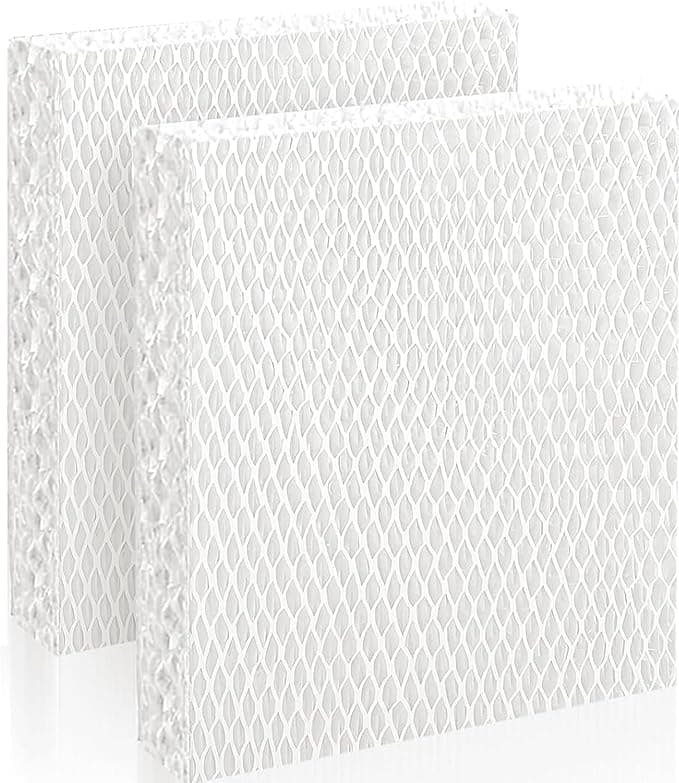
So that's how I ended up testing the Honeywell FILTER T as a compatible replacement instead of marching back to pay OEM prices again. I'd been treating these things like they last forever. They don't.
The price gap that finally annoyed me into switching
Here's the math that pushed me. The genuine Honeywell wicking filters run me somewhere around $20 to $24 a pop at the big-box price, and on a unit running most of the dry season I'm swapping them every couple of months. Call it three or four filters a year. The compatible FILTER T set I bought worked out to roughly half that per filter — I paid in the low teens each, and they came more than one to a box. Over a single heating season that's the difference between spending close to $90 and spending around $45 on something that, functionally, is a folded paper wick. It's a paper wick. I'm not paying a premium for a logo printed on cardboard that I throw away in eight weeks.
That was the bet, anyway. A paper wick is a paper wick — but I've been burned by "compatible" stuff before, so I didn't take it on faith. I ran one for a full cycle and watched it.
Does it actually fit, or do you fight it?
This is where compatibles usually trip. The fit was fine. I powered the unit down first — you always kill the power before you go digging in a humidifier, partly for safety and partly because nobody wants to reseat a wet filter into a running fan. Popped the tank, lifted out the chalk-brick of an old filter, dropped it in the trash. The new FILTER T came folded in its little frame, and it seated into the wick channel with the same press-and-it-sits motion as the original. No trimming, no forcing, no "well if I bend this tab it'll probably hold."
I'll give you the honest nitpick: the frame on the compatible is a touch flimsier than the OEM frame. The cardboard collar feels a hair thinner, and when it's brand new and bone dry it doesn't grip the housing quite as confidently as the Honeywell one did — there was a tiny bit of side-to-side play before I closed the lid. Once it wicked up and the lid was latched, it didn't matter at all. But if you're the type who likes a part to feel reassuringly solid in your hand before it goes in, you'll notice the difference for about four seconds.
How it ran once it was wet
Within a day the room humidity was back where I wanted it — I keep a cheap hygrometer on the dresser and it climbed back into the comfortable 40s overnight, same as the OEM filter used to deliver. The wick drew water up evenly; no dry patches, no spots where half the filter stayed crispy. Output felt the same. My skin stopped feeling like paper, the static shocks off the doorknob stopped, the houseplants quit looking resentful. That's the whole job of the thing and it did it.
Two specific things I watched for, because they're where a cheaper wick can quietly let you down:
- Even wicking. A bad filter draws water unevenly and you get a stiff dry zone that never evaporates and a soggy zone that breeds smell. This one wetted edge to edge.
- Mineral handling. We have genuinely hard water, and the real test of a wick is how it holds up against scale. By week six the FILTER T was starting to whiten at the bottom edge — same as the OEM did, on the same timeline. It wasn't worse.
The downside I want you to hear before you buy
The first two or three days, there was a faint papery smell off the new filter. Not chemical, not strong — more like the inside of a fresh ream of printer paper, carried on the mist. With the OEM I don't remember it being quite as noticeable. It faded completely by about day three and I haven't smelled it since, but if you're sensitive to that sort of thing, run the unit for an evening with a window cracked before you sleep with it going. I'd rather tell you about the break-in smell than have you think your new filter is defective and return it.
The other honest mark against it: the packaging is cheap and the printing is a little crooked, and there's no slick instruction card like Honeywell tucks in. None of that touches performance. But it's the kind of thing that makes you second-guess at the moment of opening the box, so — that's what you're getting. A good filter in a forgettable wrapper.
And one real thing that isn't about this filter at all, it's about all of them: do not let it go like I did. A clogged, mineral-caked wick doesn't just stop adding moisture — it sits there damp and starts growing things, and then you're breathing that into a closed bedroom all night. That's the actual risk, not some scary HVAC failure. On hard water, plan on a swap roughly every two months in heavy-use season, and don't wait for the chalk-brick smell to remind you.
So — OEM or this?
If your humidifier is still under a warranty that has some fussy clause about genuine parts, or you've got soft water and you only change a filter once a year anyway, fine, buy the Honeywell-branded one and don't think about it — the premium barely matters at that frequency.
But for me, on hard water, burning through three or four wicks a season? I'm not paying double for a logo on a disposable paper honeycomb. The FILTER T fit right, wicked evenly, held up against scale on the same timeline as the original, and saved me something like forty-odd bucks a year. The frame's a little flimsy and it smells faintly of paper for two days. I weighed those against the price and bought a second box. That's the most honest endorsement I've got: I already reordered it.