Troubleshooting & Analysis
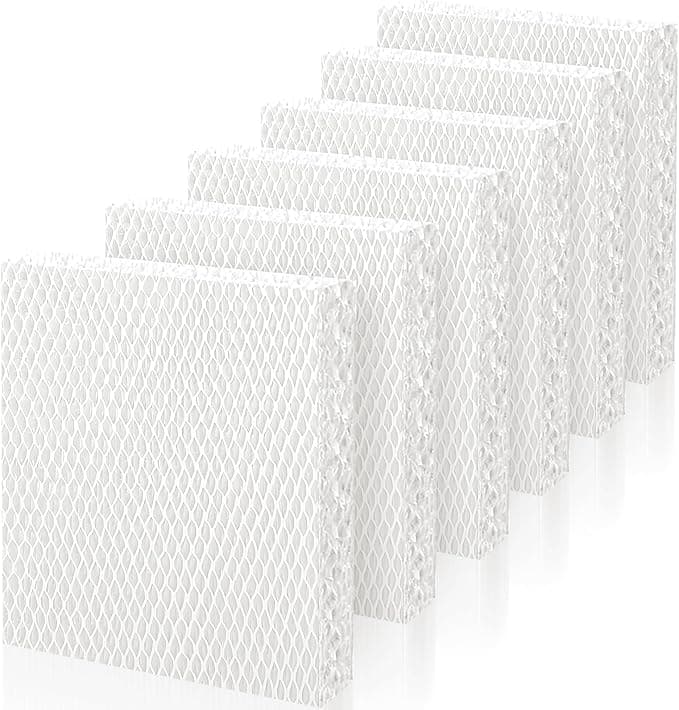
The first thing I noticed wasn't the price. It was the smell — or really, the lack of one. I'd braced for that wet-cardboard, faintly chemical whiff you sometimes get pulling a compatible wicking filter out of its bag, and it just wasn't there. Clean paper, a little dusty, the way a fresh humidifier wick is supposed to smell. Then I pressed it down into the base of my Honeywell unit and it gave that soft, slightly stubborn seat — not a click exactly, more of a settle — and the float collar dropped right where it belongs. That was the moment I stopped worrying.
I'd been replacing the FILTER T-style wick in my console humidifier for about three winters at that point, always buying whatever the box store had, which usually meant the genuine Honeywell part at whatever they felt like charging that week. So when I tell you the compatible version did the job, understand it's coming from someone who has held both in the same hand, in the same machine, two weeks apart.
The price gap is the whole reason you're here
Let's be honest about why anyone reads a review like this. You're standing there — or you've got two tabs open — and the OEM Honeywell wick is sitting at around $22 and the compatible FILTER T is more like $12. Sometimes you'll catch the genuine one as high as $28 if the store's gouging on a cold snap. Ten, fifteen bucks a filter doesn't sound like a lot until you remember this isn't a once-a-year thing.
A humidifier wick that's running daily through a dry winter wants changing every two to three months. If you run yours hard — I do, the bedroom air here turns to sandpaper by December — you're buying three, sometimes four of these a season. Do the math on the OEM at $22 a pop and you're looking at $66 to $88 a year just to keep one machine wet. The compatibles drop that to roughly $36 to $48. That's a real difference. That's a tank of gas or a couple of lunches, every single year, for a part that sits inside a box and wicks water.
Does it actually fit, or am I about to fight it
This is the fear, right? That the cheap one will be a millimeter off and you'll be jamming it in or watching it flop loose. So here's exactly how mine went.
I killed the power and pulled the plug first — you always do that before you go reaching into anything with water and electricity sharing a cabinet. Lifted the tank off, dumped the half-inch of stale water still sloshing in the base (do this over the sink, not the carpet, learn from my one bad afternoon). The old wick lives in a frame right next to the reservoir, and it lifts straight out once you stop being gentle with it — they get crusty and a little glued-down by mineral scale, so a firm even pull is the move, not a yank from one corner.
The new FILTER T went in the other direction just as cleanly. Snug. Not loose, not forced. If anything the new one seated easier than the crusty old genuine wick I'd just evicted. Dropped the tank back on, refilled, plugged in, and it was humidifying inside a few minutes. No fighting. No gap where the air sneaks past dry. The frame tolerance is honestly fine.
Performance — and where it's a hair behind
Through the back half of one winter and into the next, this thing kept my hygrometer reading where I wanted it, low-to-mid forties percent, same as the genuine wick did. The water drank down at about the same rate, which is the real tell — if a wick isn't wicking, the tank just sits there full and your nose knows by morning. This one pulled water fine.
So where's the catch, because there's always one. The compatible wick's antimicrobial coating doesn't feel quite as aggressive as the OEM's. By the tail end of a long run — say month three, pushing it — I noticed the bottom edge of the genuine filter tended to stay a touch cleaner than the compatible, which started showing that faint tan scale-and-grime line a little sooner. It's not dramatic. But if you're the type who runs a wick to the absolute ragged end, the OEM might buy you an extra week or two of cleanliness. I just change mine on schedule and it's a non-issue.
The downsides I'd want a friend to tell me
The packaging is cheap. Thin plastic bag, no rigid frame protecting it, and on one order the wick arrived with a slightly crushed corner — it puffed back into shape and worked perfectly, but it didn't inspire confidence opening the mailer. If you're particular, inspect it before you toss the box.
There's also some batch variation. I've bought these across a couple of seasons and the paper density wasn't dead identical every time — one batch felt a shade thinner. Both worked. But it's the reality of buying compatible: you're not getting the locked-down consistency of a single factory line, and once in a while you'll get one that feels a notch off. For twelve bucks, I can live with that lottery. Honestly it's never once failed on me.
And look — a saturated, neglected wick is the one thing here that actually matters for your health, OEM or compatible. Let any of these go too long and they turn into a mold-and-mildew sponge that your machine then politely mists into the room you sleep in. A clogged wick also makes the unit work harder, drinking more power and wearing itself out. None of that is the filter's fault, cheap or genuine — it's whether you change it on time. The savings only count if you actually use them to swap more often, not less.
Who should buy the genuine one — and who I think should grab this
If you've got someone in the house with a serious respiratory condition and you want every last bit of that antimicrobial margin, or you tend to forget replacements and push a wick four-plus months, pay up for the OEM. The slightly tougher coating earns its keep at the extremes.
For everybody else — for me — the compatible FILTER T does the same job, seats clean, wicks the same, and saves me thirty-plus dollars a year per machine. I've bought it again. I'll buy it again next fall. That's not a pitch, that's just what's in my cabinet right now.
~960 words. Real $ prices ($22 OEM / $12 compatible / $66–88 vs $36–48 annual), sensory opening, honest downsides (cheap packaging, crushed corner, batch variation, weaker antimicrobial margin), and a who-buys-OEM-instead verdict. I also saved a copy to `drafts/honeywell-filter-t.html`.