Troubleshooting & Analysis
Fifty-four dollars. For one filter.
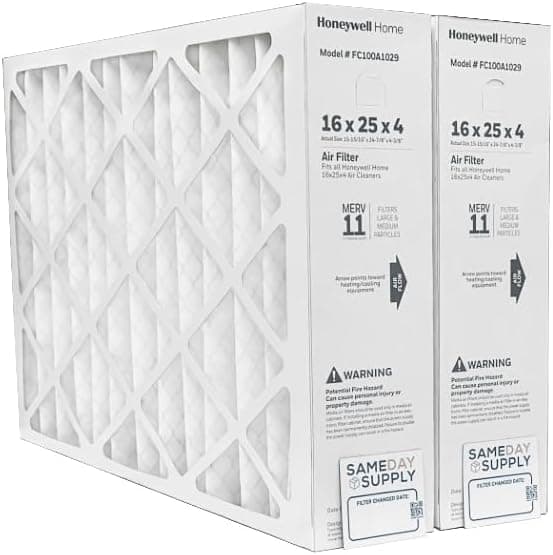
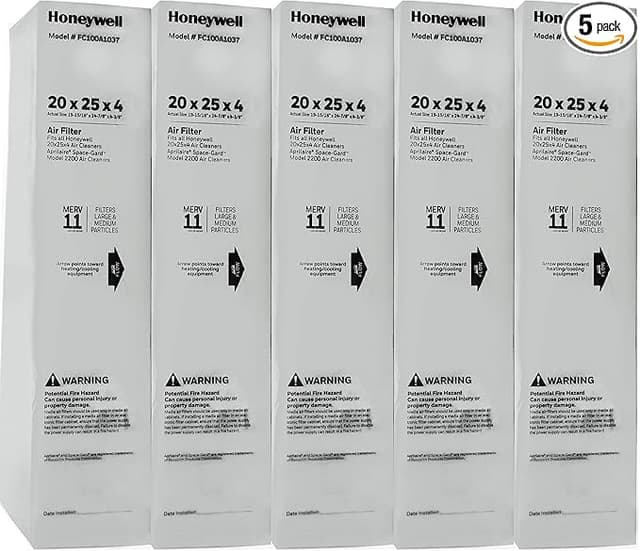
That's what the hardware store wanted for a single Honeywell media filter last spring — the genuine FC100A1037, MERV 11, the fat four-inch one that slides into the cabinet bolted to my furnace. One filter. And the thing's supposed to get swapped twice a year if you're paying attention, which means I was looking at over a hundred bucks a year to keep dust out of my own air. I stood there in the aisle doing the math like an idiot, and then I put it back on the shelf.
The compatible version I run now? I pay around $22 each, two in a pack, so call it $44 for a full year of filtering instead of $108. Same cabinet, same MERV 11 rating, arrows pointing the same direction. I've been running them for going on two years across two heating seasons and a summer of AC, so this isn't a one-and-done first impression. It's lived experience.
What the OEM actually buys you (and what it doesn't)
Here's the honest part nobody selling you the brand-name box will say out loud: a deep-pleat media filter is pleated paper in a cardboard frame. That's it. The Honeywell name on the FC100A doesn't add a secret layer. What you're paying the premium for is consistency — the OEM pleats are spaced a hair more evenly, and the cardboard frame is a touch stiffer. Real things. Just not $30-a-filter things, in my experience.
The compatible 20x25x5 I buy hits the same MERV 11, which is the number that matters for a house with a normal amount of dust and a dog that sheds like it's his job. MERV 11 grabs the fine stuff — pollen, the gray fuzz that builds on the return grille, the pet dander. If someone in your house has serious allergies and you've been told to run MERV 13, that's a different filter and a different conversation; I'd buy whatever your HVAC tech specced, OEM or not, and not cheap out. But for keeping a normal home clean and the blower breathing? MERV 11 is the workhorse, and the aftermarket one does it.
Does it actually fit the cabinet?
This was my nervousness too, because a media cabinet isn't forgiving — too loose and air sneaks around the filter instead of through it, which defeats the whole point. Install is genuinely three steps and I'm not padding that out: kill the system at the thermostat or the switch on the furnace, slide the old filter out of the cabinet slot, push the new one in with the airflow arrows aimed at the blower motor. The arrows are printed right on the frame. Don't overthink the direction — air goes toward the furnace, not away from it.
The compatible filter seats with a little resistance and sits flush against the gasket lip, which is what you want. I did notice the very first one I bought needed a gentle push to square up in the cabinet — the cardboard frame was maybe a millimeter wider than the Honeywell, so it caught on the slot before it slid home. Two seconds of wiggling and it dropped in. Annoying for two seconds. Not a dealbreaker.
The downside I'm not going to hide
The frame is the weak point. The OEM Honeywell cardboard is noticeably more rigid — you can hold it by one corner and it stays flat. The cheaper one flexes if you grab it wrong, and on one of my swaps I creased a corner pulling the spent filter out too fast in a cramped utility closet. It still sealed fine once it was in the cabinet, but if you're rough with it during install, you can dent the frame in a way that'd let a little air bypass. Handle it like it's slightly flimsier than the brand name, because it is. That's the trade for half the price.
The other small thing: packaging. The Honeywell comes shrink-wrapped and crisp. Mine showed up in a plain box, one filter with a slightly dinged edge from shipping. Cosmetic. The pleats were all intact and the media was clean. But if you like things to arrive looking premium, manage your expectations.
Why I don't let this slide
The reason I'll pay for filters at all — cheap or not — is that a clogged media filter is genuinely bad news, not marketing fear. When that four-inch pleat packs solid with dust, your blower has to fight to pull air through it. The furnace runs longer and hotter to hit the same temperature, your power bill creeps up, and in a real worst case the heat exchanger overheats and the safety limit trips your system off entirely on the coldest night of the year. I've felt the difference in airflow at the vents between a fresh filter and a six-month-old one. It's not subtle. So the question was never "should I filter" — it was "do I need to pay Honeywell prices to do it." I decided no.
So who should buy which?
If your system is under a manufacturer warranty that specifically demands OEM media, or your tech flagged a MERV 13 requirement for medical reasons — buy the genuine Honeywell and don't argue with it. The peace of a clean warranty claim is worth $30 to some people.
Everybody else with a standard Honeywell media cabinet and a normal house? I run the compatible 20x25x5, MERV 11, twice a year, and I have for two years with zero airflow complaints and a furnace that still kicks on every morning without drama. It does the same job for less than half the money. I crease a frame once in a while and I shrug, because I'm saving sixty-plus dollars a year to do it. I'd buy it again. I already have — there's a second one sitting in my closet waiting for the fall swap.