Troubleshooting & Analysis
The furnace that quit on the coldest night
It was February, maybe eleven at night, and the house just stopped getting warm. The furnace was running — I could hear the blower — but the air coming out of the vents had no push to it. My first thought was the worst one: dead furnace, emergency service call, a four-figure repair right before payday. I went down to the basement in my socks, pulled the filter access panel, and slid out the filter I'd "been meaning to change for a while."
It was gray. Not dusty-gray. Felted, matted, you-could-barely-see-light-through-it gray. The thing had basically turned into a wall. The blower was straining against it, the airflow had nowhere to go, and the system had started cycling on its high-limit safety because heat was building up around the heat exchanger with nowhere to send it. That's the part that scares me in hindsight — a starved furnace isn't just inefficient, it's the kind of thing that cooks a heat exchanger or trips a limit switch over and over until something gives.
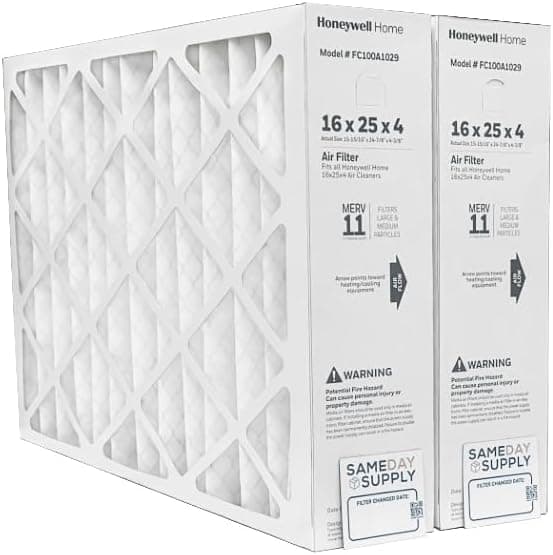
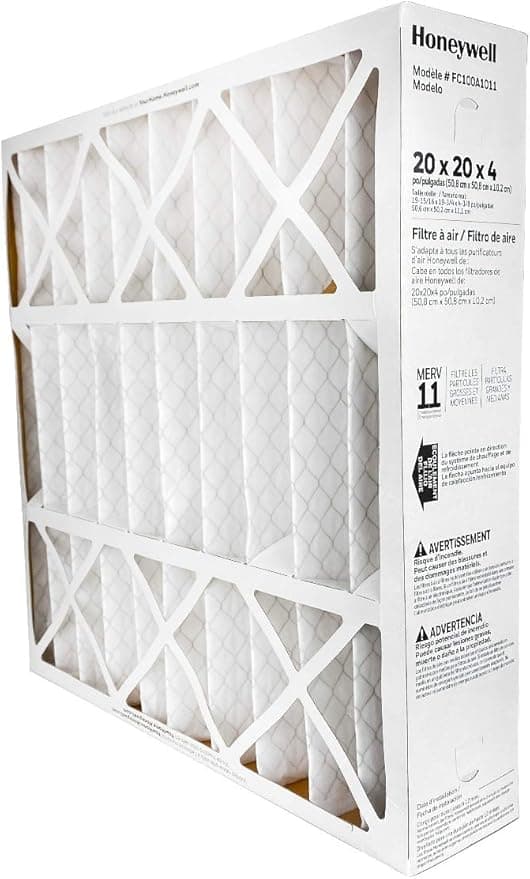
So that's the backstory to why I now keep a stack of these Honeywell-compatible HVAC filters on a shelf and actually swap them on schedule. Let me tell you what I've learned living with the cheaper ones.
The OEM price thing finally broke me
Here's the math that pushed me off name-brand boxes. A single OEM-branded pleated filter in my size runs me somewhere around $22 to $28 at the big-box store, and I'm supposed to change it every 90 days — more like every 60 in my house because I've got a dog and the furnace runs hard. Call it four to six filters a year. That's well north of a hundred bucks annually just to keep air moving.
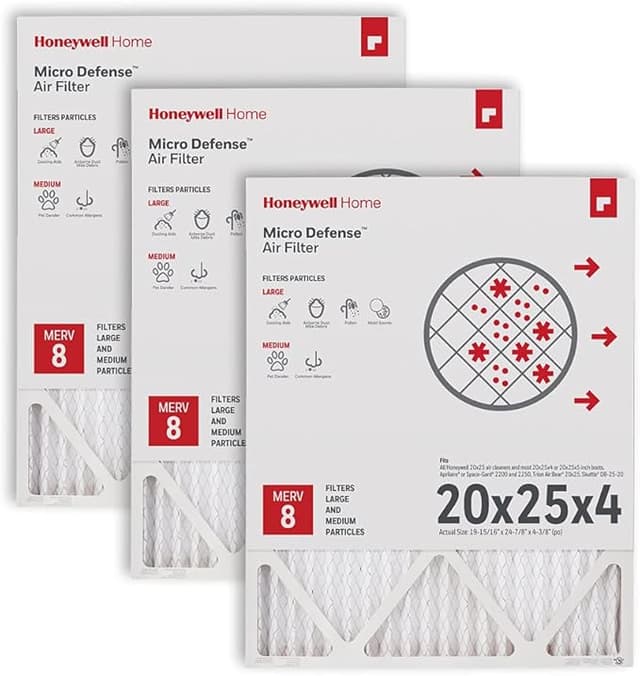
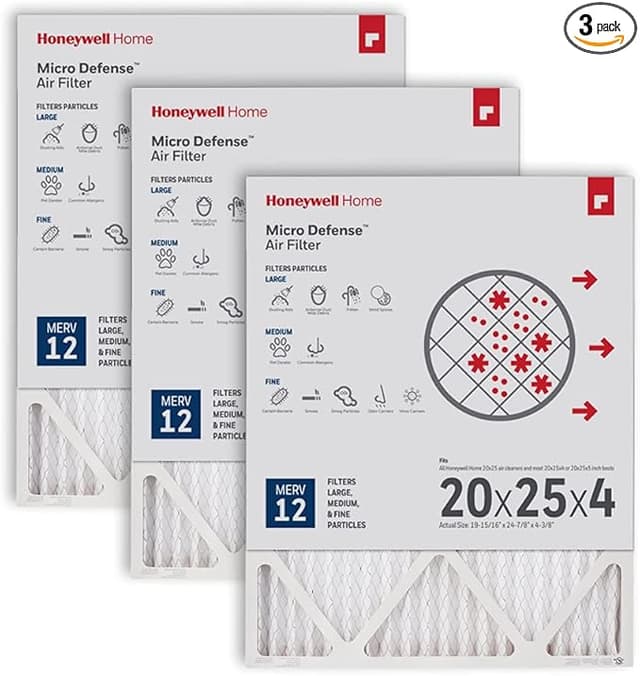
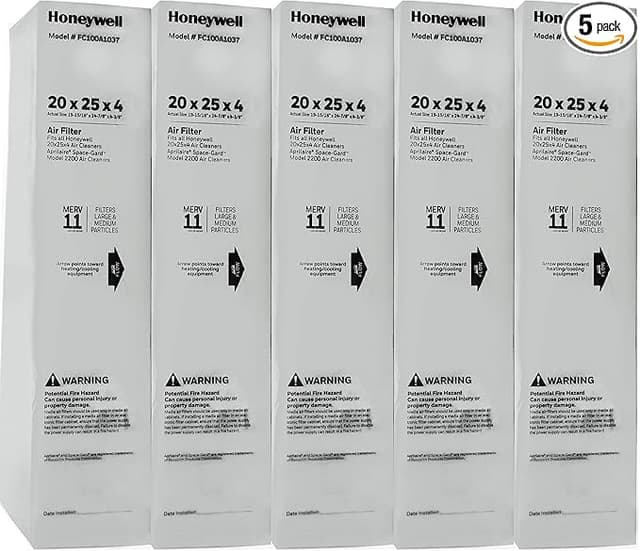
The compatible multipack I switched to lands closer to $8 to $11 per filter when you buy them several at a time. Same nominal size, same MERV-rated pleated media. Over a year I'm spending maybe a third of what the OEM boxes cost me, and — this is the real win — because they're cheap and already sitting on the shelf, I actually change them. The expensive ones I'd ration. A $25 filter you "stretch" for six months is a false economy. It's how I ended up in the basement in my socks.
Does it actually fit?
This is the part everybody's nervous about, and fair enough — an HVAC filter that's a hair off seats crooked and lets air sneak around the edge, which defeats the whole point. My honest report: the fit is good, with one caveat. The cardboard frame on the compatible ones is a touch lighter-gauge than the OEM frame. Not flimsy, but you notice it. When I slide one into the slot it goes in clean and sits flush, and the arrows on the frame make orientation obvious — arrows point toward the furnace, toward the blower motor, the direction air is traveling. Get that backwards and the pleats fight the airflow instead of working with it.
The install itself is nothing. Kill the system at the thermostat first — I shut it down so the blower isn't pulling while my hand's in there. Pull the old filter straight out. Slide the new one in with the arrow aimed at the motor. Done in under a minute. The only spot I've had to fuss was one filter where the frame had a slight bow from shipping; I flexed it back flat with my hands before it seated right. Minor.
How it performs against the name brand
Day to day, I genuinely can't tell the difference in airflow or in how the house feels. The pleated media catches what a comparable MERV rating should catch — the dust film on my furniture comes back slower, my allergy mornings got better after I started changing them on time, and the filter face loads up evenly when I pull it at the 60-day mark, which tells me air is moving through the whole surface and not just punching a hole in one spot.
Where's it a touch behind? The pleat count feels a little lower than the premium OEM filter, and I think the OEM media holds together marginally better at the very end of a long run. If you stretched both to four months, the OEM would probably still look structurally fine while the compatible one would be sagging. But I'm not stretching either to four months anymore, so that gap is mostly theoretical for how I actually use them.
The downside I'll say out loud
The packaging is cheap and the frames are lighter. That's the honest tradeoff. And once in a while one filter in a pack arrives a little crushed on a corner — I just flex it flat or, worst case, set that one aside for the garage unit. If you're someone who wants every filter to feel substantial and identical out of the box, the OEM experience is more polished. You're paying for that polish, though, not for cleaner air.
Who should skip these
If you've got someone in the house with serious respiratory issues and your doctor or HVAC tech specced a particular high-MERV OEM filter for a reason, follow that — don't experiment to save twelve dollars. And if your system's manual demands a specific OEM part to keep a warranty intact, read that fine print first.
For everybody else — a normal house, a normal furnace, a person who just wants clean air and a system that doesn't choke itself out in February — I grab the Honeywell-compatible multipack every time now. Same job, a third of the cost, and they're cheap enough that I actually change them on schedule. That last part is the whole ballgame. The best filter is the one you'll replace before it turns into a gray felt wall. I learned that the cold way.