Troubleshooting & Analysis
Two filters, one cart, and me standing there like an idiot
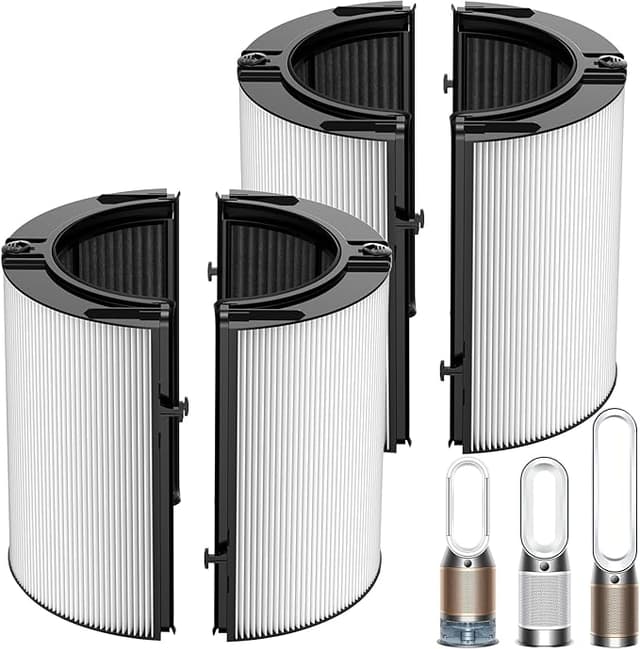
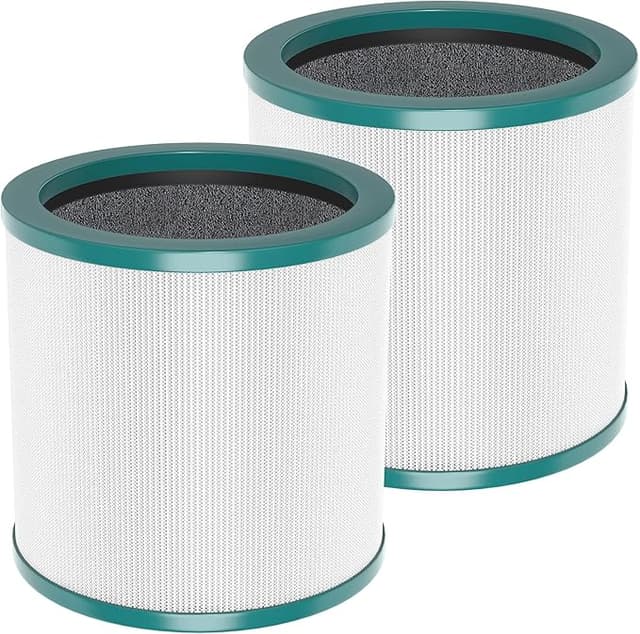
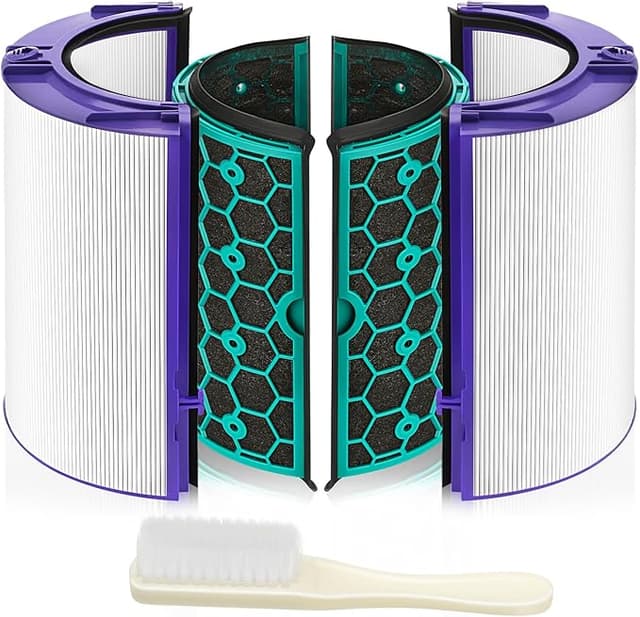
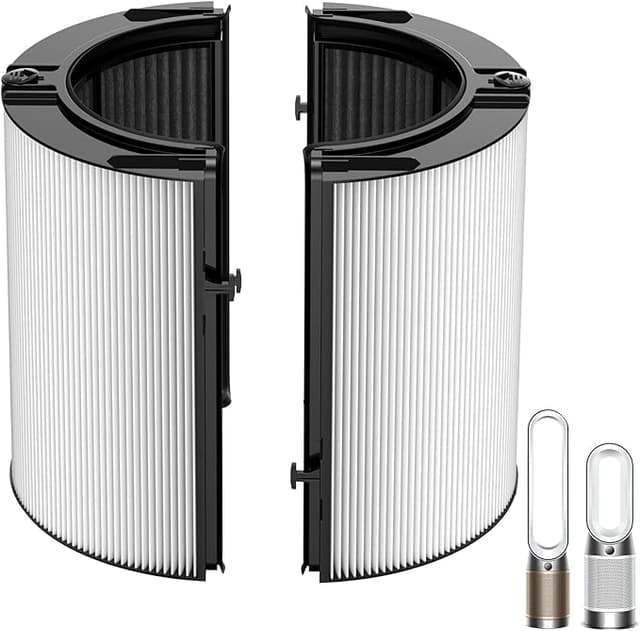
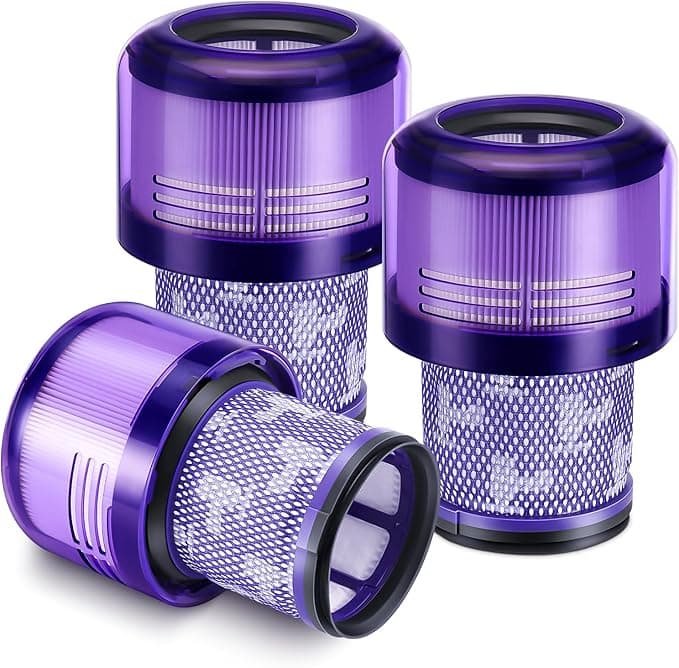
I had both of them open in browser tabs for about ten minutes. The genuine Dyson V11 filter — the blue-and-purple one, $29.99 on the day I looked. And a compatible washable one for $11.99, two-pack, so really six bucks each if you count it that way. My V11 was sitting on the kitchen counter with its little screen flashing the filter-maintenance light at me, and I just couldn't decide. Twenty bucks isn't life-changing money. But it's the principle. Why does a folded piece of foam and mesh cost thirty dollars?
I bought the cheap pair. Here's what actually happened over the next five months.
The fit — better than I expected, with one annoying caveat
The V11 filter lives up top, the round purple cap that twists out. Pull the bin, twist the filter counter-clockwise, it lifts straight out. The compatible one dropped in and twisted to the lock position on the first try — no shoving, no "is this seated?" second-guessing. The pleats lined up, the cap sat flush.
The caveat: the rubber gasket around the rim is a touch firmer than Dyson's. The first time I twisted it home it didn't give me that soft, satisfying seat. It felt a hair more plastic-y, a little stiffer in the turn. I actually pulled it back out to check I hadn't cross-threaded something. I hadn't. It just doesn't have the same hand-feel. After two or three swaps you stop noticing. But on day one it made me nervous, and I'm telling you so you don't panic the way I did.
Does it actually clean the air it's pushing back out?
This is the part people skip and it's the only part that matters. A V11 filter's job is to catch the fine stuff before the motor blows the exhaust back into your room — and if you've got a dog or a kid with allergies, that exhaust is going right past somebody's face.
I ran this thing as my daily driver. Two cats, hardwood and a couple of rugs, vacuuming maybe four times a week. The suction held. I did a dumb little test the first week — vacuumed a known-dusty corner with the OEM filter, emptied, then ran the same corner the next day with the compatible one. Bin fill looked the same. No visible dust plume out the back when I held a black sheet of paper near the exhaust, which is the cheap man's allergen check. The captured-percentage claims on the box are the captured-percentage claims on every box; I can't verify 99.9% in my kitchen. What I can tell you is my nose and my allergy-prone partner noticed exactly nothing different. Five months in, no change.
The real downside (there's always one)
Here it is, and it's about washing. Dyson says rinse the filter in cold water, no soap, squeeze, and let it dry 24 hours before you put it back. The OEM foam bounces back to its shape fast and dries a little quicker. This compatible foam held water longer — I gave it a full 24 hours and the inner core was still faintly damp, so I ended up leaving it closer to 36. If you're someone who washes the filter at night expecting to vacuum the next morning, you'll be annoyed. Put a slightly damp filter back in and the V11 will throw a fault and cut suction to protect the motor — ask me how I know.
The fix is stupidly simple: the two-pack solves it. Run one while the other dries on the windowsill. That's honestly the whole reason I'm glad I bought the pair instead of a single. Rotate them and the dry-time problem disappears.
Oh — and there's a faint plastic smell out of the bag for the first couple of days of running. Not chemical, not strong, just that new-foam thing. Gone by day three. Didn't smell it in the exhaust, only when I had my face right up at the filter.
Why you can't just ignore the light
A clogged filter on the V11 is not a "meh, later" problem. Airflow drops, the motor works harder to pull through a saturated filter, it runs hot, and the unit will throttle suction or shut the cleaning cycle short to save itself. You'll think the vacuum is dying when really it's choking on a filter you forgot about. Whatever filter you run, OEM or this one, the rule is the same: rinse it about once a month, dry it all the way, don't skip it.
So who should buy what
If your V11 is under warranty and you're the type who'd blame an $11 part for any hiccup the machine ever has, buy the Dyson filter and sleep fine. Same if you only ever want to own exactly one filter and never deal with rotation — the OEM dries faster and that's a genuine edge for a single-filter household.
For everyone else — me included — the math is hard to argue with. One genuine filter is $29.99. A two-pack of these ran me $11.99, and the V11 wants a fresh-ish filter roughly once a year if you wash and rotate properly. I'm getting two filters and a built-in dry-time backup for less than half the price of one Dyson part, doing a job I genuinely can't tell apart in five months of real use.
I'd buy it again. I already did, actually — grabbed a second two-pack for my mom's V11 last month. The stiff gasket and the slow dry are real, and now you know about both going in. For twenty dollars back in my pocket, doing the same work, that's a trade I'll keep making.