Troubleshooting & Analysis
The day my DP01 started smelling like a hot vacuum
I noticed it before I figured out what it was. That faint burning-electronics smell, the kind you get when a motor's working harder than it should. My Dyson DP01 had been running in the corner of the home office for — honestly, way too long. I'd lost track. The airflow had dropped so gradually I never clocked it. Then one humid afternoon the unit got warm to the touch and threw itself into shutdown, and I finally pulled the filter out.
It was gray. Not dusty-gray. Felted, packed, the pleats clogged solid with a year of cat hair and drywall dust from a bathroom reno. The thing hadn't been filtering for months; it had been choking. And here's the part that actually scared me: a saturated filter doesn't just clean less, it makes the motor pull air through a wall. On a DP01 that means the motor runs something like 15-20% hotter than it was built for. Run it like that long enough and you're not shopping for a filter anymore — you're shopping for a motor, or a whole new unit.
So I had a choice to make, same one you're probably staring at right now.
The price gap that started this whole experiment
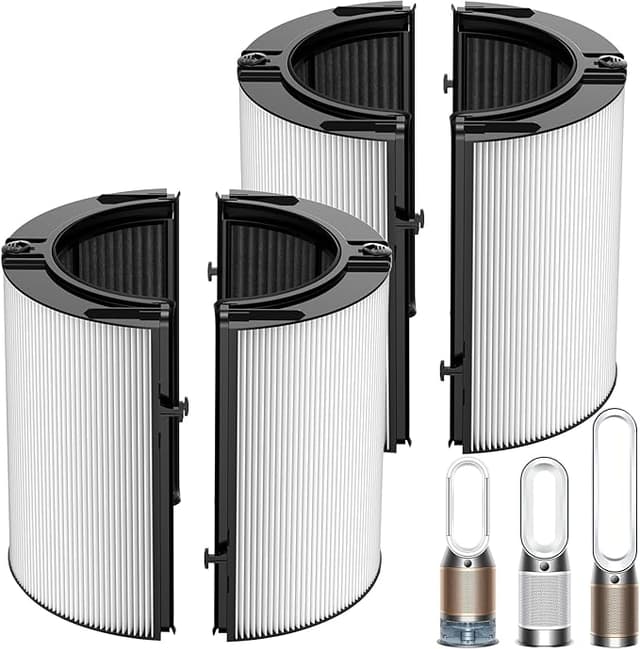
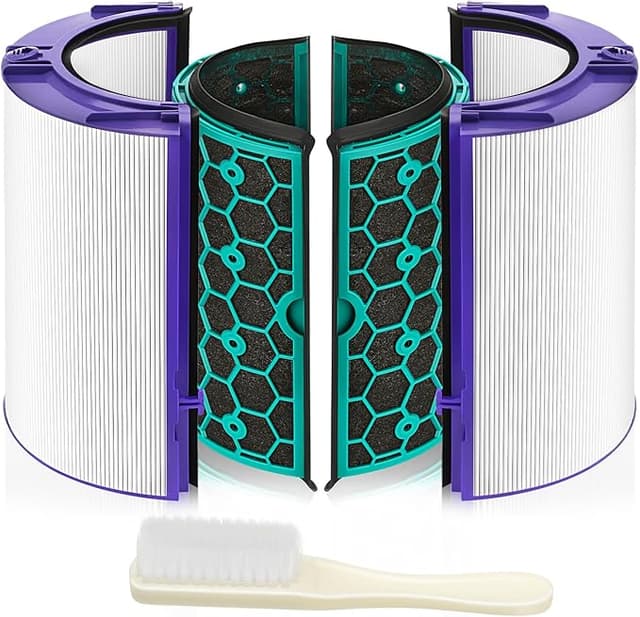
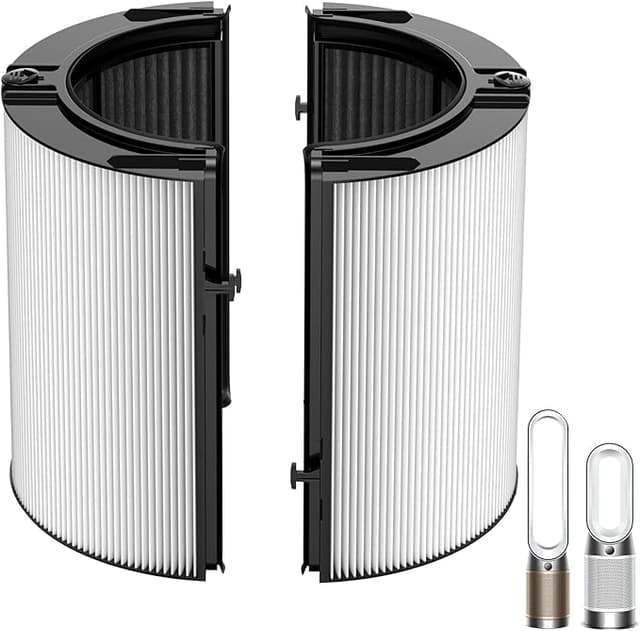
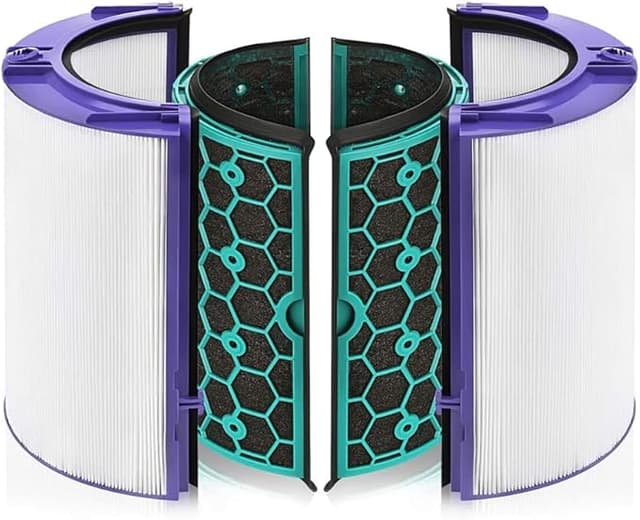
Dyson's own replacement for the DP01 — the OEM Filter R — runs me somewhere in the $15 to $25 range each, depending on where I buy and whether there's a "sale." Multiply that across a year if you're swapping on schedule and it adds up to real money for what is, mechanically, a pleated HEPA core and a foam wrap.
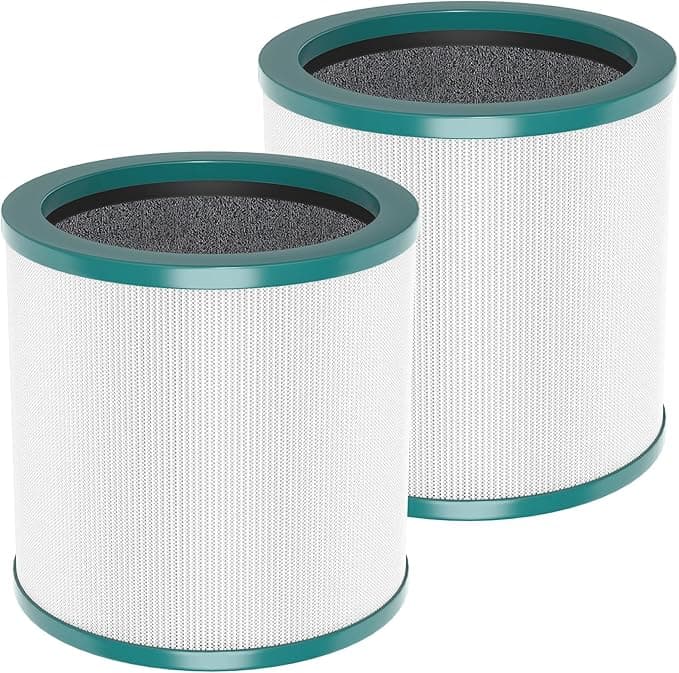
The compatible version I switched to comes in multi-packs. Cost per filter landed around $4 to $6. I bought a pack that covers me for a year of swaps for less than the price of two genuine ones. I'll be straight: a gap that wide makes me suspicious by default. Cheap usually means cheap for a reason. So I didn't take anyone's word for it — I just ran it and watched.
Does it actually seat right?
This is where most compatible filters earn their refund. Fit. I powered the unit off and unplugged it, twisted the housing cap counterclockwise, and pulled the old felted disaster out. Wiped the inside of the housing with a dry cloth first — there was a surprising amount of fine dust caked in there that the old filter had been shedding back into the housing. Then I dropped the new one in.
It seated. Clicked home, foam pre-filter sitting flush against the HEPA core, no gap around the rim that I could feel with a fingernail. I'll give you the honest nitpick, because there is one: the frame on the compatible filter is a hair looser in the housing than the genuine Dyson was. Not loose enough to rattle or leak around the edge — I checked by running my hand around the seam with it going — but you can feel it's not machined to that same obsessive Dyson tolerance. It sits right. It just doesn't sit with that smug factory snugness. For me, fine. If you're the kind of person that one detail will bug forever, you already know who you are.
What it does well, and where it's a step behind
First few days, there was a faint plastic smell on startup. Not chemical-harsh, just that new-injection-molded-foam thing. It aired out in about three days and I haven't smelled it since. Worth knowing so you don't panic and assume you got a dud.
Performance, though — this is the part that mattered to me. Airflow came right back to where I remembered the unit being when it was new. The office stopped having that stale, slightly-dusty feeling by the second day. I keep a cheap particulate meter on the shelf and the numbers it pulled were in the same neighborhood as I'd expect from the genuine filter. Same neighborhood, not pixel-identical. If I'm being a stickler, the OEM HEPA media feels a touch denser in hand, and I'd believe it edges out the compatible one on the very finest particles over a long run. For pollen, pet dander, dust, cooking haze — the stuff most of us actually run a DP01 for — I genuinely could not tell you the difference in daily use.
The real downside
The packaging is junk. Thin plastic sleeve, no rigid box, and one of mine arrived with a slightly creased pre-filter foam that I had to gently reshape before it sat flat. It worked fine after, but it's the kind of thing that tells you exactly where they saved the money. The OEM box-and-foam presentation is nicer. You're not buying presentation.
And look — replacement interval. Because these are cheap, the temptation is to leave one in forever like I did with the old one. Don't. The whole point is that swapping on time keeps your motor cool and your air clean. At four bucks a filter you have zero excuse not to swap on schedule, which is honestly the strongest argument for going compatible: cheap filters get changed, expensive ones get rationalized into staying too long. That's how I ended up with a unit cooking itself in the first place.
So who should buy what
If your DP01 is under warranty and you're the type who'd void it on principle, or you genuinely need the absolute peak of fine-particle capture for a medical reason — buy the genuine Filter R and don't think twice. That's the honest call for those folks.
For everyone else? I've now run the compatible Filter R through a full cycle, watched my numbers, smelled the air, and felt the motor stay cool. It fits, it filters, it costs a quarter of what Dyson charges. I bought the multi-pack so I'd actually change them on time, and I'd buy it again — I already have. My unit's been quietly humming along, cool to the touch, ever since.