Troubleshooting & Analysis
The click was the first thing that surprised me
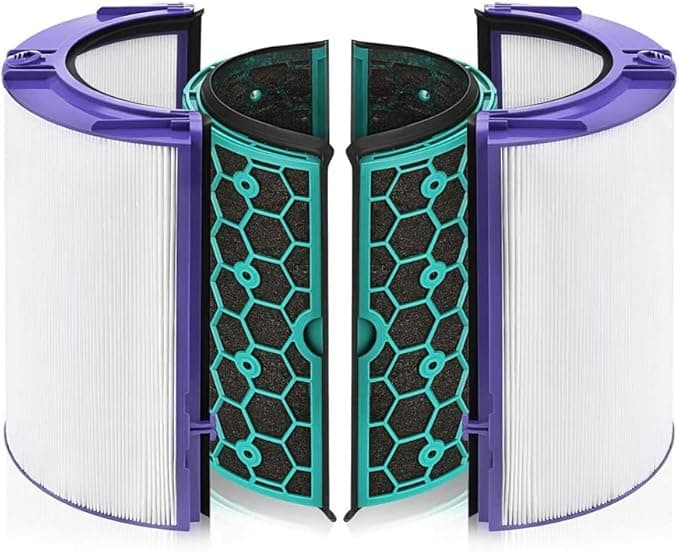
I'd braced myself for that cheap-knockoff feeling — you know the one, where the part wobbles in its slot and you spend ten minutes wondering if you broke something. Didn't happen. The compatible filter for my Dyson HP04 dropped into the bin housing and gave me that little seated click, the same one the original made. Honestly, I sat there for a second a bit annoyed at myself, because I'd already half-decided this thing was going to disappoint me before I even opened the box.
So let me back up and tell you why I was buying a third-party filter for a machine that cost me the better part of four hundred dollars in the first place.
The price math that pushed me here
Dyson filters are not cheap. You already know that — it's probably why you're reading this instead of just clicking "buy" on the official one. When a genuine replacement runs you in the $50–65 range and the unit reminds you to swap it roughly once a year (sooner if you run it hard, like I do in a dusty bedroom with a dog), you're looking at a recurring tax just to keep breathing clean air. The compatible filter I bought was a little over twenty bucks. Same job. That's a forty-dollar gap, every single year, for a part that ends up in the trash.
I did the boring spreadsheet thing. Over the life I'm realistically going to keep this HP04 — call it five, six years — sticking with OEM versus compatible is the difference between a couple hundred dollars and basically pocket change. For a filter. A consumable. That's the part that always got under my skin.
Putting it in — what to actually expect
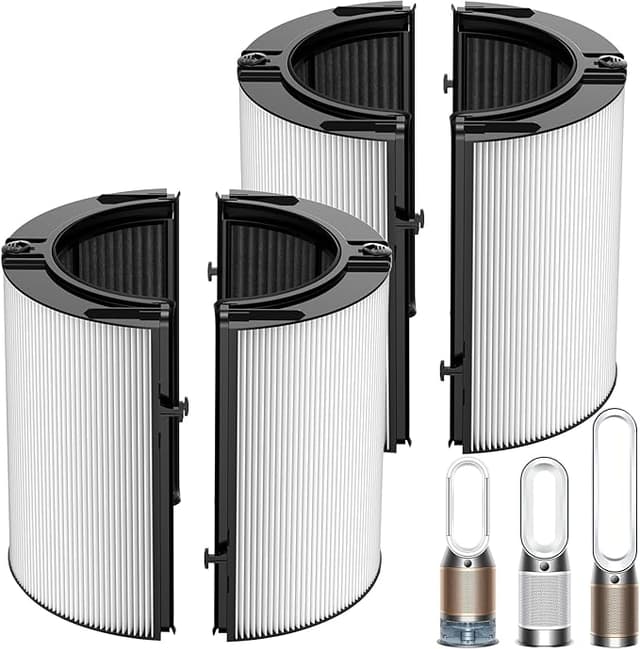
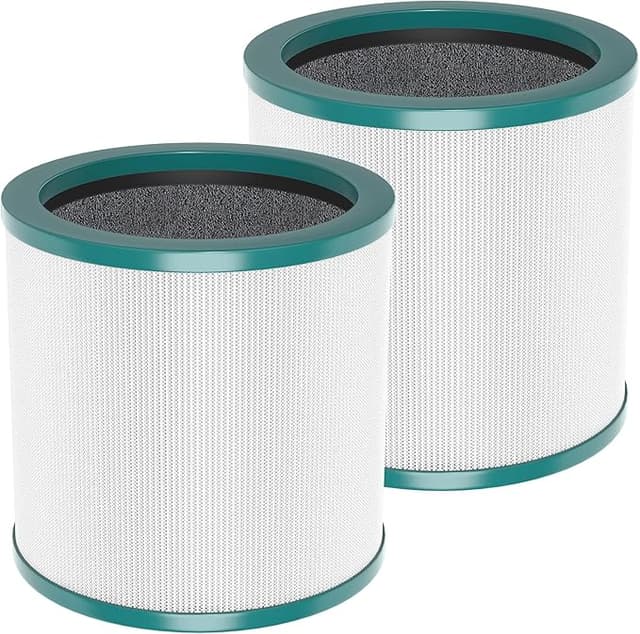
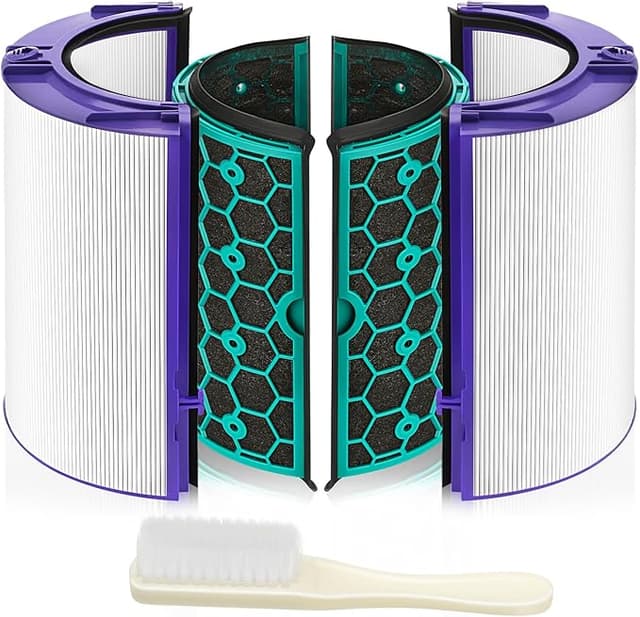
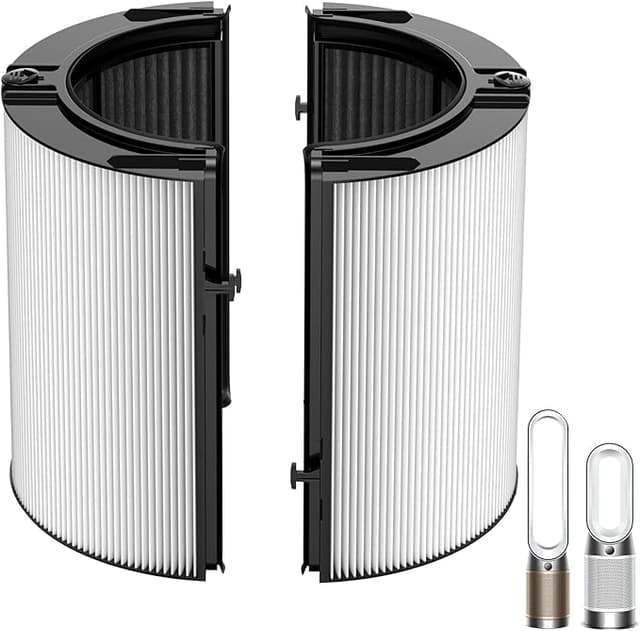
The swap is genuinely a two-minute job and you don't need anything. Pop the dust bin off the base, pull the old filter straight out (mine came out with a satisfying tug — there's usually a gray fuzz of trapped dust on the old one that'll make you glad you're replacing it), and the new one goes in the same orientation. This one's the washable type, so the first time I actually rinsed it under the tap, let it dry fully overnight, then seated it. That drying step matters — don't rush it back in damp. I left mine out a full 24 hours on a towel to be safe.
One honest note on fit: the frame on the compatible unit felt a hair looser than the genuine Dyson when I first held the two side by side. Not rattling-around loose — but if you ran your thumb along the seam you'd notice the molding isn't quite as crisp. Once it's clicked into the bin, though, it sits flush and I've had zero issue with air leaking around the edges. The seal is where it counts, and the seal held.
How it actually performs
This is the part you care about. After the swap, suction and airflow came right back — the HP04 had gotten noticeably weaker over the prior months, that lazy "is this thing even on?" feeling, and the new filter snapped it back to where it was when I first set it up. The unit's own air-quality readout dropped back into the good range within an evening of running. I'm not going to pretend I ran lab tests with a particle counter; I didn't. But the machine's onboard sensor, my own nose, and the dust I'm no longer wiping off the nightstand every two days all agree it's pulling its weight.
Where's it a touch behind OEM? If I'm being picky — and you should want me to be — I think the genuine filter media feels a little denser when you handle it, and I'd guess the original holds up marginally longer before it saturates. I'm planning to check mine more often because of that rather than blindly trusting a calendar. That's the trade. Slightly more attention from me, forty dollars less from my wallet.
The downside I won't gloss over
For the first two or three days there was a faint plastic smell when the unit ramped up — that new-injection-molding odor. Mild, gone by day three, and running the purifier on high near an open window cleared it faster. But it's real and you'll notice it, so I'd rather you hear it from me than feel ambushed. The packaging's also nothing to write home about — thin cardboard, no fancy molded insert. Doesn't affect the filter. Just don't expect the Dyson unboxing experience.
Why you can't just ignore a tired filter
Quick reality check, because this isn't only about clean air. A clogged filter chokes the airflow the HP04's motor depends on, and a starved motor runs hot — that's how these machines die early. Worse, a saturated filter stops trapping and starts letting dust slip back into the room you're trying to keep clean. So a "I'll swap it eventually" filter isn't a neutral choice; it's slowly working against both your lungs and the machine. Whichever filter you buy, the lesson is the same: don't stretch the interval.
So who should buy what
If your HP04 is under warranty and you're the type who'd lose sleep over a non-genuine part possibly being used as an excuse in a claim — go OEM, pay the premium, sleep fine. Same if you have a serious medical reason to want the absolute tightest filtration spec on paper.
For everyone else — which is most of us, running this in a bedroom or living room to cut dust and allergens — the compatible filter is the one I reach for. It fit, it clicked, it brought my suction back, and it did it for less than half the price. The looser frame and the few-day plastic smell are the honest cost of that savings, and for forty bucks a year I'll take that trade every time. I already have, twice now. I'd buy it again without thinking twice.