Troubleshooting & Analysis
Sixty-five dollars. That's what Dyson wanted for a replacement filter for my HP01 the last time I checked the official store. Sixty-five dollars for a pleated cylinder of carbon and HEPA media that I'm supposed to swap out roughly once a year. I stood there in the app with my thumb hovering over "buy," did the quick math on what I'd already sunk into the machine itself, and just closed the tab. The compatible one I ended up with cost me $19.99 — and yes, I felt like an idiot for almost paying triple.
So here's the honest write-up after living with the cheaper filter, because I know exactly the spot you're in right now. You own the HP01, the app or the light on the unit is nagging you, and you're trying to figure out if the $20 thing is going to cook your motor or just quietly do its job.
The price gap is the whole story
Let me put real numbers on it. OEM, depending on where you catch it, runs $55 to $65. The compatible filter I've been running came in just under twenty. If you actually follow Dyson's once-a-year guidance, that's a $45 swing every single year you own the machine. Keep the HP01 for five years — and these things last if you don't abuse them — and you're looking at over two hundred dollars in filters alone versus about a hundred. That's not a rounding error. That's a tank of gas every year for, near as I can tell, the same captured dust.
Does it actually fit the HP01?
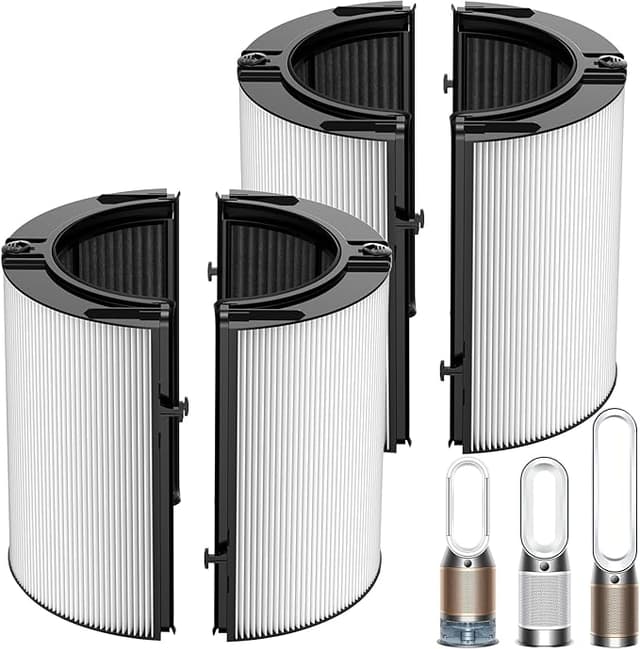
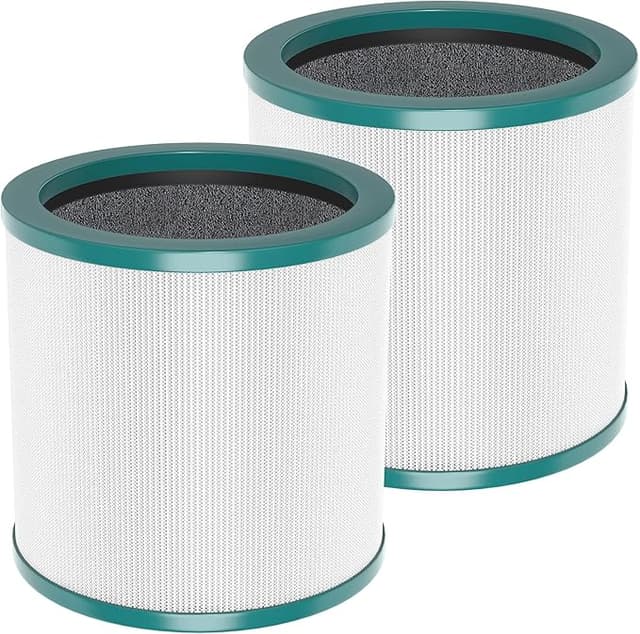
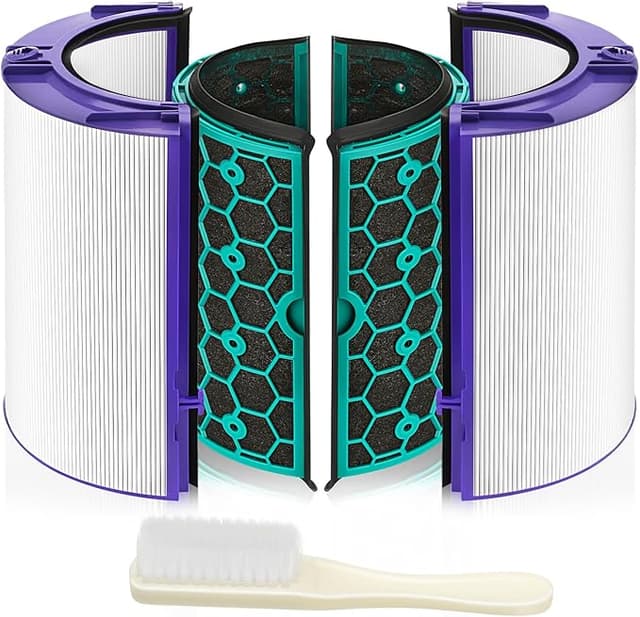
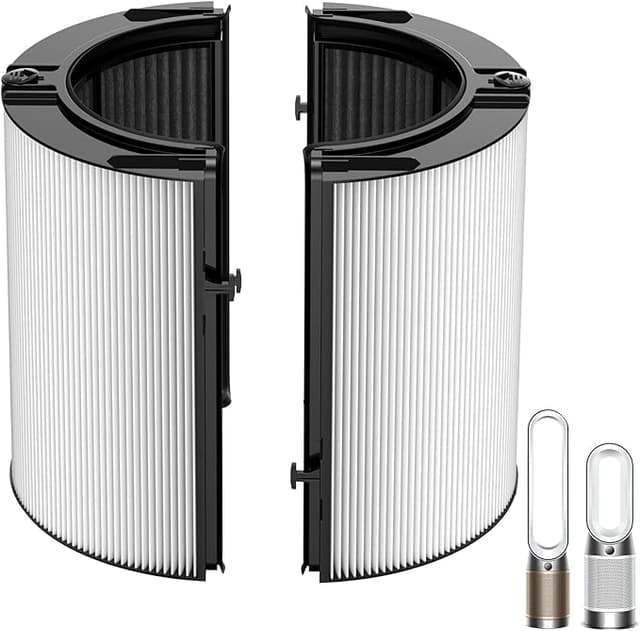
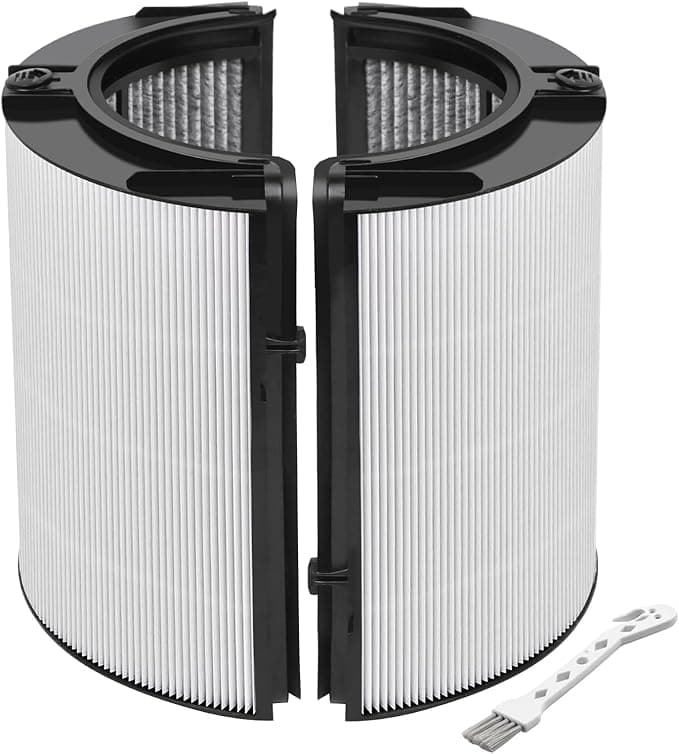
This was my real worry, more than performance. Dyson parts have that snug, engineered feel and I figured a third-party copy would be sloppy. The install itself is dead simple either way — pop the dust bin off, pull the old filter straight out, drop the new one in, seat it. On mine it's a washable type, so I rinsed it under cold tap water until the runoff went clear, then let it dry on the counter for a full day before putting it back. Don't shortcut that drying step. Wet media back in the housing is how you get a musty smell that haunts you for a week.
The fit? Ninety-five percent there. It seated and the unit fired right up, no error. But I'll be straight with you — the frame on the compatible one is a hair less precise than the Dyson original. There was the tiniest bit of play before it clicked home, where the OEM part drops in like it was machined for that exact slot. Once it's in and the bin is back on, it holds fine and I've had zero rattle. But that first install, you notice the difference in tolerance. If you're the kind of person who's bothered by a filter that doesn't snap in with authority, that'll bug you.
How it actually performs
Suction and airflow came right back after the swap, which was the point — my old filter was clearly choked and the machine had gotten weak and loud trying to push air through it. New filter in, it went quiet again and you can feel the throw across the room like when it was new. On dust and the general pollen misery I deal with every spring, I genuinely can't tell a difference from the Dyson media. It grabs the fine stuff and my surfaces stayed cleaner.
Where it's a touch behind: the carbon layer. The OEM filter has always knocked down cooking smells and that stuffy closed-room odor a little faster. With the compatible one, kitchen smells linger maybe a few minutes longer before the unit catches up. It's subtle. If you mostly care about particulates and allergens, you'll never notice. If you bought the HP01 specifically as an odor killer, the OEM carbon has a slight edge.
The downside nobody mentions
Two real ones. First, the plastic-and-carbon smell out of the bag. The first two or three days, especially when the unit ran on high, there was a faint new-filter odor — not chemical-harsh, but present. It faded completely by day four. Second, the packaging is cheap. Thin plastic sleeve, a sticker, no box. It works, but it doesn't arrive feeling like a $20 product, let alone a $65 one. Neither of these affects how it filters. They just remind you that you bought the budget option.
Why you can't just ignore the warning light
Worth saying plainly because people stretch these way too long: a clogged filter isn't a "meh, later" problem on the HP01. When the media saturates, the motor has to fight to pull air through it, and that extra load means heat. Run it choked long enough and you're stressing the motor — the expensive part — to save twenty bucks on the cheap part. Worse, a packed filter can start letting trapped dust get pushed back into the room, which defeats the entire reason you own an air purifier. Whatever filter you pick, OEM or this, swap it on schedule.
So who should buy what
Buy the genuine Dyson filter if you're still under warranty and the paranoid part of your brain won't let you risk it, or if odor control is your number-one reason for owning the thing — that carbon edge is real, if small. For everyone else? I run the compatible one in my bedroom HP01 and I've already reordered it once. Same restored airflow, same clean air I can actually feel, for roughly a third of the price. The looser frame and the two-day break-in smell are the toll you pay, and for forty-five bucks a year back in my pocket, I'll pay it every time. I have, and I'm not switching back.