Troubleshooting & Analysis
Sixty-two dollars. For a filter.
That's what Dyson wanted me to pay to keep my DP01 breathing. I stood there in the app, finger hovering over "add to cart," doing the kind of quick ugly math you do when something feels wrong. The DP01 sips a fresh filter roughly twice a year if you run it like I do — bedroom, basically 24/7 during allergy season. So call it $120-plus a year just to feed a machine I already paid a few hundred bucks for. The compatible Filter C I ended up buying? Twenty bucks, give or take, depending on the week. That's not a discount. That's a different sport.
So I did the thing the Dyson forums tell you not to do. I bought the cheap one. Here's how it actually went.
What you're really paying for with OEM
Look, Dyson's filter isn't a scam. The genuine unit is well-made, the seal is dead-on, and the branded HEPA media is legitimately good. But you're paying a brand tax on a consumable. A consumable. This is a part you throw away and replace on a schedule — it is not the motor, it's not the sensor array, it's the part designed to get dirty and die. Paying premium-product prices for the disposable bit always rubbed me the wrong way, and the gap here is just too wide to ignore. Three compatible filters cost less than one of theirs. Three years of clean air for the price of half a year of theirs.
Does it actually fit?
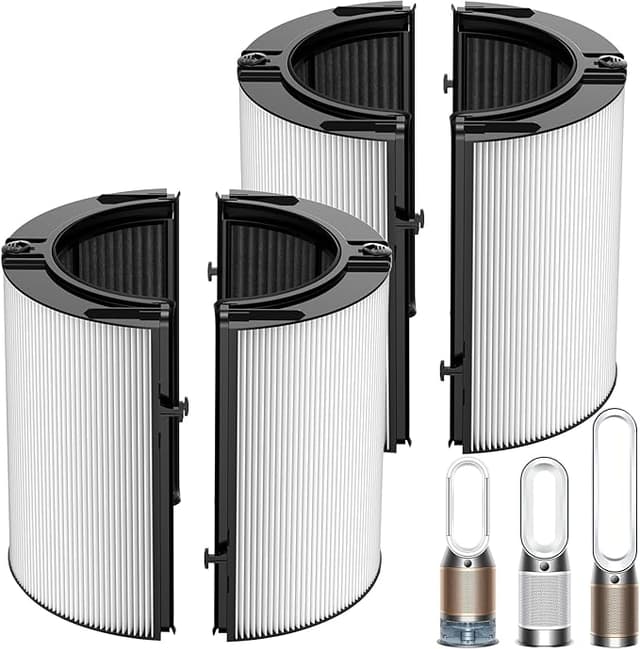
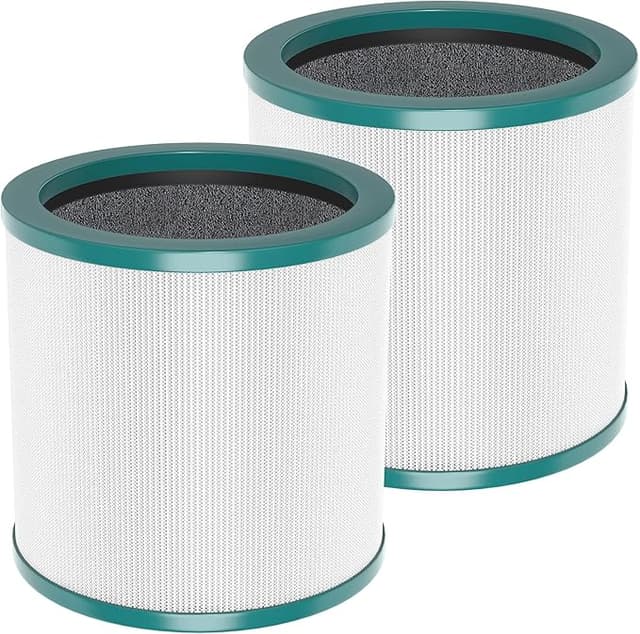
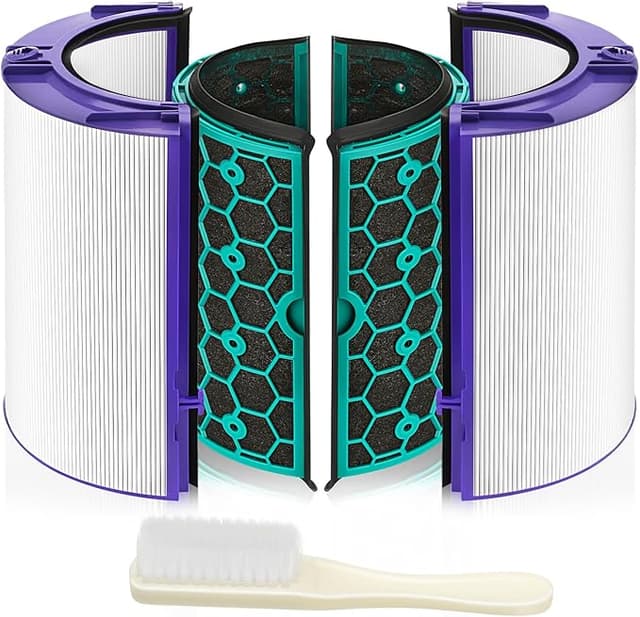
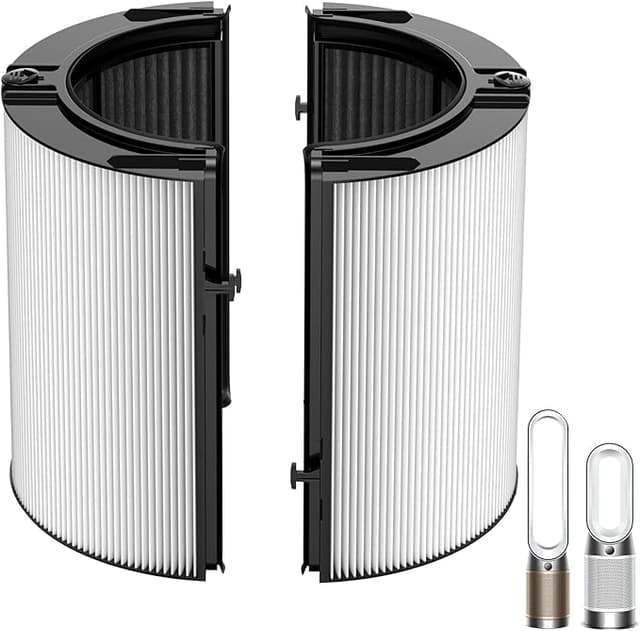
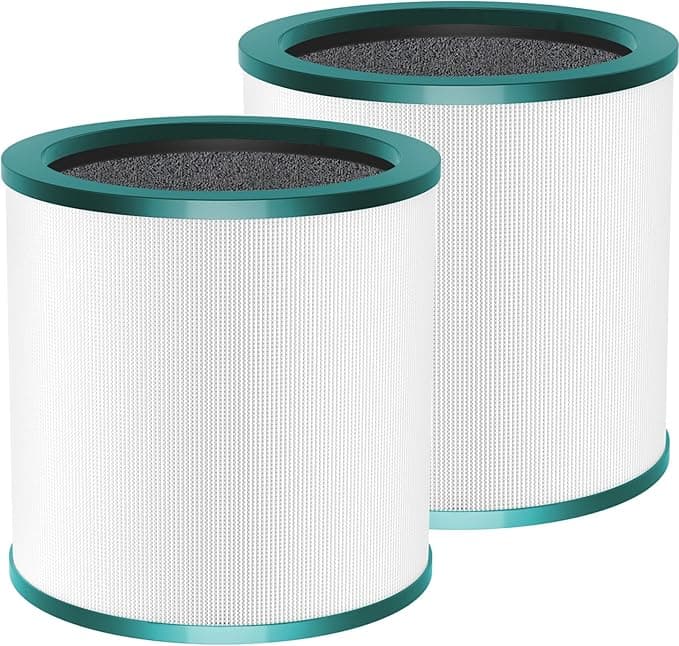
This was my real worry. Aftermarket parts live and die on fit, and a filter that doesn't seat right is worse than no filter — it lets dirty air sneak around the edges. So the first thing I did when Filter C showed up was pop the old one and compare them side by side on the counter.
The swap itself is nothing. Open it up, pull the spent filter, drop the new one in, close it back up. On mine it took maybe forty seconds. The compatible filter went in with the same little click the original gives you when it's home — and that click matters more than people think. It's the feedback that tells you the gasket's compressed and you're not running an air leak.
Honest note though: the frame on the compatible one is a touch — and I mean a touch — less rigid than Dyson's. The OEM frame feels machined. This one feels molded. When you press it into place there's the faintest bit of give that the genuine part doesn't have. Did it affect the seal? No. It sat flush, the unit ran without that whistling you get from a bad fit, and I checked the edges with my hand near the intake. No leak I could feel. But I'm telling you it's there because you'll notice it too.
Four months in
I ran it hard. Spring in my area is brutal — pollen on every flat surface, the car turns yellow — so the DP01 was working overtime in the room where I sleep. The particle sensor on the unit is my honest scorecard here, and the compatible filter pulled the air-quality reading back down to "good" just as fast as the Dyson media ever did after I'd open a window or the cat got rowdy. Dust on the nightstand dropped back to its usual once-a-week level. My morning congestion, the stuff that tips me off when the air's gone stale, stayed gone.
Where's it a hair behind? Longevity, I think. The genuine media seems to hold its airflow a little longer into its life before you feel the machine pushing harder to move air. With Filter C I felt it start to choke up maybe a few weeks sooner than I'd expect from OEM. Not dramatically — but at this price I'm replacing it more freely anyway, so I genuinely don't care. Cheaper filter, swapped a little more often, still way ahead on cost.
The one downside nobody warns you about: the first two or three days, there's a faint plastic-and-cardboard smell on startup. New-filter smell. It's the fresh media and the budget packaging off-gassing, and it burned off completely by day three. The cheap packaging, by the way, is exactly what you'd guess — thin plastic sleeve, no fancy box. Doesn't matter. It's going in a machine, not on a shelf.
Why I don't let it ride past its date
Here's the part I won't soft-pedal. A loaded-up filter is the actual risk, OEM or not. Once the media saturates, the DP01 has to strain to pull air through it, the unit runs hotter and louder, and worst of all it stops doing its one job — it can start kicking the dust it already caught back out into the room. The whole point is clean air, and a dead filter quietly hands you dirty air while the light still glows like everything's fine. So whatever you buy, swap it on schedule. The low price of the compatible one is exactly why I never stretch a filter past its life anymore — I used to baby the expensive Dyson one for an extra month or two. Now I just replace it. That's the real upgrade.
So who should buy what
If you're the type who needs the absolute longest service life per filter, or you simply won't trust anything without the Dyson name molded into the frame, buy OEM — you'll get a marginally sturdier part and sleep fine. No argument from me.
Everybody else: I've now run compatible Filter C through a full nasty allergy season in the room I actually sleep in, watched my own sensor confirm it, and lived with its one small smell quirk and its slightly softer frame. For roughly a third of the price, doing the same job, I'd buy it again. And I have — there's a spare sitting in my closet right now, because at this price, why wouldn't there be.