Troubleshooting & Analysis
I didn't believe a $20 cartridge could be fine either
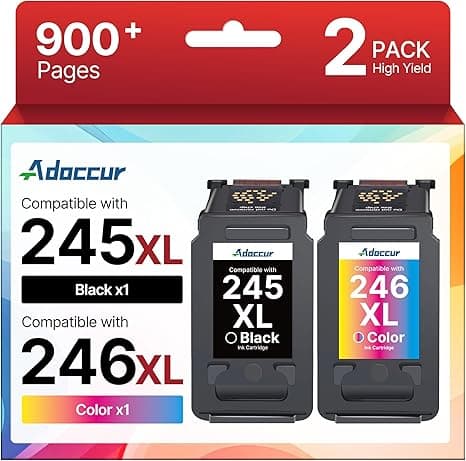
Look, I'll just say it up front: the first time I bought a compatible 245XL for my Canon, I was sure I was about to ruin a perfectly good printer. Twenty-something bucks for the thing the OEM wanted nearly double for? My gut said it'd clog the heads, streak every page, or just sit there blinking a low-ink error two days after I installed it. I've been burned by cheap stuff before. So I went in fully expecting to write the angry review.
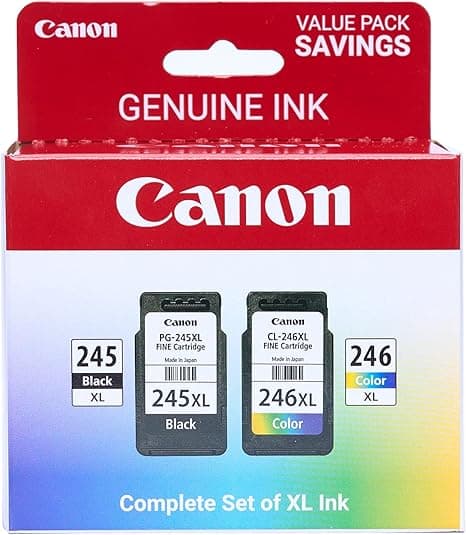
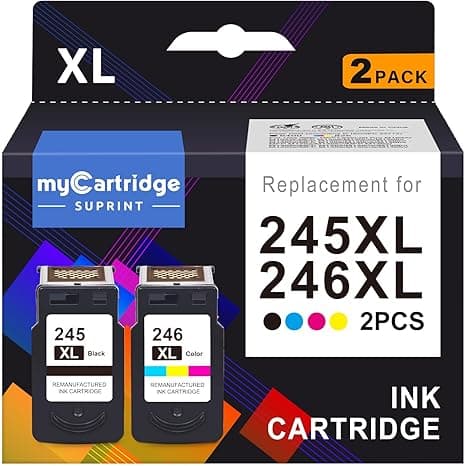
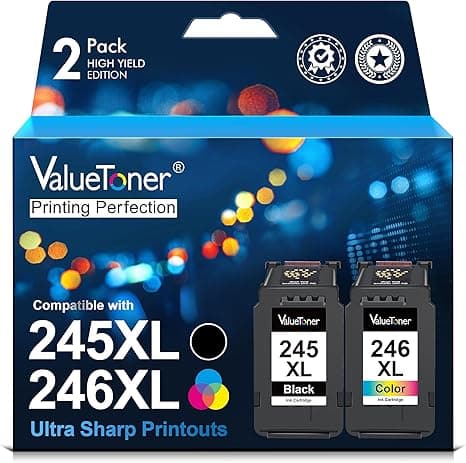
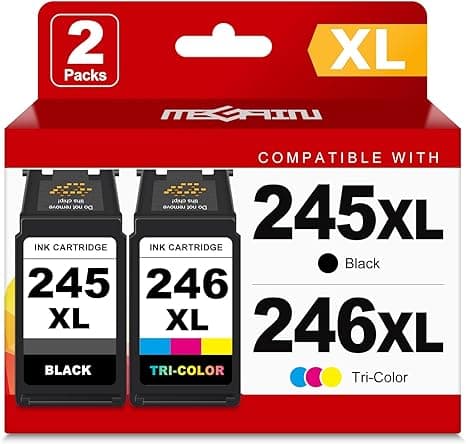
That was a Canon running the 2924/302/2820 line, and I needed to print a stack of shipping labels and a kid's school project the same night. The OEM cartridge at the store was the kind of price that makes you actually pause in the aisle and do math you don't want to do. The compatible 245XL was sitting right next to it for about half. So I grabbed the cheap one, told myself I'd return it if it was garbage, and drove home half-annoyed at myself.
The price gap is the whole reason you're reading this
Here's the concrete part, because vague "save money!" talk is useless. The OEM high-yield runs you somewhere in the $35–$40 neighborhood depending on where you shop. The compatible 245XL I've been buying lands around $18–$20. Call it a $20 gap per cartridge. That's not nothing.
Now do the year. If you print a normal home/home-office amount — labels, returns, the occasional 30-page PDF nobody needed to print — you're going through maybe four or five high-yield black cartridges a year. At a $20 savings each, that's roughly $80–$100 a year you're handing the brand for the privilege of the name on the box. Over the life of a 2924 that you'll keep for three or four years, you're talking real money. The kind that pays for the printer itself a couple times over.
And the part that surprised me: the yield held up. Canon markets the 245XL as high-yield, and the compatible one I used didn't quietly give me half the pages to justify the lower price. I got through that whole label-and-homework night plus weeks after on a single black, which is exactly what I'd expect from the OEM.
Does it actually fit and seat right?
This was my big fear and it turned out to be the least dramatic part. You open the cover, wait for the carriage to slide over and stop — don't rush it, let it settle — then press the little tab to pop the old cartridge out. The new compatible 245XL went in the same slot, same orientation. Pull the protective tape off first (I almost forgot, which would've been a mess), then push it down until you hear the click. That click is the tell. If you don't hear it, it's not seated, and the printer will throw a fit.
Mine clicked first try. I ran a test print, the alignment page came out clean, and that was it. No re-chipping, no error dance, no "non-genuine cartridge" nag screen that some people warn about — though I'll get to that, because it's not nothing.
The honest downsides — and there are a few
I'm not going to pretend this is identical to OEM, because it isn't, and a review that says everything's perfect is a review you shouldn't trust.
First: the plastic and the build feel cheaper in your hand. The cartridge body is a little lighter, the packaging is the thin blister kind, and the print contacts don't look as precisely finished as Canon's. It works, but you can feel where the money got saved.
Second, and this is the real one — the "non-genuine" warning. On some firmware versions, the Canon will pop a message saying it doesn't recognize the cartridge, sometimes telling you ink-level monitoring is disabled. On mine it showed up once, I held the stop button for a few seconds like the prompt said, and it cleared and printed fine. But the practical cost is that the on-screen ink gauge gets dumb. It either stops tracking or guesses, so you can't fully trust the little ink bar. I just keep a spare cartridge in the drawer and go by how the prints look instead. Faded or streaky text is your real low-ink signal, not the meter.
Third: color consistency was a hair behind on glossy photo prints. For text, spreadsheets, labels, forms — I genuinely could not tell the difference from OEM, and I went looking. But on a full-bleed photo, the compatible was a touch less punchy in the deep blues. If you're printing your kid's birthday photos to frame, OEM might be worth it. For literally everything else I print, it didn't matter.
Why a dead or failing cartridge is more than an annoyance
People underrate this until it bites them. Running a Canon down to a truly empty or half-clogged cartridge isn't just "oh, faded page" — letting the heads run dry or printing through a starved cartridge is how you get clogged nozzles, and clearing those eats even more ink in cleaning cycles. A cartridge that dies mid-job, the night before something's due, is the actual nightmare. The whole point of keeping a cheap compatible on hand is that you swap the second the text goes light and never let the machine limp.
That's the other quiet win of the price: at $20 a pop, I keep two spares in the drawer without flinching. Back when I paid OEM, I'd run a cartridge way past where I should have, just to squeeze it, because buying the next one stung. Cheaper ink actually made me treat the printer better.
The verdict — who should skip this, and why I keep buying it
Buy OEM if you print photos for a living, or if you're the type who will lose sleep over a disabled ink gauge and a one-time warning screen. There are people for whom the brand-name certainty is genuinely worth the extra twenty bucks a cartridge, and I'm not going to talk them out of it.
But for the rest of us — the 2924/302/2820 sitting on a desk printing labels, returns, homework, the occasional contract — the compatible 245XL does the same job for about half the price. I came in expecting to hate it, ran it through everything I normally print, and the only real catches were a dumb ink meter and slightly softer photo color. Honestly? For a $20 saving per cartridge, doing work I genuinely can't distinguish from OEM on text, I'd buy it again. And I have — three times now.