Troubleshooting & Analysis
Two carts on the shelf, one cart of doubt
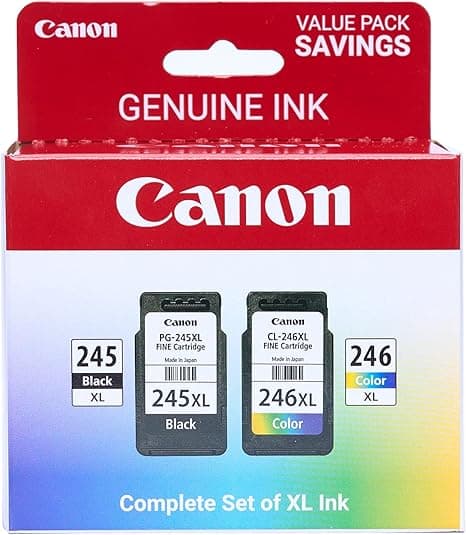
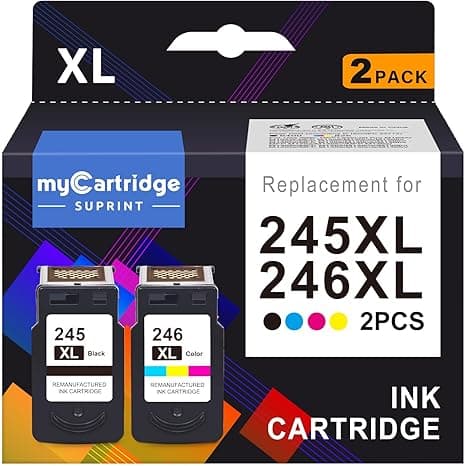
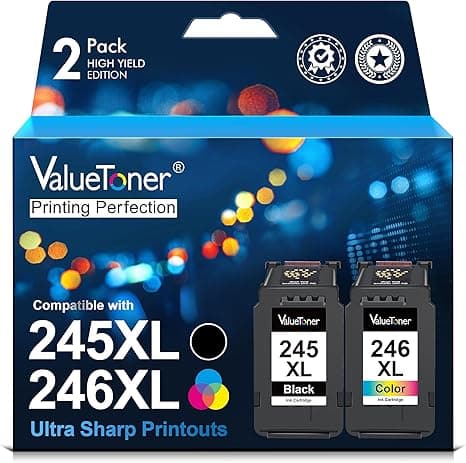
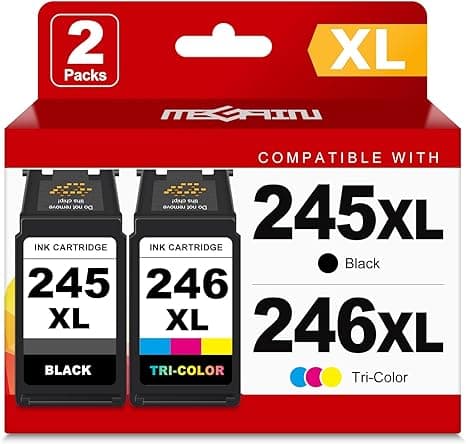
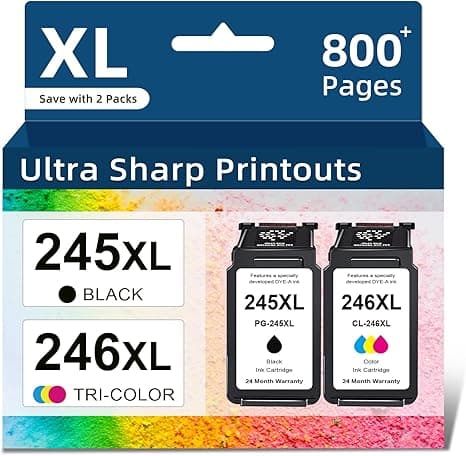
I stood in the office-supply aisle holding a Canon 245XL in my right hand and the compatible version of the same cartridge in my left, and I did the dumb thing everybody does — I just looked back and forth between them like the answer was going to appear. The Canon-branded one rang up around $34. The compatible 245XL? Right around $16. Same high-yield XL claim. Same printer on the box: the 2924, the 302, the 2820. And the only thing standing between me and twenty bucks was a feeling in my gut that the cheap one was going to gum up my carriage or print like a fax machine from 1998.
I bought both that day. The OEM because I was scared, the compatible because I'm cheap and curious. Then I ran them head to head in my own 2820 for the better part of a year. Here's what actually happened — the good, and the stuff nobody on the listing tells you.
The price gap is not small, and it compounds
Let me do the math the way it actually hits your wallet, because "50% less" sounds abstract until you live it. I burn through roughly four black cartridges a year — I print shipping labels, my kid's homework, the occasional 30-page PDF I should've just read on screen. At OEM prices that's about $136 a year on black ink alone. At the compatible price it's closer to $64. That's $72 a year, every year, on one printer, for a machine that probably cost me less than two sets of OEM carts to begin with.
That's the part that flipped me. It's not the $18 you save on one trip. It's that the OEM model quietly assumes you'll re-buy their ink forever at a markup that dwarfs the printer's own price. The compatible 245XL breaks that loop. And "running out of ink at the wrong moment" — the boarding pass, the contract due in twenty minutes — that's a real Canon-printer nightmare, and it stings a lot less when a backup cart costs $16 instead of $34. I keep two spares in the drawer now. I never did that at OEM prices.
Does it actually fit? Yes — with one honest caveat
Fit was my biggest fear and it turned out to be the least of my problems. The install is the same dance as the original: pop the cover, wait for the carriage to slide over and stop, press the little tab to release the old cart, pull the orange protective tape off the new one, and seat it until you feel the click. That click matters — on the compatible one the click is a touch shallower than the Canon, a slightly softer "tk" instead of a firm "snap," and the first time I installed it I genuinely wasn't sure it had seated. I pulled it and reseated it twice before I trusted it.
It had seated fine. The contacts lined up, the test print ran clean, the printer never threw a "cartridge not recognized" tantrum. But I'll be straight with you: the plastic housing on the compatible cart is a hair less precise than OEM. The tolerances are looser. It clicks in, it works, but it doesn't have that machined, vault-door feel the Canon does. If you're the kind of person who reseats a cart roughly or yanks it at an angle, just be a little gentler — let the click do the work.
Print quality: where it ties, and where it doesn't
Black text? Dead even. I printed the same dense legal-size page from both carts, set them side by side under a desk lamp, and I could not tell you which was which. Sharp edges, no gray haze, no skipping. For documents — which is 90% of what most people actually print — the compatible 245XL is a straight tie with OEM. No asterisk.
Color and photos are where the gap shows up, and I won't pretend it doesn't. On glossy photo paper the compatible color cart ran very slightly warmer — reds leaned a touch toward orange, and a deep blue sky came out maybe half a shade flatter than the Canon version of the same photo. Is it bad? No. Would you notice on a coupon, a kid's worksheet, a map you printed for a road trip? Never. Would a photographer printing portfolio prints notice? Probably, yeah. So that's the honest line in the sand.
The downsides I actually lived with
First one: the page-yield claim runs optimistic. The box says high-yield XL, same as OEM, and in my testing the compatible cart got me maybe 85–90% of the pages the Canon XL did before the printer started crying about low ink. So you're not quite getting the full XL count — but at less than half the price, even at 88% of the yield you're still way, way ahead on cost per page. The savings survive the shortfall with room to spare.
Second one, and this one's just annoying: the printer's own software will sometimes nag you. My 2820 popped a "this cartridge may not be genuine Canon" warning the first time, with a little dialog I had to click through. It's a one-time click, it doesn't stop printing, and the ink-level monitor is a bit less accurate with the compatible cart — it tends to report "low" earlier than it should, so don't panic and toss a cart that's actually got a third left in it. Print a test page when it warns you; the ink's usually still flowing fine.
Third, smaller: the packaging is cheap. Thin blister plastic, a little ink smudge on the tape of one of mine. Cosmetic. The cart inside was sealed and clean. But it's not the tidy boxed presentation the Canon comes in, if that matters to you.
Who should still buy OEM
I'm not going to tell everyone to grab the compatible. If you print photos for a living, or you're running prints you'll frame and sell, buy the Canon 245XL — that small color shift and the tighter tolerances are worth the $18 to you specifically. Same if your printer is brand-new and still under a warranty you're paranoid about; some folks just sleep better keeping it all-OEM for the first year. No shame in that.
The verdict
But for me — and for the 2924/302/2820 sitting on most people's desks doing shipping labels and homework and the occasional crooked family photo — the compatible 245XL is the one I reach for. It fits, it clicks, black text is a dead tie, and it saves me around $72 a year per printer without me thinking about it. I've now bought it four more times since that first nervous trip to the aisle. The OEM cart I was so scared to skip? It's still sitting in my drawer, unopened, as my "emergency" backup. That tells you everything. For half the price, doing the same job, I'd buy the cheap one again — and I have, four times over.