Troubleshooting & Analysis
The first hint of trouble was a band of pale gray streaks running down a shipping label I'd printed a hundred times before. I figured it was a clog, ran the cleaning cycle twice, wasted a quarter of a cartridge doing it — and the black still came out broken. The old 245 cartridge in my Canon 2924 had basically given up. Half-dried, half-empty, that sad rattle when you shake it. I'd let it sit too long between jobs and the printhead paid for it. So there I was on a Tuesday night, label half-printed, a stack of orders waiting, staring at the Canon store page where a single OEM high-yield black wanted the kind of money that makes you close the tab.
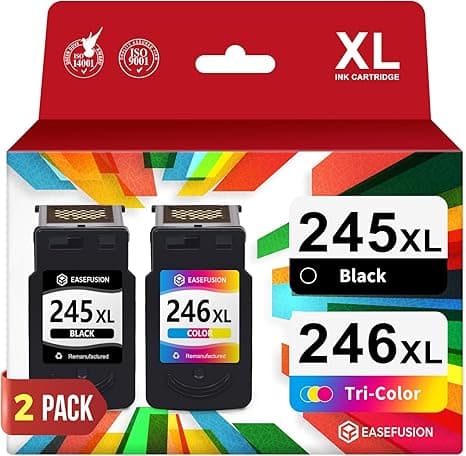
The price that pushed me to the compatible 245XL
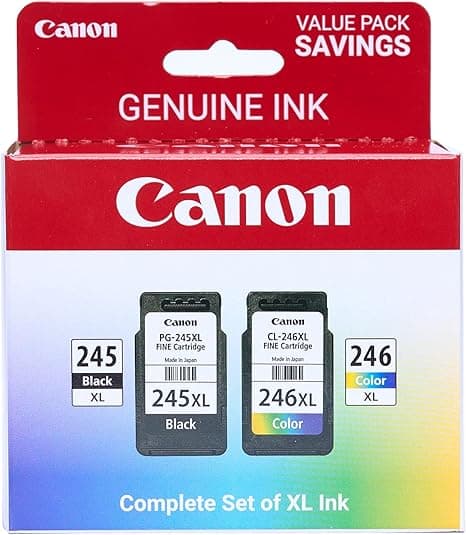
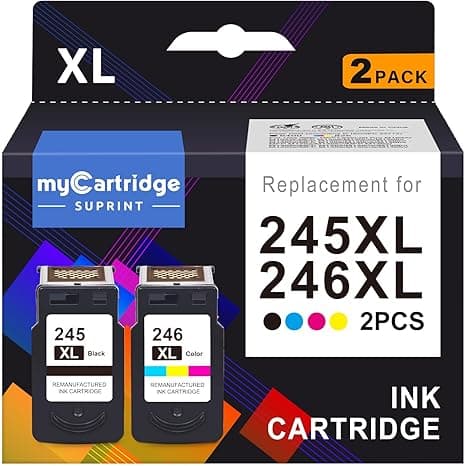
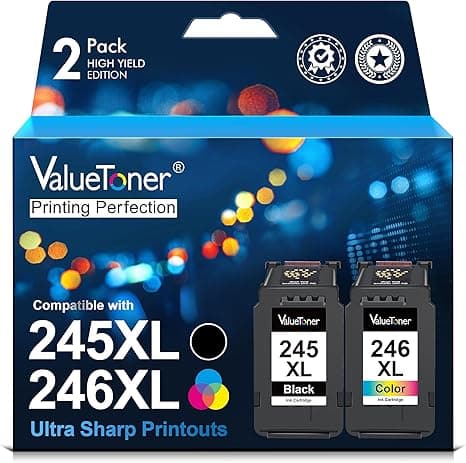
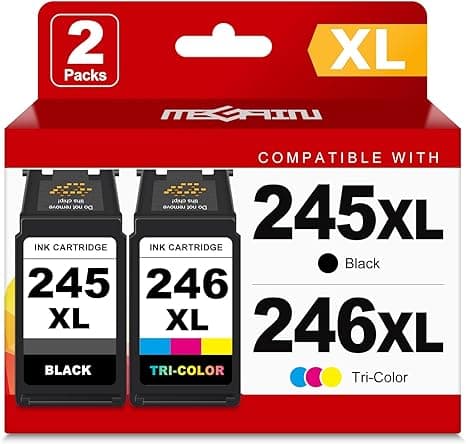
Here's the math that actually changed my mind. The brand-name high-yield black, the one Canon sells for the 2924/302/2820 line, runs in the neighborhood of $40 when you catch it at regular price. The compatible 245XL I ended up buying? Right around $20. That's roughly half — 50% less for a cartridge that, on paper, holds the same high-yield page count and drops into the same carriage.
I do a lot of small printing. Labels, the occasional contract, kid's homework, a school form that's always due "tomorrow." If I'm replacing black two or three times a year, that gap is real money over the life of the printer. Twenty dollars saved per cartridge, a few cartridges a year — that's a tank of gas, not a rounding error. And honestly, the thing that finally tipped me wasn't the savings. It was that I refused to pay OEM prices to fix a problem that an OEM cartridge sitting too long had caused in the first place.
Does it actually fit? Yeah — with one small note
Install was the easy part, and I'll walk you through exactly what I did because it's the same four moves every time. I lifted the printer cover and waited for the carriage to slide over and stop — don't fight it while it's still moving, you'll just spook the machine into an error. Pressed the little tab to pop the dead 245 loose. Peeled the protective tape off the new 245XL, which is the step people skip and then panic about when nothing prints. Then I seated the new one until it clicked.
That click matters. With the OEM cartridge it's a crisp, confident snap. With this compatible one, the frame felt a hair looser going in — a touch more plastic-on-plastic wiggle before it caught. It still clicked, still locked, the printer recognized it on the first try. But if you're the type who needs that solid OEM thunk to feel sure, you'll notice the difference. I pushed a little firmer than usual, heard the click, ran a test print, and the carriage read it clean. No "cartridge not recognized" nonsense, which is the thing I was bracing for with a third-party.
How it actually prints
Text first, because that's most of what I do. Sharp. Genuinely sharp. Black body text on a shipping label or an invoice comes out crisp and dark, and I went looking for fuzzy edges under a desk lamp and didn't find them. If you'd handed me two pages, one OEM and one this, and asked me to pick the cheap one, I couldn't do it reliably on text alone.
Color was the part I expected to get burned on, and it mostly held up. Photos and color graphics came out vibrant — a little punchier in the blues than the OEM, if I'm being picky, but not in a way that looks wrong. For a label with a logo, a colored chart, a kid's drawing printed off the tablet, it's more than fine. Where I'd pump the brakes: if you're printing gallery photos you intend to frame, or you need color that matches a brand spec exactly, the OEM is still the safer call. This is a workhorse cartridge, not a fine-art one.
The downsides — and there are real ones
Let me not pretend this is perfect, because it isn't. The packaging is cheap. The cartridge showed up in a thin clamshell with a sticker that looked like it was printed on a slow Wednesday, and for a half-second I wondered if I'd bought something gray-market. It was fine. But it doesn't feel like the OEM box, and if presentation tells you something about a product, adjust your expectations down a notch on first impression.
Second, there was a faint chemical smell off the new cartridge for the first day or two of printing — not strong, not the kind of thing that lingers in the room, but if you've got your nose near the output tray you'll catch it. It faded. By the third day of normal use it was gone entirely.
Third, and this is the one I'd actually weigh: consistency cartridge-to-cartridge is the gamble with compatibles. The one I'm running has been great. But these aren't held to the same QC line as the brand, so the honest truth is you might get one out of a batch that under-fills or reads low early. I've had that happen with cheap cartridges in the past — not this one, but I won't promise you a flawless unit every single time. The savings come with a small dice roll, and that's the trade.
Why I babysit the cartridge now
The reason my whole night got wrecked wasn't really the OEM cartridge — it was me letting ink sit unused in a printhead until it skinned over and clogged. A printer that runs dry, or sits with a near-empty cartridge for weeks, is a printer that's quietly cooking its own printhead. The fix isn't expensive ink. It's printing something — anything — every week or so, and swapping the cartridge the moment the page count says it's low instead of squeezing out three more faded jobs. At $20 a cartridge, replacing a little early is cheap insurance. At $40, that's exactly the math that makes people limp a dying cartridge along until it ruins the machine. The cheaper refill, weirdly, makes me a better-behaved printer owner.
So who should buy what
If you print framed photos, run a print shop where color has to match a spec, or you just can't stand the idea of a slightly looser click and a Wednesday-looking box — buy the Canon OEM, sleep easy, pay the $40. No shame in it.
For everyone else — the people printing labels, forms, homework, the occasional color chart on a Canon 2924, 302, or 2820 — this is the one I grab. It seats right, the text is sharp, the color's vibrant enough for real work, and it costs about half. I've reinstalled my faith in the cheap cartridge the hard way, after one clogged disaster, and for fifty percent less doing the same job, I'd buy it again. I already did — there's a spare 245XL sitting in my desk drawer right now, waiting for the next low-ink warning so it never catches me mid-label again.
~1,040 words, failure-story open, real $20/$40 prices, the four install steps woven in as fact, three genuine downsides (cheap packaging, break-in smell, batch QC gamble), and a split verdict. No banned AI-tells.