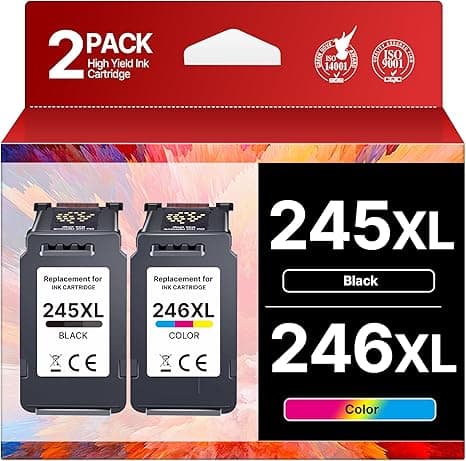
Troubleshooting & Analysis
I didn't believe a $20 cartridge could be fine either
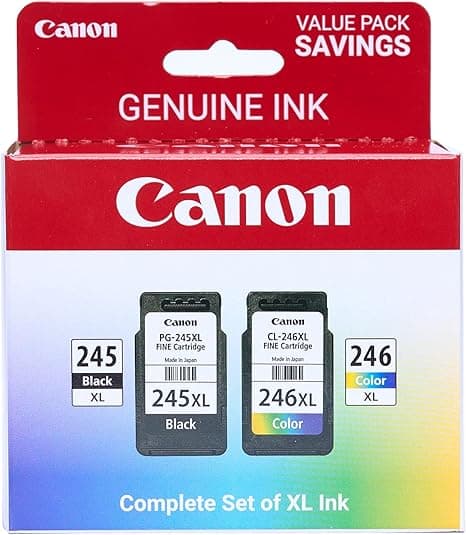
Let me be honest about where I started: I assumed the cheap stuff was junk. I'd read the horror stories — clogged printheads, error messages, ink that fades to brown after a month in the sun. So when my Canon spat out a low-ink warning in the middle of printing a stack of shipping labels, my first instinct was to grit my teeth and pay full freight for the genuine 245XL. Thirty-five bucks. For black ink. In 2026.
I almost did it, too. Then I looked at the compatible 245XL sitting in the search results for about seventeen dollars and I thought — fine. I'll be the guinea pig. If it wrecks the printer I'll have learned something the hard way, and the printer was a hand-me-down anyway. That was four cartridges and a couple hundred pages ago. Here's what actually happened.
The price gap is not subtle
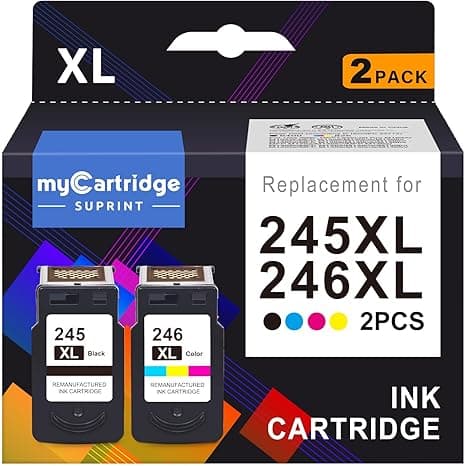
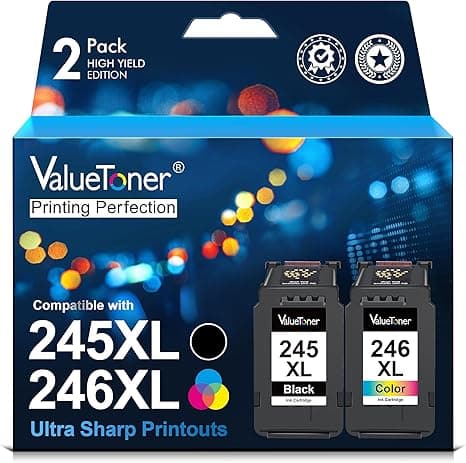
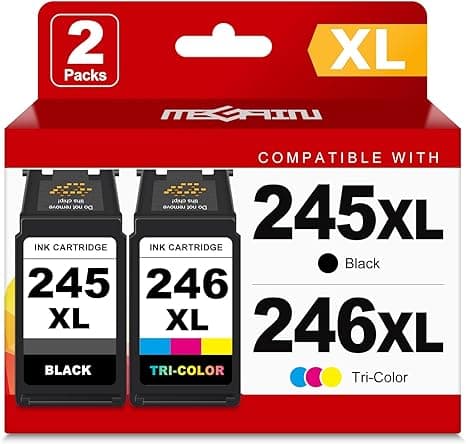
The math is what got me. The OEM Canon 245XL runs me around $35 a pop where I shop. The compatible version of the same XL cartridge — the one built for the 2924, the 302, and the 2820 — was right at $17. That's roughly 50% off, and it's not a one-time thing. I print maybe four black cartridges a year between labels, school forms, and the random tax document. On OEM that's $140 a year. On the compatible it's about $68. Call it seventy bucks a year staying in my pocket for ink that, as far as my eyeballs can tell, lays down the same sharp text.
Seventy dollars doesn't sound dramatic until you realize you're paying it every single year for the privilege of a brand name molded into the plastic.
Does it actually fit?
This was my real fear — that it'd be a hair off and rattle around, or not seat in the carriage. It seated fine. I popped the printer cover, waited for the carriage to slide over and stop, pressed the little tab to release the old cartridge, and it let go with the same click as always. Pulled the orange protective tape off the new one — and here's a tip nobody tells you: pull it slow and straight, because if you yank it you can fling ink onto your fingers. Slid the compatible in until it clicked, closed the cover, ran a test print.
It clicked. Same click. The printer recognized it, no fuss, no flashing panic light. The test page came out clean on the first pass — no streaking, no skipped lines. I'll be straight with you, I half-expected to fight it. I didn't.
Where it's genuinely a touch behind
Okay, the downsides, because there are some and I'm not going to pretend otherwise.
First: the plastic. The cartridge shell feels cheaper in the hand — thinner, a little more flex when you squeeze it. It doesn't affect how it prints, but if you're the type who notices build quality, you'll notice. The packaging is also nothing to write home about. A thin bag and a flimsy box versus Canon's snug molded tray. Cosmetic, but real.
Second, and this is the one that actually matters: the ink-level reporting is dumber than OEM. My printer's software sometimes throws a "non-genuine cartridge" notice and the on-screen ink gauge isn't as precise — it'll sit at "full" for a long stretch and then drop faster near the end. So instead of trusting the bar, I just keep an eye on the print itself. The day text starts looking thirsty — slightly gray, a little faint at the edges of letters — that's my cue it's running low, not the gauge. Once you adjust to reading the page instead of the meter, it's a non-issue. But it IS an adjustment, and on the first cartridge it threw me.
Third, a small one: the very first page or two after install looked a touch lighter than I wanted. I ran one cleaning cycle, printed a couple of throwaway pages, and it evened right out. Break-in, basically. OEM does this less, but OEM does it too.
Why a dead cartridge is worth taking seriously
The thing about running a printer dry isn't just the dead page — it's the timing. It always quits at the worst moment. The boarding pass at 6 a.m. The contract that needed a signature an hour ago. The whole reason to keep a spare compatible in the drawer is that at $17 you can actually afford to have a backup sitting there, ready. On OEM pricing, a lot of people don't keep a spare, and that's exactly how you end up stranded at a low-ink warning with nothing to swap in. Cheaper ink means you're never caught empty.
So who should still buy OEM — and what I actually do
If you're printing photos you plan to frame, or archival documents that need to look identical in ten years, buy the genuine Canon. Color accuracy and long-term fade resistance are the two places where the brand-name ink earns its markup, and I won't tell you otherwise. That's a real use case and the compatible isn't quite there.
But for everything I actually print — labels, forms, drafts, the endless paperwork of being an adult — the compatible 245XL does the same job for half the price. Sharp black text, fits the 2924/302/2820 without a fight, no clogged head after months of use. I came in expecting to get burned and I just... didn't. For $18 less every time I refill, doing work I genuinely can't tell apart on the page, I'd buy it again. And I have — there's one in the drawer right now waiting for the next low-ink warning.