Troubleshooting & Analysis
The click is what sold me
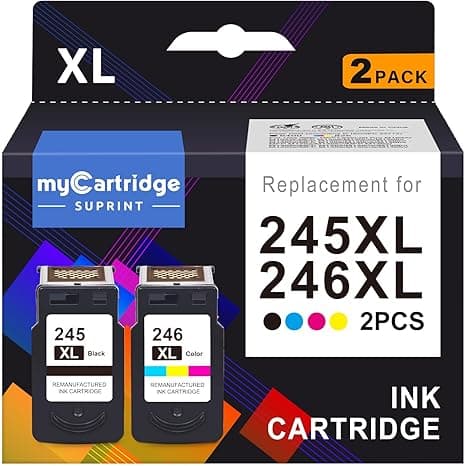
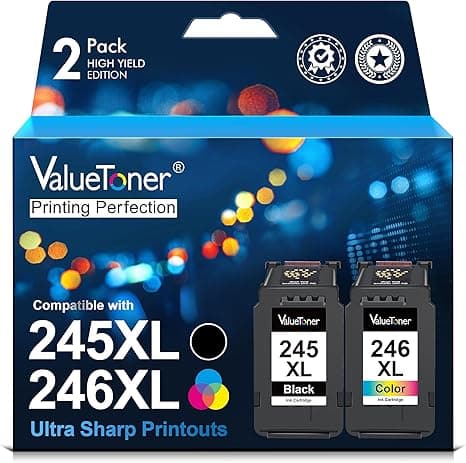
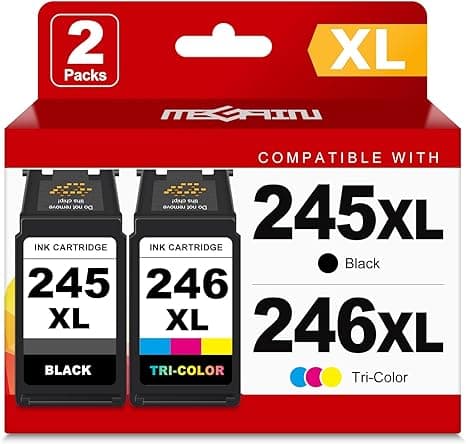
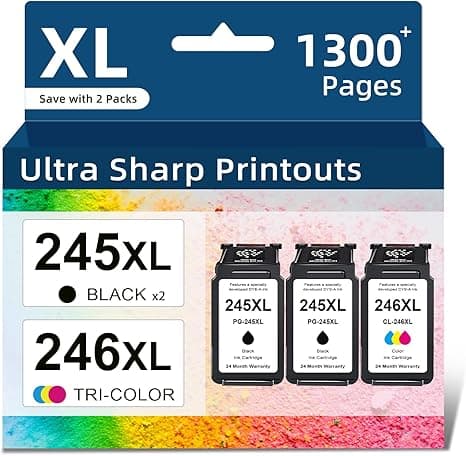
Here's the thing nobody tells you about aftermarket printer cartridges: you find out in the first two seconds whether you wasted your money. It's the click. I slid the compatible 245XL into my Canon — model 2924, the one that lives on the corner of my desk and judges me — and it seated with this firm little snap, exactly where the carriage wanted it. Not a wiggle. Not that loose, "did it actually go in?" feeling I half-expected for the price. Just click, done, carriage parked.
And yeah, I sniffed it. Don't laugh — I always do with third-party stuff, because cheap cartridges sometimes come off the plastic with a faint solvent smell, like a new shower curtain. This one had a whisper of it for maybe a day, gone by the second print job. I'll come back to that, because it's one of the few honest knocks I've got.
The math that made me try it in the first place
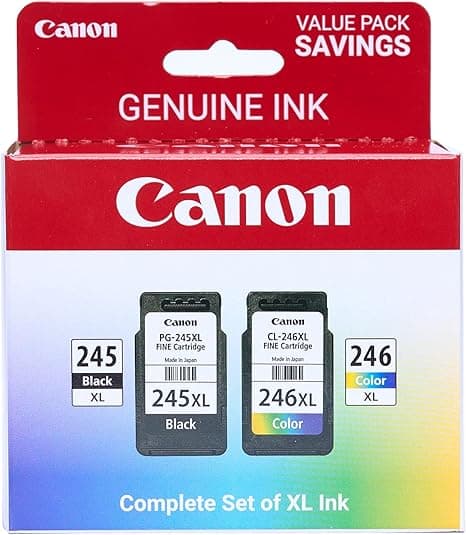
I'd been a loyal OEM guy for years. Burned through Canon's own cartridges on three different machines — the 2820, the 302, now the 2924 — and every refill felt like a small mugging. The genuine high-yield black runs you about $40 a pop where I shop, and once you add the color, you're staring down close to $60 for a set. The compatible 245XL I bought ran roughly half that. Call it a clean $20 savings on the black alone. Fifty percent. That's not a coupon-clipping difference — that's "should I even keep buying brand-name" money.
Run the annual math the way I did. I print maybe two, three cartridges' worth a year — shipping labels, my kid's school stuff, the occasional 40-page PDF I refuse to read on a screen. At OEM prices that's pushing $120 a year just feeding the thing. At compatible prices I'm under $60. Over the life of a printer that I'll probably keep four or five years? That gap buys a whole new printer. I did the multiplication standing in my office and felt a little stupid for not switching sooner.
Does it actually fit, though
This is the part people are really nervous about, and I get it — a cartridge that doesn't seat right can throw a "cartridge not recognized" error and ruin your afternoon. So let me be specific about the install, because it matters.
You pop the cover and wait for the carriage to slide over and stop on its own — don't yank it. There's a tab you press to release the old cartridge; it lets go with a soft pop. Then the one step people skip and then panic about: peel the protective tape off the new cartridge's contacts and nozzle. All of it. If you leave a corner on, the printer will swear it's empty and you'll be back online writing a one-star review. Tape off, slide it in until that click I mentioned, close the cover, run a test print. On mine the alignment page came out clean on the first pass. No streaking, no nudging it in three times.
Fit-wise, if I'm being picky — and I am — the housing plastic is a hair lighter than Canon's. You can feel it. The genuine cartridge has this slightly denser, more "engineered" heft. The compatible one feels a touch more like a toy by comparison. But it locked into the carriage with zero slop, and four months in it hasn't shifted or rattled. Looser in the hand, tight in the machine. That's the summary.
How it actually prints
Text first, because that's 80% of what I do. Sharp. Genuinely sharp — crisp black edges on 10-point type, no feathering, no gray ghosting. If you laid an OEM page next to a compatible one I couldn't reliably tell you which is which on plain paper. The high-yield claim held up too; I got a long run out of it before the low-ink nag started.
Color is where I'll split hairs. On a photo print — a glossy 4x6 of my dog — the compatible color was vibrant, a little punchy even, but maybe a half-step warmer than Canon's. Reds leaned slightly toward orange. For documents, charts, a kid's book report with a pie graph? You will never, ever notice. For archival photo printing where you're matching skin tones exactly? That's the one place I'd think twice. Most of you aren't doing that. I'm not doing that.
The downsides, said plainly
I promised honesty, so here's the real list and not a softened one.
- The break-in smell. Faint plastic-y odor for the first day. Harmless, gone fast, but it's there if you've got a sensitive nose sitting two feet from the printer like I do.
- The ink-level reporting can lie. This is the big one. On compatible cartridges the printer's little ink gauge is more of a vibe than a measurement. Mine showed "low" with what felt like plenty of pages left, then held at low for ages. You learn to ignore the gauge and judge by the print quality instead — when the black starts going faint, swap it. Annoying if you're used to trusting that number. Manageable once you know.
- The packaging is cheap. Thin plastic clamshell, no fancy foil. Doesn't affect the ink one bit, but it doesn't inspire confidence on the doorstep. Cosmetic.
That's the honest tally. Notice none of those is "it wrecked my printer" or "it leaked." Four months, dozens of jobs, no clogs, no carriage errors after that first clean install. The horror stories you read are usually old tape left on, or a genuinely defective unit — and a defective unit gets returned, same as a bad OEM one would.
Why a dead cartridge is more than an annoyance
Running dry mid-job isn't just irritating, it's the worst-timed thing in the world — it always happens on the boarding pass, the contract, the thing due in ten minutes. Keeping a compatible spare in the drawer at half the OEM price means you actually keep a spare, instead of rationing one overpriced cartridge and crossing your fingers. That's the quiet argument for going aftermarket: it's cheap enough that you stop living in scarcity.
So who should buy what
If you're a professional photographer printing portfolio pieces where color accuracy is the product — buy Canon's genuine 245XL and don't think about it. Your livelihood isn't the place to save $20.
For everyone else — the 2924, 302, 2820 owner printing documents, labels, homework, the occasional snapshot — I grab the compatible one. I have. Repeatedly. It clicks in right, the text is sharp, the savings are real and roughly $20 every single refill, and the only thing I gave up was a slightly fussy ink gauge and a one-day smell. I'd buy it again, and the spare in my drawer says I already did.