Troubleshooting & Analysis
I stood in the aisle holding both boxes like an idiot
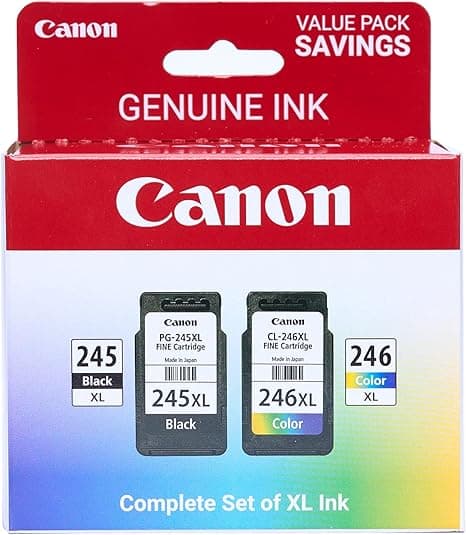
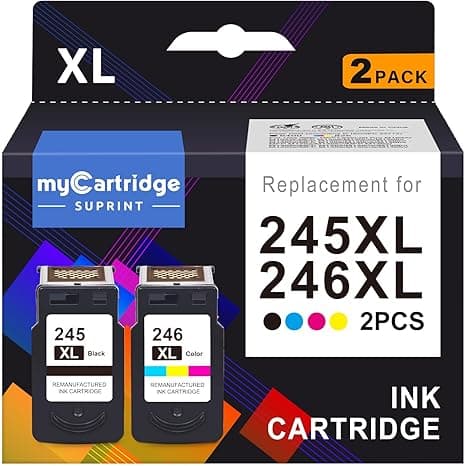
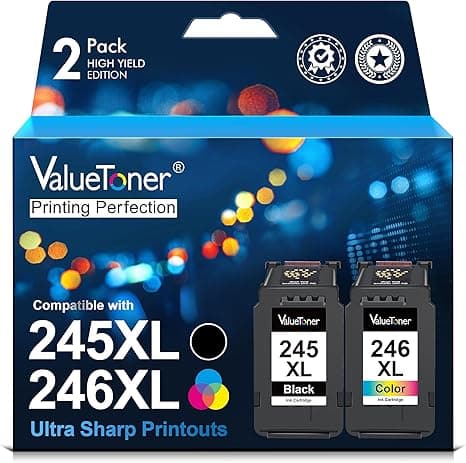
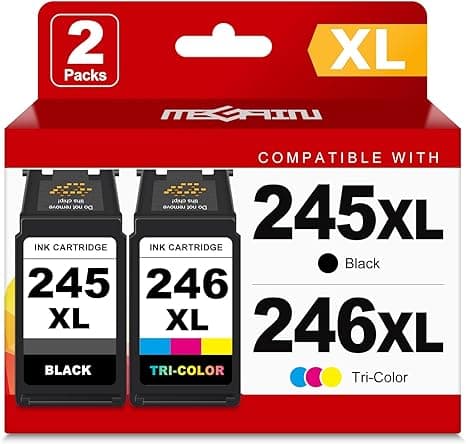
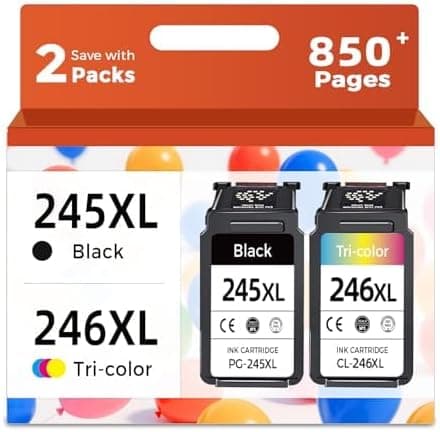
Genuine Canon 245XL in my right hand. A compatible 245XL — same part number, different brand, shrink-wrapped in plastic that felt a grade cheaper — in my left. The Canon was $25. The compatible one was $12. My 2820 was sitting at home with a blinking low-ink light and a half-printed shipping label stuck in the queue, and I had maybe ninety seconds before the store closed.
I'd been burned by a no-name cartridge years ago — a bargain-bin thing that leaked into a different printer and stained my hands black for two days. So I knew the nervous feeling. Cheap ink, expensive printer, and that little voice going "you'll regret this." I bought the compatible one anyway. Here's everything that happened after, the good and the genuinely annoying, so you don't have to gamble blind the way I did.
The math that made me do it
Let's be blunt about why anyone even considers this. Canon's own 245XL black runs around $25 a cartridge at full retail. The compatible 245XL I grabbed was $12. That's not a rounding error — that's literally half price, which lines up exactly with the 50% gap these things advertise.
Now run it out over a year. I print more than I'd like to admit — school forms, return labels, the occasional 40-page PDF I refuse to read on a screen. I go through maybe four black cartridges a year on the 2820. At OEM prices that's about $100 a year just in black ink. At $12 a pop it's $48. Add the color side and the gap only widens. For a $60 printer, I was about to spend more on a single year of brand-name ink than the machine cost. That's the part that always gets me — the printer's basically free and the ink is the racket.
Does it actually fit the 2924/2820/302?
This was my first worry, because a cartridge that doesn't seat is just a $12 paperweight. It fit. Cleanly.
The install is the same dance you already know if you've owned one of these Canons. I lifted the cover, waited for the carriage to slide over and stop — don't rush it, let the machine finish moving — then pressed the little tab to pop the old cartridge loose. The new one needed the protective tape peeled off the contacts and the print head first, which I almost forgot in my hurry. Then it dropped in and gave me that satisfying click. You feel it more than hear it. I ran a test print and the alignment page came out clean on the first pass.
One honest note on fit: the plastic housing on the compatible unit felt very slightly less precise than the Canon. Not loose, not rattly — it clicked and held — but if you've handled enough OEM cartridges you'll notice the molding isn't quite as crisp. It seated fine. It just doesn't feel as expensive in your fingers, because it isn't.
How it prints — the part that matters
Text is the easy win. Black document printing off this compatible 245XL is, to my eye, indistinguishable from the Canon original. Sharp edges on the letters, no gray ghosting, no streaks down the page. I printed a stack of legal-looking PDFs and a resume, and I would not be embarrassed handing any of it to a person.
Color is where I'll be straight with you. It's good. Vibrant, even — photos and color charts came out punchy. But side by side with an OEM page, very saturated blues looked a hair different on the compatible — a touch cooler, a shade off from the Canon reference. For everyday color — kids' homework, a coupon, a map, a flyer for the garage sale — you will never notice. If you're printing gallery photos you plan to frame, that small color shift is the reason serious photo people still buy OEM. I'm not that person. My "photos" go on the fridge.
The downsides I actually hit
I promised you the annoying parts, so here they are, no sugarcoating.
First, the page-yield count felt optimistic. The box implies XL-level output, and it does last a long time, but I'd swear I got somewhat fewer pages out of it than I'd get from a true Canon 245XL. Hard to measure exactly without lab gear, but the low-ink warning came up a little sooner than I expected. Even accounting for that, at half the price you're still ahead — I'd have to be getting barely more than half the pages to lose money, and I wasn't close to that.
Second, the ink-monitor drama. Some compatible cartridges trip the Canon software into nagging you — "non-genuine cartridge detected," that kind of thing. Mine threw a one-time warning on install that I clicked through, and after that it tracked ink level fine. But this is the single most common gripe with compatibles on these printers, so know going in: you may have to dismiss a pop-up, and the ink gauge can read a little less accurately than it does for OEM. It's a mild annoyance, not a dealbreaker.
Third — and this is small — the packaging is bare-bones. Thin plastic, a paper insert, no fancy box. Doesn't affect the print one bit. It just confirms what you're paying for: ink, not branding.
Why you don't want to just let it run dry anyway
Quick word on the thing nobody plans for: running out at the worst moment. A cartridge that quits mid-job on a Canon inkjet doesn't just stop — it can leave you with a streaked, half-done page and a print head that's been sitting there pulling air. Keeping a cheap spare in the drawer is honestly the bigger argument for going compatible. At $12 I keep two on hand. At $25 I'd keep none, and I'd be the guy standing in a store at closing time again. Don't be that guy.
So who should buy what
Buy the genuine Canon 245XL if you're doing professional photo work where a slight color shift on deep blues actually costs you something, or if you simply cannot stand a software pop-up and want the ink gauge to be dead accurate. That's a real, legitimate reason. No judgment.
For everyone else running a 2924, 2820, or 302 — the homework, the labels, the forms, the everyday color — I grab the compatible 245XL. Same sharp text, color that's plenty good, fit that clicks right in, for $12 instead of $25. The yield's a touch lower and the gauge nags once. I weighed that against saving fifty-odd dollars a year, and it wasn't close.
I bought it nervous in a parking lot. I've reordered it twice since, calm as anything. That's the whole review.