Troubleshooting & Analysis
Two cartridges, one cart, and forty seconds of standing there like an idiot
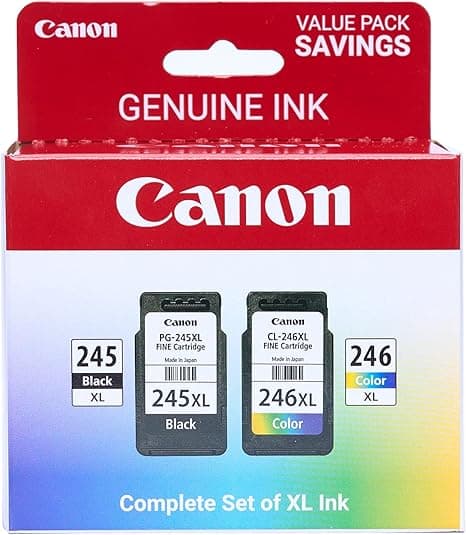
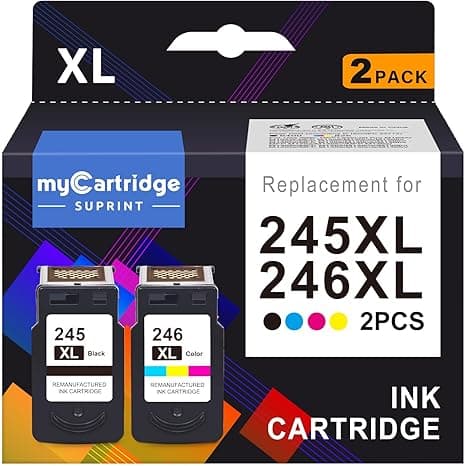
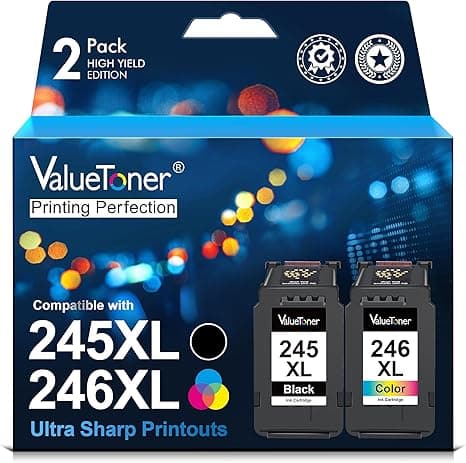
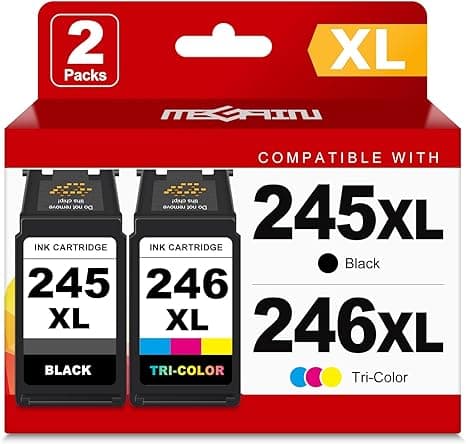
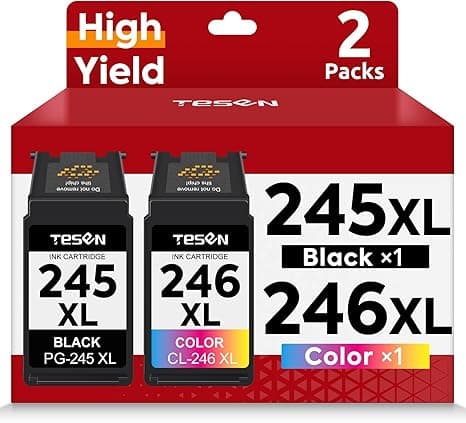
I was at the shelf with the little Canon-branded box in one hand and the third-party one in the other, doing the math out loud in the aisle. The genuine Canon 245 high-yield was running close to $34. The compatible 245XL — same XL claim, same printer, my PIXMA MG2924 — was about half that. And I just stood there. Because here's the thing nobody tells you: it's not the money that stops you. It's the fear that the cheap one bricks the printer, or floods a page with streaks, or the machine throws that smug little "non-genuine cartridge" warning and refuses to play.
I'd been burned before by a no-name cartridge on an old Brother, so I wasn't feeling brave. But I bought the compatible anyway. Partly stubbornness. Partly because I print maybe twice a week — return labels, a kid's homework, the occasional boarding pass — and paying brand-name markup to print a Spirit Airlines confirmation felt insane. So I took it home. Here's how it actually went.
The price gap is the whole reason you're reading this
Let's be blunt about the numbers, because that's what you came for. OEM 245-class ink hovers around $30–$34 a cartridge depending on the day and the retailer. The compatible 245XL I grabbed was right around $17. That's roughly half. If you replace black ink three or four times a year — which is normal for a light-to-moderate home user — you're looking at a real swing. Call it $50 to $60 a year staying in your pocket instead of going to a cartridge that does, functionally, the same job. Over the life of a printer you bought for under a hundred bucks, that math gets silly fast. You'd spend more on ink than the machine in a single year if you stayed OEM.
Install: it clicked, and that click matters more than you'd think
Putting it in was uneventful, which is exactly what you want. I lifted the cover, waited for the carriage to slide over and stop — don't rush it, let the printer move it on its own — and pressed the tab to pop the old cartridge loose. The new one came wrapped with that orange-ish protective tape over the contacts and the vent. Peel ALL of it. I've seen people leave a sliver on the bottom and then panic when nothing prints. Then I seated it.
And it clicked. A real click, not a mushy "is-that-in?" half-seat. Honestly that little tactile snap did more to settle my nerves than any review could. I ran a test print right after, like the instructions say, and the page came out clean on the first pass. No alignment dance, no priming ritual. The printer recognized it. I did get the "this cartridge is not a genuine Canon product" pop-up — more on that below, because it's the one thing I want you braced for — but a tap to acknowledge and it printed like normal.
How it actually prints, no spin
Text? Sharp. I printed a dense two-page rental agreement in 10-point font and put it next to a page from the genuine cartridge, and I genuinely could not tell you which was which without the timestamps. Black is black. For documents, return labels, school worksheets, anything where you just need legible ink on paper, this thing is indistinguishable from the expensive one.
Color — and the 245 is the black, the 246 is the color, so if you're doing photos you're dealing with both — held up fine for charts, colored text, a birthday flyer my daughter insisted on. Vibrant enough. Not washed out.
Where it's a hair behind: glossy photo prints. If you're printing actual photographs on photo paper and hanging them on a wall, look closely and the OEM has a slightly richer, more saturated quality in deep skin tones and dark gradients. The compatible is maybe 90% of the way there. For a fridge photo or a kid's project? You will never notice. For a portrait you're framing? You might. That's the honest line.
The downsides — and there are real ones
First, that non-genuine warning. Every single time the printer powers up fresh, it reminds you the cartridge isn't Canon's own, and it'll tell you it can't monitor the ink level accurately. That second part is the actual annoyance. With OEM you get a tidy little ink gauge. With this, the level reading is basically guesswork — sometimes it just shows a question mark or a "cannot detect" icon. So you print until you start seeing faint streaks or gaps, and that's your signal to swap. I've made my peace with it, but if you're the type who likes a precise fuel gauge, this'll bug you.
Second, the consistency across units isn't bulletproof. The first compatible cartridge I bought was flawless. A second one, from a cheaper seller, started skipping after about three weeks and I think it had a minor air-bubble issue in the print head feed. I gently re-seated it and ran two cleaning cycles and it came back, but it cost me a little ink and twenty minutes. With a brand-name cartridge that almost never happens. Buy from a seller with a real return policy, because the floor on these is lower even if the ceiling is the same.
Third, the packaging is flat-out cheap. Thin plastic clamshell, no fancy foil seal, instructions printed in eye-strain micro-font. It feels like what it is — a budget product. Doesn't affect the print, but if unboxing quality tells you something about a company, manage your expectations.
Why you don't want to coast on a dying cartridge
One thing worth saying because it's easy to ignore: don't keep hammering prints out of a cartridge that's clearly streaking and starved. Running a print head while the ink's basically gone makes the head work harder and can let it dry or clog, and on these all-in-one Canons the print head is part of the cartridge — so a clog can mean tossing it early. When you see the gaps, swap it. At $17 a pop, there's no reason to nurse a dead one and risk gumming things up.
The verdict: who buys OEM, and what I actually do
If you print professional photography, sell prints, or you genuinely cannot tolerate a startup warning and an inexact ink gauge, buy the genuine Canon. No shame in it — you're paying for polish and reliability and you'll get it.
But me? For a sub-$100 home printer that spits out homework and shipping labels twice a week, I grab the compatible 245XL every time. It clicks in right, the text is identical, it saves me fifteen-plus bucks a cartridge, and the only real tax is acknowledging a pop-up and eyeballing my own ink level. I've bought it three times now. I'll buy it again next month. For half the price doing the same job, that's an easy call to make — even for someone who stood in the aisle for forty seconds not trusting it.