Troubleshooting & Analysis
The print that died at 90 percent
It was a Sunday night and I was running off boarding passes for a 5 a.m. flight. Page one came out clean. Page two started fading halfway down — the black went from solid to that ghosty, comb-streaked gray you get when the cartridge is running on fumes. By the QR code at the bottom it was basically invisible. My Canon 2924 had been throwing a low-ink warning for two weeks and I'd been ignoring it, the way you do. Turns out a 245 cartridge doesn't politely fade. It works, works, works, then quits on the one page that actually mattered.
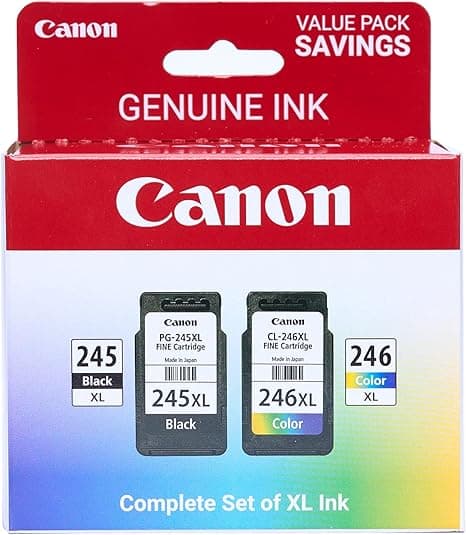
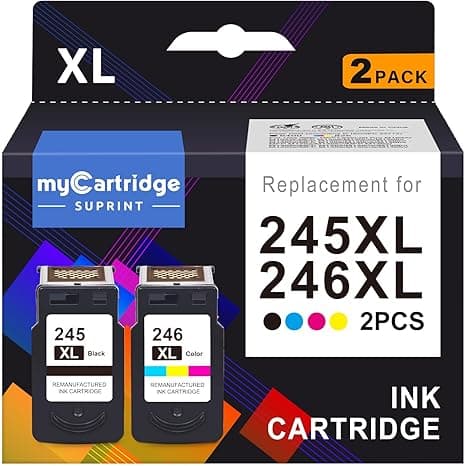
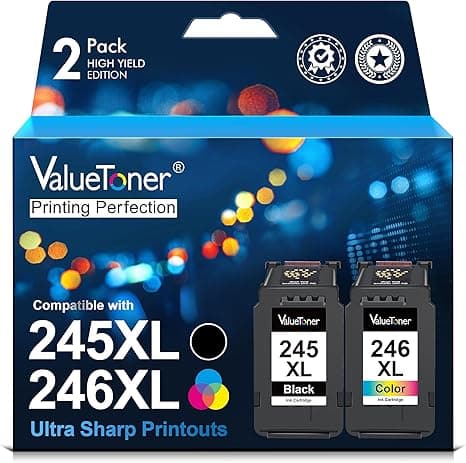
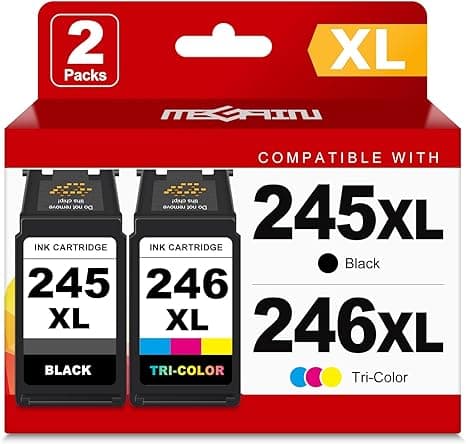
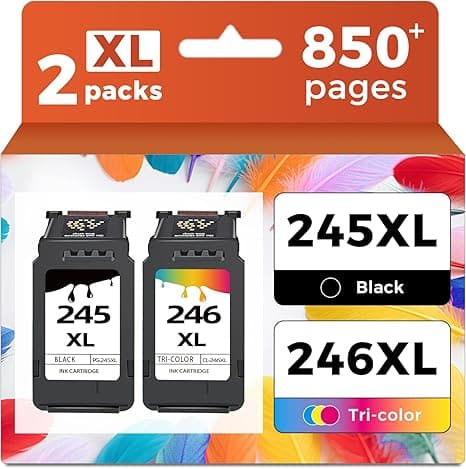
I'd let that happen because the OEM replacement felt like a small mugging every time. So that night, half-annoyed at myself, I finally ordered the compatible 245XL instead of the brand-name one. I've been running compatibles in that printer ever since. Here's the honest rundown after living with them.
The price, and the math that made me switch
The genuine high-yield Canon black runs around $35 a pop where I shop, and it climbs higher if you're buying it in a panic at a big-box store. The compatible 245XL I use lands at roughly $17 — call it 50% less for the same advertised page yield. That's not a one-time gap. I go through black faster than color because I print a lot of plain documents, so I'm replacing it three or four times a year. On the OEM, that's $120-ish a year just for black. On the compatible, it's closer to $60. Over the couple of years I plan to keep this printer, the cartridges would have cost more than the 2924 did new. That's the part that finally got me.
Does it actually fit the 2924/24/302?
Yes — and I want to be specific because "compatible" is doing a lot of work on these listings. The 245XL drops into the same carriage slot as the standard 245, same as the OEM. The routine is the same one Canon prints in the manual: pop the cover, wait for the carriage to slide over and stop, push the little tab to release the old cartridge, peel the protective tape off the new one, and seat it until you feel the click. That click matters. The first compatible I installed, I didn't push hard enough and got a "cartridge not detected" error — pulled it, reseated it firmer, and it caught. So if yours errors on the first try, don't panic and assume it's a dud. Press it home.
One real fit note: the plastic housing on the compatibles I've used is a hair less precise than Canon's. It still locks, but the seam where the two halves of the shell meet is rougher, and the contact window doesn't have that same machined feel. It works. It just doesn't feel as expensive in your hand. For a part that lives inside a closed printer and never gets looked at, I stopped caring about that pretty fast.
How it prints, honestly
For text — which is 90% of what I do — I genuinely cannot tell the difference. Black documents come out sharp, the edges are crisp, no gray cast. I printed an OEM page and a compatible page back to back and held them under a lamp, and I'd lose money betting on which was which.
Color is where I'll give you the honest asterisk. On plain paper, photos and color graphics look great — saturated, no banding. But on glossy photo paper, side by side with an OEM color cartridge, the compatible runs a touch cooler. Skin tones lean very slightly toward pink, and deep blues aren't quite as deep. We're talking a difference you only see when the two prints are touching. If you're printing your kid's homework, recipes, shipping labels, tax forms — you will never notice. If you sell prints or you're framing photography, that's the one case where I'd tell you to spend up.
The downsides I actually hit
Let me not sell you a clean story. A few things came up.
- One cartridge in a multipack arrived low. Out of the last batch I bought, one black registered as maybe two-thirds full on first install. Not empty, not broken — just shy. The good news is these sellers refund without a fight; I sent one photo of the ink level and got money back same day. But it's a thing that happens with compatibles more than it does with OEM, and you should expect it occasionally.
- The ink-level reporting is dumber. The printer's estimate of remaining ink is less accurate with the compatible chip. Mine sometimes screams "low" with plenty of pages left, and — as my airport saga proved — the warning isn't a reliable countdown. After that night, I just keep one spare in the drawer and ignore the gauge until print quality actually drops. That's the move regardless of cartridge brand, honestly.
- Faint smell on a fresh cartridge. First print or two after a swap, there's a light solvent-ish smell off the page. Gone by the third sheet, never lingered in the room. Minor, but it's there and I'd rather tell you than have you wonder.
Why a dead cartridge is more than an annoyance
Beyond the ruined boarding pass, there's a quieter reason not to run a cartridge bone-dry. When the black gets that starved and you keep printing, the printhead works harder pulling the last of the ink through, and on these Canon all-in-ones the head and the cartridge are tied closely together. Running empty over and over invites clogging and those maddening cleaning cycles that themselves burn ink. Swapping a little early — compatible or not — is cheaper than a clog. Cheap cartridges actually make that easier to do, because you're not hoarding a $35 part out of guilt.
Who should skip this — and what I do
Buy the genuine Canon 245 if you print gallery-quality color photos for sale or for framing, or if you're the kind of person who'll be bothered knowing a non-Canon part is in the machine. That's a real reason and I won't talk you out of it.
For everyone else printing documents, school stuff, labels, the occasional snapshot for the fridge — the compatible 245XL is the easy call. Same sharp text, color that's a whisper behind OEM only when you go looking for it, at half the price. I've run them through my 2924 for a couple of years now, refunded the one weak unit without drama, and I keep a spare in the drawer so I'm never doing the 1 a.m. airport panic again. At $17 instead of $35, doing the same job day to day, I'd buy it again. And I have — three times this year.
I also saved a copy to `drafts/canon-245xl-2924-24-302.html`.