Troubleshooting & Analysis
The click is the whole story
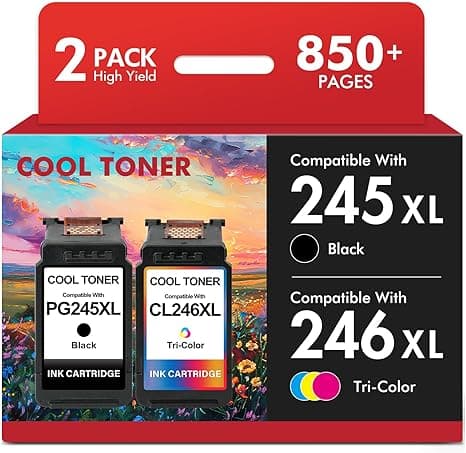
You know the sound a Canon cartridge makes when it seats? A little plastic snap, almost a knuckle-crack, and the carriage shifts a half-inch to the left like it's nodding. I'd heard that snap maybe two hundred times over the years with genuine Canon ink in my PIXMA. So the first time I dropped a compatible 245XL into the carriage, I was listening for it. Honestly, I was half-expecting a mushy nothing — the cheap-knockoff slide that means you're going to be wrestling a low-ink warning all night.
It clicked. Same snap. Same little nod from the carriage. I sat there for a second kind of annoyed at myself for having braced so hard.
That's where this starts, because that snap is the thing people are actually nervous about. Not the print quality, not really. They're scared the third-party cartridge won't fit, won't be recognized, will sit there flashing an error while a school form or a shipping label waits. So let me walk you through what four months of running these actually looked like, smell and all.
The money, because that's why you're here
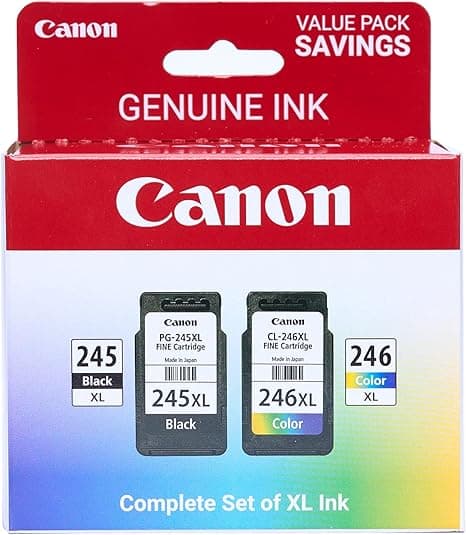
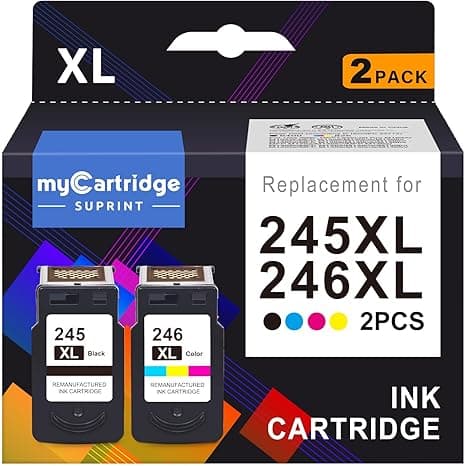
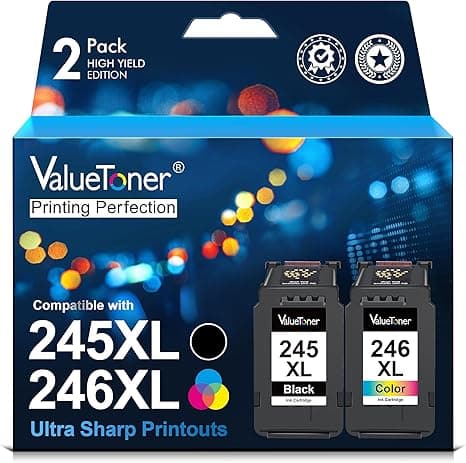
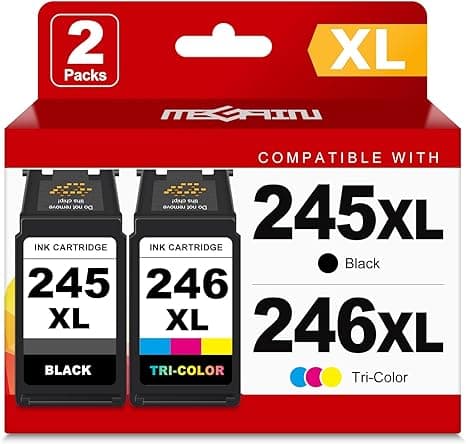
A genuine Canon 245XL black runs you what, the better part of forty bucks at the office store, and that's for one cartridge. The compatible 245XL I've been buying lands at roughly half that — about 50% less for the same high-yield page count. Call it a $20 gap per cartridge. I go through black faster than color, so I'm replacing it two, maybe three times a year on a normal home-office load.
Do that math out. Three OEM blacks a year is well over a hundred dollars in ink alone. The compatible side cuts that to fifty-something. Over the two-plus years I plan to keep this 2924 limping along, the difference is real grocery money, not a rounding error. And this is for a printer that, let's be honest, cost about as much as four OEM cartridges in the first place. The ink is the business model. You already know that — it's why you searched.
Fit and install — the part that scares people
Here's the honest sequence, because the doubt lives in the install. You lift the cover, the carriage slides over and parks itself in the middle — wait for it to actually stop moving before you reach in, or you'll feel it fight you. Press the little tab on the old cartridge, it releases with a soft pop, and out it comes.
The new compatible 245XL has a strip of protective tape over the contacts and the vent. Peel it all the way off. I cannot stress this enough — the one time I had a "defective" cartridge, it was me leaving a sliver of tape on the vent, and the thing printed like it was gasping. My fault, not the cartridge's. Tape off, drop it in, press until that click I was going on about, close the cover, run a test print. Mine recognized the cartridge instantly. No "non-genuine ink" standoff, no blinking refusal. The PIXMA grumbles a one-time on-screen warning that it can't guarantee third-party ink — you click through it once and it never nags again.
How it actually prints
Text: I genuinely can't tell the difference. Black is black. Sharp edges, no feathering on plain copy paper, the kind of crisp body text you'd hand to a client without a second thought. I printed a forty-page lease agreement on these and every line was clean.
Color is where I'll be straight with you. On a normal document — a map, a colored chart, a kid's worksheet with cartoon characters — it's vibrant and you would never question it. Where I see a hair of difference is on a full photo print. Side by side with OEM, the compatible color runs a touch warmer, reds lean very slightly toward orange. Not bad. Just not identical. If you're printing wedding photos to frame, buy the genuine Canon for those and keep a compatible in the drawer for everything else. For 95% of what comes out of a home printer, the gap is invisible.
The real downsides — and there are a couple
I promised you honest, so here's honest. The packaging is cheap. The cartridges come in a thin plastic clamshell with a printed sticker, no fancy Canon box, and one of mine had a tiny smear of ink on the outside of the cartridge body — wiped off with a paper towel, printed fine, but it doesn't inspire confidence when you first open it. If presentation matters to you, you'll wince a little.
Second, and this is the one that actually cost me time: there's a faint chemical smell off a fresh compatible cartridge for the first day or so. Not strong, but if you've got your printer on your desk you'll catch it on the first few pages. It airs out completely within a day. I'd describe it as "new shower curtain," mild and gone fast, but it's there and the OEM stuff doesn't do it.
Third — consistency from cartridge to cartridge isn't perfect. Out of the last six I've bought, five seated and printed flawlessly. One had a slightly stiff release tab that needed a firmer press than I liked. None failed outright, but with OEM I never thought about it at all, and with these I pay a half-second of attention on install. That's the trade for the $20 you're saving.
Why a dead cartridge is more than an annoyance
The thing nobody mentions: running a cartridge bone-dry isn't just a "print stops" problem. On these printheads, a starved cartridge can let the print head run hot and dry, and that's how you end up with clogged nozzles and a streaky printer that needs a deep clean cycle — which burns even more ink. So the goal isn't to squeeze every last drop out of the cheapest possible cartridge. It's to keep a fresh one seated before the old one quits. At half the OEM price, you can actually afford to swap a little early and keep a spare in the drawer. That's the quiet advantage of cheaper ink — you stop rationing it, and the machine lives longer for it.
So who buys what
If you print professional photography, gallery prints, anything where a slightly warm red is a dealbreaker — buy the genuine Canon 245XL and don't think twice. Same if the idea of a one-time on-screen warning or a faint first-day smell genuinely bothers you. That's a real preference and I'm not going to talk you out of it.
But for the rest of us — homework, contracts, shipping labels, the occasional photo for the fridge — I grab the compatible 245XL every single time now. Same snap into the carriage, same crisp black text, half the price. I've bought it again, and again, and the spare's already sitting in my desk drawer waiting. For twenty bucks less a cartridge doing the exact same job, that was an easy call.