Troubleshooting & Analysis
The page came out streaked. Not faint — streaked, like somebody dragged a dry highlighter down the left third of every line. I was printing a shipping label at 11pm, the kind of thing you need to just work, and instead I got that hollow gray ghosting that means the toner's spent and the printer is scraping the bottom of the cartridge to give you anything at all. My Brother 2550DW had been coughing up lighter and lighter pages for a week and I'd been ignoring it. That night it finally quit pretending.
So I did the thing you do. Pulled the old TN-730 starter cartridge, gave it the shake — you know the shake, the desperate left-to-right rattle that buys you maybe forty more pages — and got exactly six more streaky labels before it was done for good. That shake is the printer equivalent of slapping a vending machine. It works until it really, really doesn't.
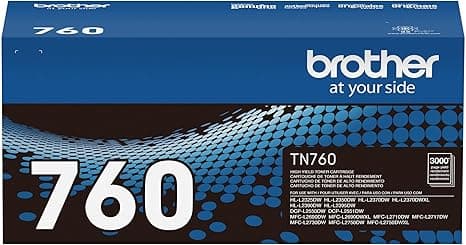
The number that made me stop buying OEM
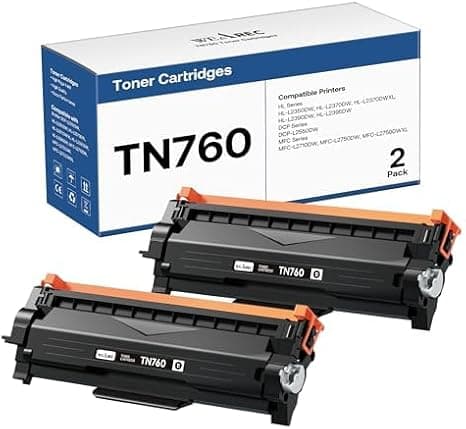
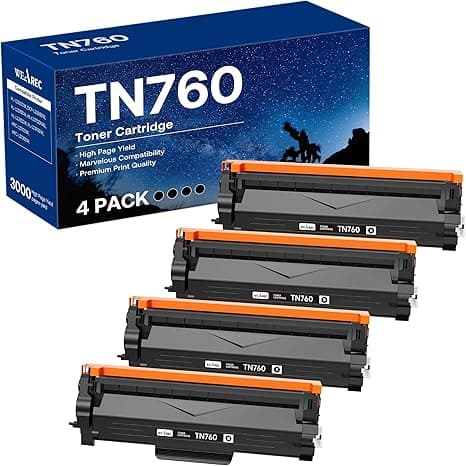
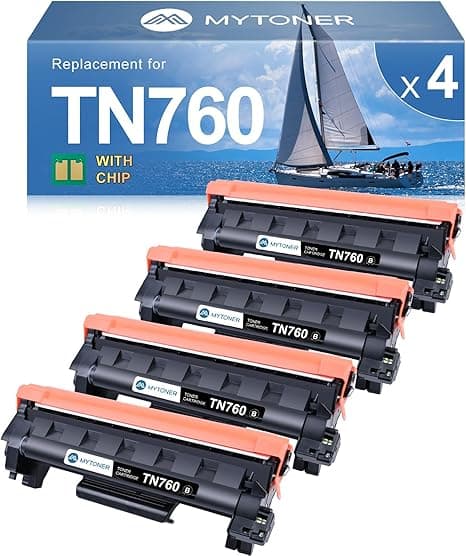
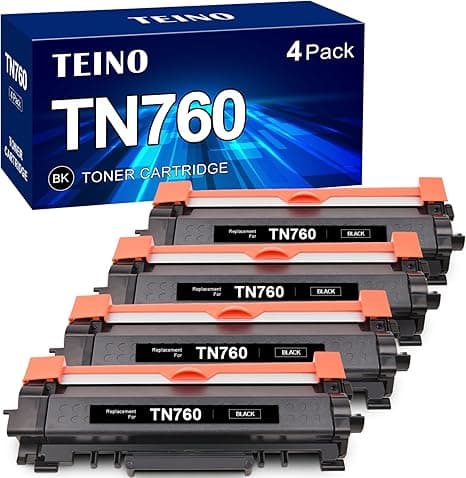
Here's what sent me down this road in the first place. A genuine Brother TN-760 high-yield cartridge runs around $80 most places. The compatible TN760 I keep buying now? Roughly $40. Same printer, same TN760 part designation, same high-yield page count on paper — and it's half the price. Cut that in half and you're looking at $40 staying in your pocket every single time the toner runs dry.
And it runs dry more than you'd think if you actually use the machine. I print maybe 150–200 pages a month — labels, the occasional contract, my kid's school stuff. At that rate the high-yield lasts me a good while, but over a couple years you're buying these things four, five times. The OEM math gets ugly fast. The compatible math, honestly, barely registers on the credit card statement.
Does it actually fit, though
This was my worry too. A toner cartridge isn't a USB cable — it sits in a drum unit, it has to seat clean, and a bad fit means smearing or a printer that flat-out refuses to acknowledge it. I'd read the horror stories.
Install was four steps and took me under two minutes. Open the front cover, wait for the carriage to settle — don't rush it, let it stop moving on its own. Press the release tab and the old cartridge pops free. Pull the orange protective tape off the new one (don't skip this; leave the tape on and you'll print nothing but blank pages and then spend twenty minutes convinced you bought a dud). Slide the new cartridge in until you feel the click. That click is the whole game. When it seats right on the 2550DW it's a definite, slightly satisfying snap — not a vague nudge. Then I ran a test print and the first page came out clean, full black, no streaks, no ghosting.
The fit on mine was good. Not flawless-OEM good — the plastic housing feels a hair lighter, a touch less precisely molded than the Brother original, and the first time I handled it I noticed the seam lines were rougher. But it dropped into the drum unit square and the printer recognized it on the first try. No "incompatible cartridge" nag, no fighting it.
How it actually prints
Text is where these things either pass or embarrass themselves, and this one passes. Black text comes out sharp — crisp edges on 10pt, no fuzzing, no gray cast. I printed a 30-page PDF contract and held it next to a page from when I was still running genuine Brother toner. Side by side, on plain office paper, I genuinely could not tell which was which. For everyday documents it's a wash.
Where I'll be straight with you: on heavy solid-black fills — like a big logo block or a page with a dark header bar — the compatible toner is a touch less uniform than OEM. Look close and you might catch the faintest unevenness in a large black field that the genuine cartridge lays down dead flat. For a label, a contract, a return form? You will never, ever notice. If you're printing something where a big black graphic is the centerpiece and it has to be perfect, that's the one scenario where I'd hesitate.
The real downsides, not the fake-balanced ones
Let me give you more than one, because anything that's only sunshine is lying to you.
First, the page-count consistency. The genuine high-yield Brother is rock-steady on how many pages it gives you. The compatibles I've used vary a little batch to batch — one ran slightly short of where I expected the low-toner warning to kick in, another went a bit longer than the OEM ever did. It evens out over time, but if you're the type who tracks exact cost-per-page to the cent, know that the number wobbles.
Second, the toner sensor. Brother printers and aftermarket cartridges have a long, petty history of squabbling over the "toner low" reading. On my 2550DW the compatible TN760 reports fine, but I've heard of units where the printer either underreports the level or just throws a low-toner warning early and won't quite shut up about it. It still prints — it just nags. If your firmware is the fussy kind, you might get a persistent warning you have to click past every job.
Third — and this one's small — the packaging is bargain-bin. Thin box, generic shrink wrap, none of the reassuring heft of the Brother retail box. It doesn't affect the print one bit, but if unboxing-confidence is a thing for you, temper it now.
Why a dying cartridge is worth replacing now, not next week
That streaky-label night taught me something I should've already known: a near-empty cartridge doesn't just make ugly pages, it makes you waste time and paper reprinting, and it always — always — dies at the worst possible moment. Running on fumes and shaking the cartridge to squeeze out a few more pages also throws toner unevenly across the drum, and that ghosting can carry over onto a few sheets even after you swap in fresh toner. Don't nurse a dead cartridge for the sake of a couple bucks. The whole point of having a $40 spare on the shelf is that you never get caught at 11pm again.
So who should buy what
If you run a print shop, or you produce client-facing materials where a giant solid-black graphic has to be absolutely flawless every single time, buy the genuine Brother TN-760 and don't think twice — that's the one job where the extra forty bucks actually earns its keep.
For everyone else — the home office, the small business cranking out labels and contracts and forms, the person who just wants sharp black text and doesn't want to bleed $80 a cartridge — I grab the compatible TN760 every time now. Lighter housing, slightly chattier toner sensor, packaging that looks like it fell off a truck. All true. But it seats with that solid click, it prints text I can't tell apart from OEM, and it does it for half the money. I've bought it four times, and the fifth one's already sitting on my shelf, waiting for the next 11pm emergency.