Troubleshooting & Analysis
Forty bucks for a folded piece of paper
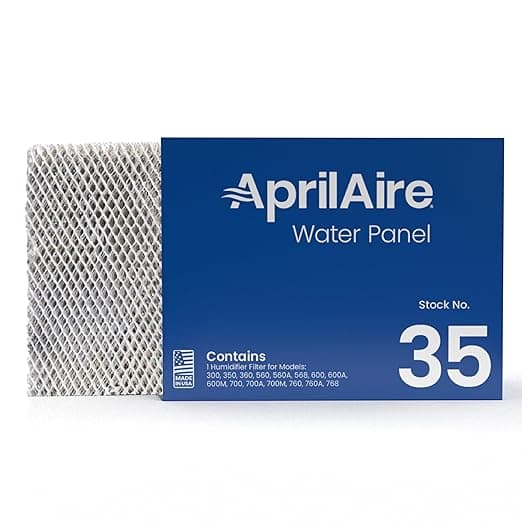
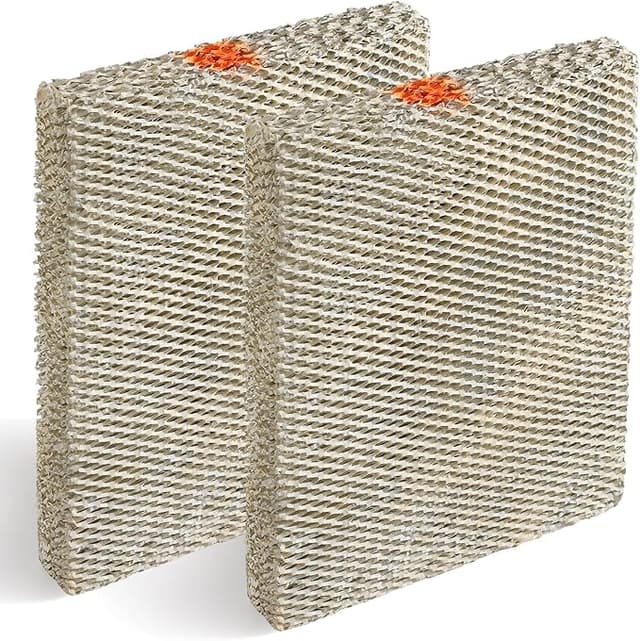
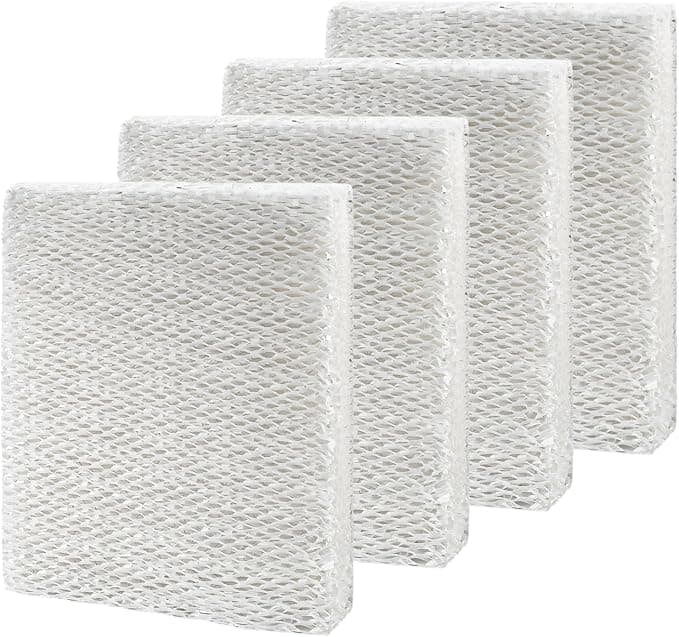
That was the number that stopped me. I was standing in my basement holding the genuine Aprilaire Water Panel 35 — the one the HVAC guy had penciled onto his invoice — and the going rate for the brand-name two-pack was hovering around $40. Forty dollars. For two stiff aluminum-mesh evaporator pads that, let's be real, are cardboard frames wrapped around expanded metal coated in some kind of moisture-wicking clay. The compatible PANEL 35 sitting next to it in my cart? About $18 for the same two-pack. Same dimensions, same job, less than half the money.
I'd been replacing these things once a heating season for three winters, always reflexively buying OEM because — well, because it felt safer. The brand was right there on the humidifier door. Then one March I did the math on what that loyalty had actually cost me: somewhere north of $60 over three years, on a part that gets soggy, crusts over with white mineral scale, and gets thrown out. That's when I finally tried the cheaper one. This is what I found.
What you're actually paying for
Here's the thing nobody tells you at the hardware store. The Water Panel 35 isn't precision electronics. It's a wicking medium. Water trickles down over it, your furnace blower pushes warm air through it, and the air picks up moisture on the way to your ducts. That's the whole machine. So the question isn't "is the compatible one as smart as the OEM" — there's nothing smart about either. The question is whether the cheaper one wicks as well and fits the tray without slumping. After running the compatible PANEL 35 through a full Wisconsin winter in my Aprilaire bypass unit, my answer is yes, with a couple of honest asterisks I'll get to.
On the money: I was paying right around $20 each for the genuine panels. The compatible came out to roughly $9 a panel in the two-pack. Across a season where I swapped mid-winter because our water is hard enough to crust a panel by January, that's the difference between spending $40 and spending $18 a year. Over the life of the furnace, you're looking at real money — easily a hundred bucks I'd rather keep.
The install — does it actually seat?
This is where a cheap pad can betray you, so I paid attention. I killed power to the humidifier first (you should too — there's a small water valve and you don't want it cycling while your hands are in there), popped the access door, and slid the old panel out. Mine came out heavy and gray, basically a brick of dried minerals. I wiped down the tray and the distribution trough while it was empty — two minutes with a damp rag, and worth it, because a clean trough means the new panel wets evenly instead of channeling down one side.
The compatible PANEL 35 slid into the frame slots with the same friction as the OEM. The little arrow stamped on the edge — "this side toward the airflow" — was printed clearly, which I half expected the off-brand to skip. It seated with that same firm stop against the back of the housing. No trimming, no bending tabs, no swearing. If you've changed a genuine one, your hands already know this one.
Where it's a touch behind — the honest part
I'm not going to pretend it's identical, because it isn't, and a review that says everything is perfect is a review you shouldn't trust.
First: the frame cardboard is thinner. Noticeably. When I pulled the compatible panel fresh out of the plastic, the chipboard edge had a little more flex than the genuine Aprilaire frame, which is a denser pressed board. Does it matter functionally? In my unit, no — once it's slotted in and gets its first soak, it stiffens up as the board takes on a bit of moisture and holds its shape. But if your humidifier mounts the panel in a way that leans on the frame for support, give it an extra look. Mine sits in proper tray slots, so the panel never has to be structurally heroic.
Second, and this is the one I'd actually warn a friend about: I got slightly less even wetting in the first week. The OEM clay coating seemed to grab water and spread it faster across the whole face. The compatible panel had a couple of dry-ish streaks near the top corners for the first few days until the coating fully wetted out and the minerals in my water "seasoned" it. After about a week it was wicking edge to edge like the brand pad. So the performance gap is real but it's a break-in thing, not a permanent deficit. If you watch your humidity readout obsessively like I do, you might see it sit a percent or two low for the first few days and then catch up.
Third, small one: the packaging is bare-bones. The genuine panel comes in a printed box; this showed up in a thin plastic sleeve with a sticker. Doesn't change how it works one bit, but if you were hoping for that boxed-product reassurance, lower the expectation.
Why you can't just skip the swap
Whichever one you buy, replace it on schedule — once a heating season, twice if your water is hard. A panel that's crusted over with scale stops wicking. When it stops wicking, two bad things happen. Your humidifier runs and runs trying to hit its target and never gets there, which is wasted water and a furnace blower working overtime. And the standing dampness on a clogged, neglected panel is exactly the kind of place mildew likes to set up shop — and then your "humidifier" is quietly seeding the air your family breathes with the stuff. A $9 panel once a year is cheap insurance against both. I've seen a glued-up, ignored panel turn a $1,800 humidifier into a moldy paperweight. Don't be that house.
So who should buy what
If you're under a manufacturer warranty that gets fussy about non-OEM parts, or you genuinely cannot tolerate a few days of slightly-low humidity during break-in — buy the genuine Aprilaire panel and pay the premium for the peace it buys you. That's a real reason and I won't talk you out of it.
For everyone else — the rest of us with an out-of-warranty bypass unit and a hard-water habit of crusting these things every winter — the compatible PANEL 35 does the same dumb, important job for less than half the price. Thinner frame, a slower first week, ugly packaging, all true. And I still reordered it the next season. For roughly $9 a panel instead of $20, doing exactly what the expensive one does once it's wet, I'd grab the compatible one again. I have, twice now, and my basement is still humid and my wallet is less mad about it.