Troubleshooting & Analysis
The afternoon I stood in the furnace room holding two boxes
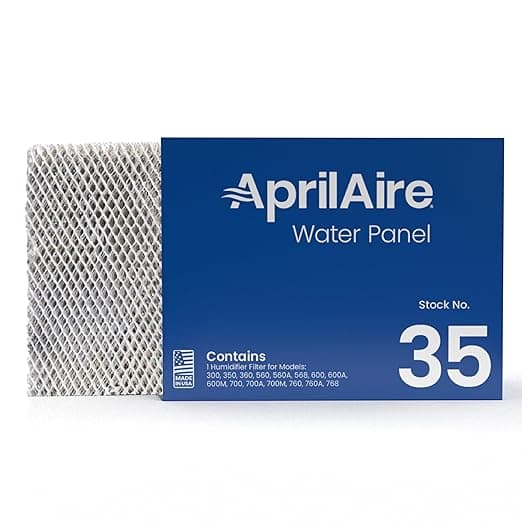
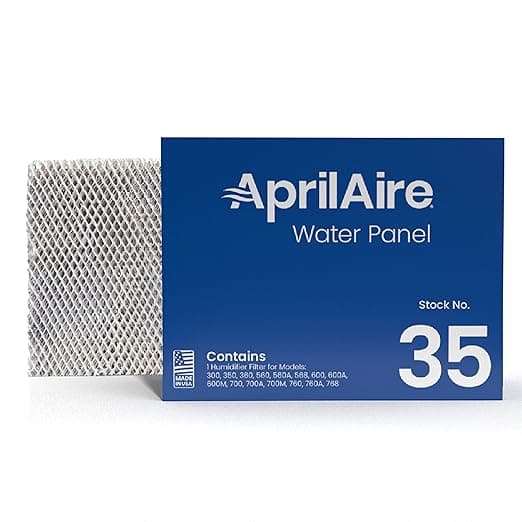
It was a Tuesday in February, my furnace humidifier had been screaming dry air into the house for weeks, and I had two filters on the workbench. One was the genuine Aprilaire water panel — the FILTER M / FILTER R / FILTER W lineup the manual told me to buy — sitting at right around $40 a panel by the time you account for shipping. The other was a generic compatible one I'd ordered on a whim for $18. Same dimensions. Same paper-and-resin honeycomb. Roughly half the money. And I stood there, honestly, a little annoyed at myself for hesitating. It's a wick. It soaks up water and lets air pass through it. How much "premium" can a sponge really be?
So I did the dumb thing on purpose: I put the cheap one in. Here's everything that happened over the four months since.
The money, laid out plainly
If you run an Aprilaire bypass or fan-powered humidifier, you're told to swap the water panel at least once a heating season — more if you've got hard water, which I do. The OEM panel runs me about $40 each time I buy one straight. The generic compatible panel I grabbed was $18. That's a $22 gap on a single swap. Do that once a year for the life of the unit and you're looking at real money — over a five-year stretch, north of a hundred bucks saved, for a part that gets soggy, does its job, and goes in the trash either way.
That last part matters more than the marketing wants you to think about. This isn't a HEPA filter trapping fine particulate that you're trusting with your lungs. It's an evaporative wick. The water evaporates off it, the minerals stay behind, and after a season it's a crusty white brick. Whatever you paid, it ends in the garbage looking identical.
Fit and install — the part I was actually nervous about
This was my real worry. A water panel that's a hair off-spec doesn't just "perform a little worse" — it can sit crooked in the frame, channel water down one side, and leave half the panel bone dry. So I paid attention.
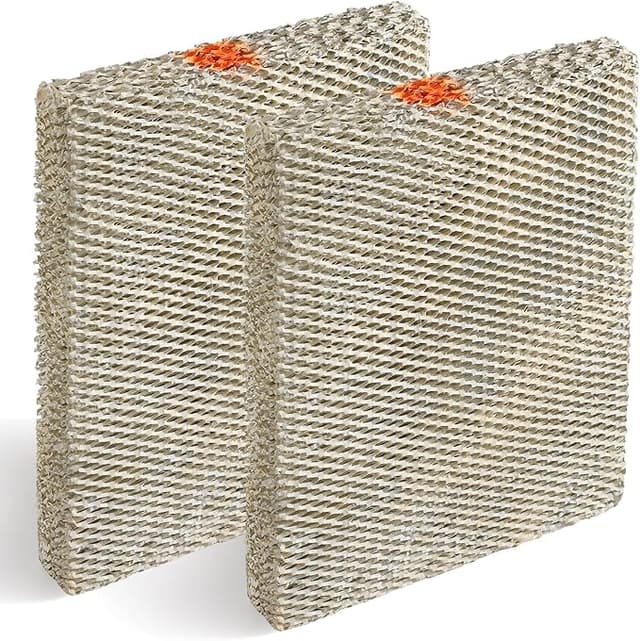
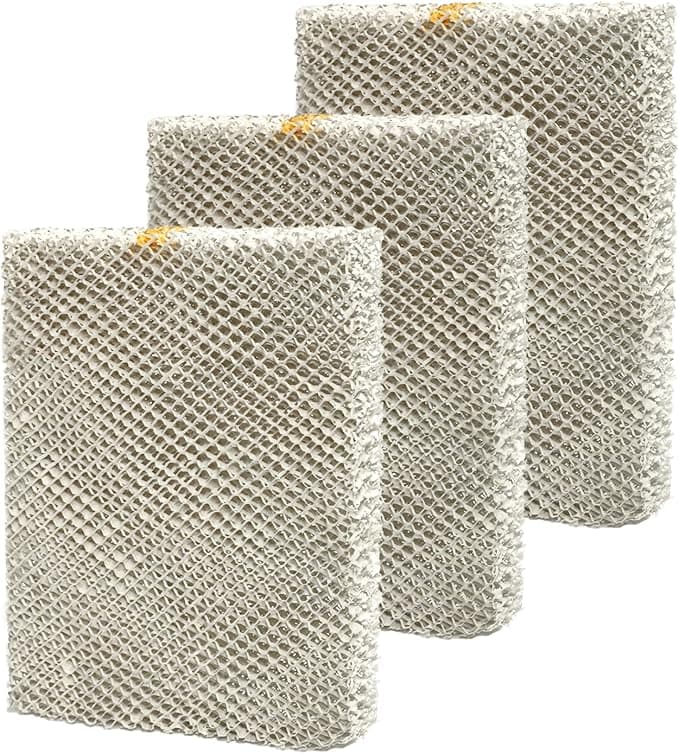
I killed the HVAC system at the thermostat first — you want the blower off so you're not pulling dust and so water isn't running while you've got the cabinet open. Popped the cover off the humidifier housing on the side of the supply plenum, slid the old panel and its plastic distribution tray out together. The generic panel dropped into the tray frame with maybe a half-millimeter of extra play compared to the genuine one. Noticeable if you're looking for it. Not enough to matter — it seated, the tray clicked back into the housing, the cover went on flush. No trimming, no shimming, no swearing.
One honest note: the orientation arrows printed on the compatible panel were faint, almost gray on tan. The OEM stamps "TOP" and a clear water-flow direction. On the cheap one I had to hold it to the light to find the up-arrow. Get that backwards and the panel wicks poorly, so it's worth the extra ten seconds. Mark the top with a pen if your eyes are tired.
How it actually performed
I keep a cheap hygrometer in the hallway, the same one all season, so I wasn't guessing. With the OEM panel last winter the house held around 38–40% relative humidity on a cold day. With the generic in, it sat at roughly 36–39% through the same kind of single-digit-outside weather. Is that a touch behind? Technically, yes. In the room? I could not feel the difference. No static-shock doorknobs, no cracked lips, no waking up with a sandpaper throat. The whole point of the humidifier — keep the air from turning the house into a desert — it did.
Evaporation rate is really what you're buying with a water panel, and the compatible one kept pace close enough that the only place the gap showed up was on a meter I had to go read on purpose.
The downsides — and there are real ones
I'm not going to pretend this was flawless, because it wasn't, and a review that hands you only good news is a review you shouldn't trust.
First, the build. The OEM panel has a stiffer aluminum mesh wrapping the media — it holds its shape even when fully saturated. The generic's frame is a thinner gauge. After a couple months of getting wet and drying out, wet and drying out, the bottom edge had started to bow slightly. Not enough to fall apart, not enough to stop working, but I could see the difference in rigidity the day I pulled it for inspection versus a fresh OEM one.
Second — and this is the one nobody warns you about — it scaled up faster. My water's hard, and by month three the compatible panel had a heavier crust of white mineral buildup than I remembered the genuine one carrying at the same point. That crust is what eventually chokes evaporation. Which means with really hard water, you might find yourself swapping the cheap panel a few weeks sooner than the OEM. Factor that into the savings: if you're replacing it more often, the gap narrows. For me it still came out ahead, but it's not the clean half-price story the box implies.
Third, smaller stuff: the packaging is flimsy cardboard, mine arrived with one corner of the media slightly dented (still usable, the dent was cosmetic on the frame), and there's no fancy printing or "genuine" hologram nonsense. You're buying a wick in a plain box. That's fine. It's just not pretty.
Why you can't just skip the swap
Quick reality check, because I've been the guy who "forgets" until March. A water panel that's fully scaled and saturated stops evaporating efficiently, and a humidifier that can't evaporate is just a tray of standing water sitting in your ductwork — that's where you get the funk, the mineral sludge, the stuff you don't want aerosolized into the bedrooms. Dry, cracking air on one end; a damp, neglected panel breeding problems on the other. Whichever panel you buy, the cardinal sin is leaving last year's brick in there. Change it. Cheap or genuine, just change it.
So which one do I tell my friends to buy?
Here's my honest split. If you've got genuinely brutal hard water and you hate doing this job, the OEM panel's stiffer frame and slightly slower scaling might earn its extra $22 by lasting the full season without a mid-winter swap — buy the genuine one and forget about it. Same if your unit is under warranty and you're the type who wants zero argument with a technician.
But for the rest of us — normal-to-moderately-hard water, a hygrometer that reads fine, and a wallet that notices forty bucks — the generic compatible panel did the same job in my house for half the price. It fit, it humidified, it got soggy and crusty exactly like the expensive one, and it kept my winter air breathable from February clean through to spring. The frame's a little flimsier and it scales a bit quicker, and I'm telling you that on purpose. I still grabbed two more for next season. At $18 a panel, doing the work the $40 one does, I'd buy it again — and I already have.