Troubleshooting & Analysis
I didn't believe a $20 panel could do the same job either
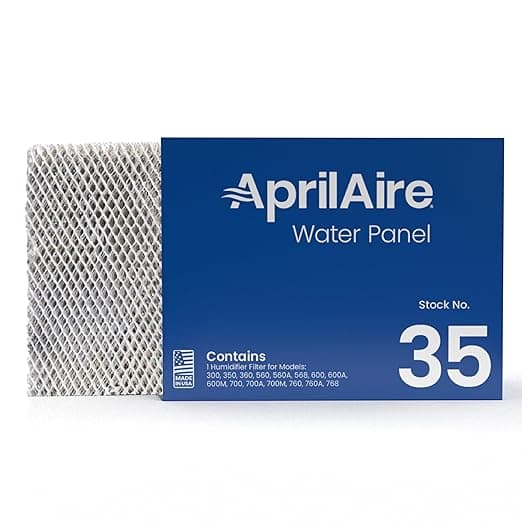
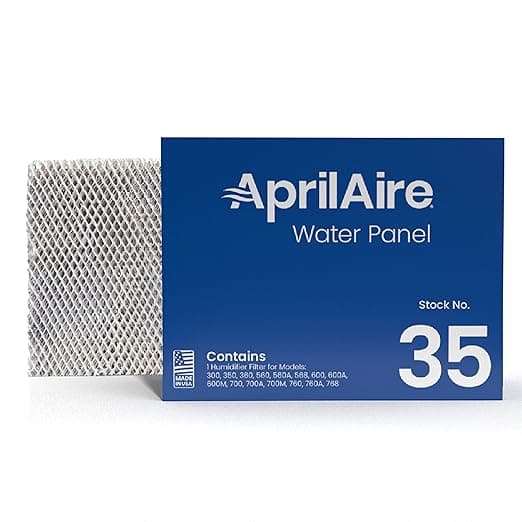
Here's where I started: convinced I was about to ruin my furnace humidifier to save a few bucks. I'd been buying the genuine Aprilaire water panels for my whole-house unit for years, and every spring I'd grumble at the receipt and pay it anyway, because the box said genuine and I figured genuine meant the thing wouldn't crumble inside my air handler. Then last fall a compatible version of the Aprilaire FILTER D / FILTER B / FILTER E showed up in my searches for about half the price, and my honest first reaction was: nope. No way a generic costs $20-something and does what the name-brand one does at closer to $40 a pop. That smells like the kind of swap that works for one cycle and then warps, channels water, and leaves you with a humidifier that drips instead of evaporates.
So I bought one to prove myself right. I've now run it through a full heating season. I was wrong, mostly, and I'll tell you exactly where.
The money, spelled out
The genuine water panels for these Aprilaire units run me in the low $40s when I buy a single, and you only ever buy one at a time because you change it roughly once a heating season — once a year for most people, twice if you've got hard water and the unit's running hard all winter. The compatible panel I bought was a hair over $20. Call it a $20 gap per replacement. That doesn't sound life-changing until you do the boring math: over five winters that's a hundred bucks I'd have handed over for a stiff piece of coated mesh that sits in the dark and gets wet. A hundred dollars to evaporate water. When you say it out loud it sounds ridiculous, and it is.
And no, I'm not counting some imaginary "premium" performance into that genuine price, because — as you'll see — I couldn't find the premium.
Does it actually fit the slot?
This was my real fear. A water panel that's off by a few millimeters doesn't filter badly, it fails differently: water runs down the face instead of soaking through, you get dry streaks and mineral crust on one side and nothing useful in the air. So fit is the whole ballgame.
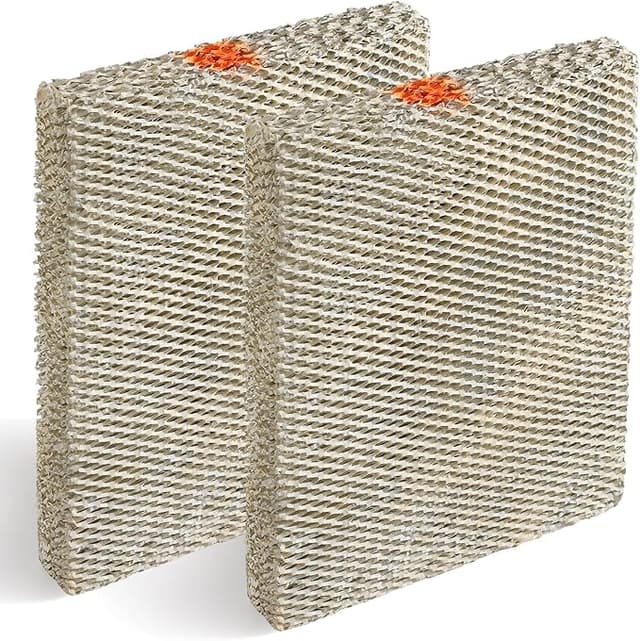
I shut the system down first — you want the blower and the water feed off before you go digging around the panel, both for your safety and so you're not fighting a trickle of water while you work. Popped the cover on the humidifier housing mounted to the furnace, slid the old panel out, and made a mental note of which way it faced. That orientation matters more than people think; these panels have a directional side, and the little marking telling you which edge points toward the airflow is there for a reason. The new one came out of the box dry and flat, I checked it against the old one for size before I committed, and it dropped into the same track. Snug. Not loose, not something I had to force. Cover back on, water and system back on, done in under ten minutes.
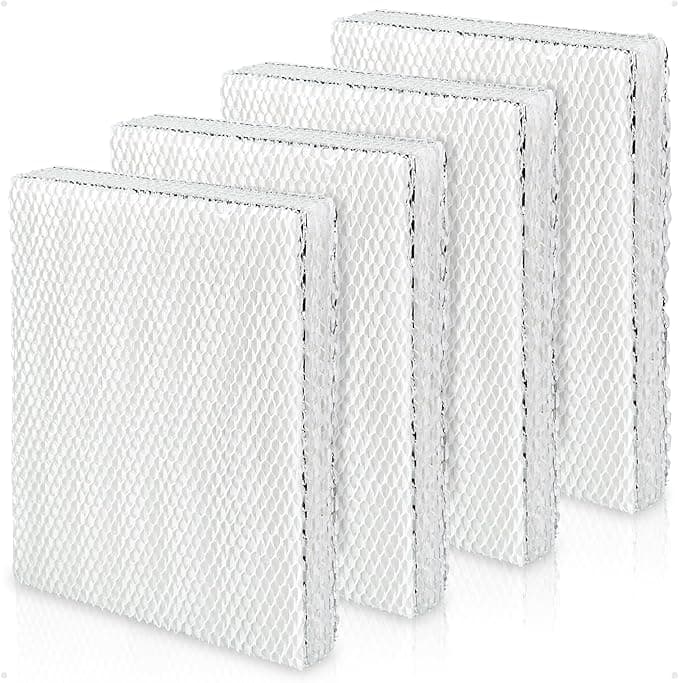
The frame is where you can feel the price difference with your hands. The genuine panel's cardboard-and-resin frame feels a touch denser. The compatible one is a little lighter, a little more flexible at the corners. In the slot, running, it made zero difference — but I'm not going to pretend they feel identical, because they don't.
How it actually performed
I keep a cheap hygrometer in the hallway, the kind that reads humidity off the wall, and that's my honest scorecard. With the genuine panel my house sat around 38-40% on a cold dry night with the furnace cycling. The compatible panel held the same range. I genuinely could not tell them apart on the number, and the number is the only thing that matters to my sinuses in February. The evaporation was even across the panel face when I pulled it mid-season to check — no dry channels, no one-sided crusting, which was the exact failure I'd been bracing for.
Mineral scaling built up over the winter the same way the genuine one does. That's not the panel's fault, that's my water, and you'll get it on any brand. By end of season the panel was stiff and chalky-white and ready to go, right on the same once-a-year schedule the genuine one runs. It didn't wear out early. It didn't fall apart. It just did the unglamorous job and then retired on time.
The downsides — and there are real ones
Let me actually sit on this part instead of waving at it, because a review that can't name a flaw isn't worth reading.
First: the packaging is cheap and a little careless. Mine arrived in a thin sleeve and one corner of the frame had a slight ding from shipping. It didn't affect the fit or the seal, but if you're the type who opens a box and inspects, you'll notice the genuine product is packed with more care. Check the corners before you install — if a corner's actually crushed inward, don't use it, because that's the one place a bent frame could let water sneak around the edge.
Second: that frame flex I mentioned. On a panel that lives in a fixed track it's a non-issue, but the first time you handle it you'll think "this feels flimsier," and you're not imagining it. It's a real, if cosmetic, gap in build quality.
Third, smaller: the orientation markings on mine were faint, lightly printed compared to the bold arrows on the genuine panel. If you're a first-timer who doesn't have the old panel sitting right there to copy, you could install it backwards without a clear cue. Keep your old one next to you as a reference and you're fine.
Why none of this is something to shrug at
A dead, scaled-over water panel isn't just "less humid." Once it crusts shut, water stops evaporating cleanly and starts sitting — and sitting water in a warm air handler is exactly where mold and bacteria set up shop, then ride your ductwork into every room you breathe in. A choked panel also makes the unit work against itself, and you feel that as dry, scratchy winter air no matter how high you crank the setting. So whatever panel you run, run a fresh one each season. The compatible one being cheap is the argument *for* changing it on time, not an excuse to stretch it.
So who should skip it?
If your humidifier is under warranty and the fine print demands genuine parts, buy genuine — don't give them a reason to deny a claim over a $20 panel. And if a perfectly stiff frame and bold printed arrows genuinely buy you peace at the register, that's a fair thing to pay for.
For everyone else: I went in expecting to catch the cheap one failing, and instead I caught it holding the same humidity, fitting the same slot, and wearing out on the same honest schedule — for about twenty dollars less. I've already bought my second one for next winter. That's the most sincere thing I can say about any filter: I spent my own money on it twice.