Troubleshooting & Analysis
The morning the nursery smelled like a landfill
I knew I'd let it go too long the second I opened the nursery door. It was a Tuesday, maybe six in the morning, and the room hit me before I'd even flipped the light — that sweet-sour, ammonia-edged smell that a full diaper pail gives off when the liner's stretched past its limit and the seal's basically given up. My daughter was fine. But the Ubbi in the corner, packed to the brim, its bag stretched so thin I could see the outline of what was inside, had stopped doing the one job it exists to do.
That's the thing nobody tells you about a diaper pail: it's only as good as the refill inside it. Run the bag empty or let it rip at the seam and the whole steel-and-rubber contraption is just an expensive-looking bucket of trapped gas. I'd been coasting on the last refill for weeks, squeezing out every last inch because I dreaded paying for another roll. That morning cured me of the dread. I ordered a new pack that afternoon — and for the first time, not the Ubbi-branded one.
What the brand-name roll actually costs you
Here's the math that made me switch. A twin-pack of the official Ubbi refill runs me around $23 at most places, and each roll gets me maybe five to six weeks with one baby in the house. Do the honest arithmetic over a year — you're refilling roughly every month and a half, so call it eight or nine rolls — and you're looking at close to a hundred dollars a year just feeding this bucket. For a bucket. That number sat wrong with me.
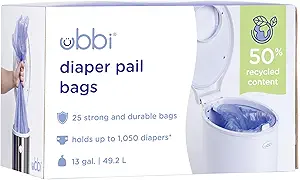
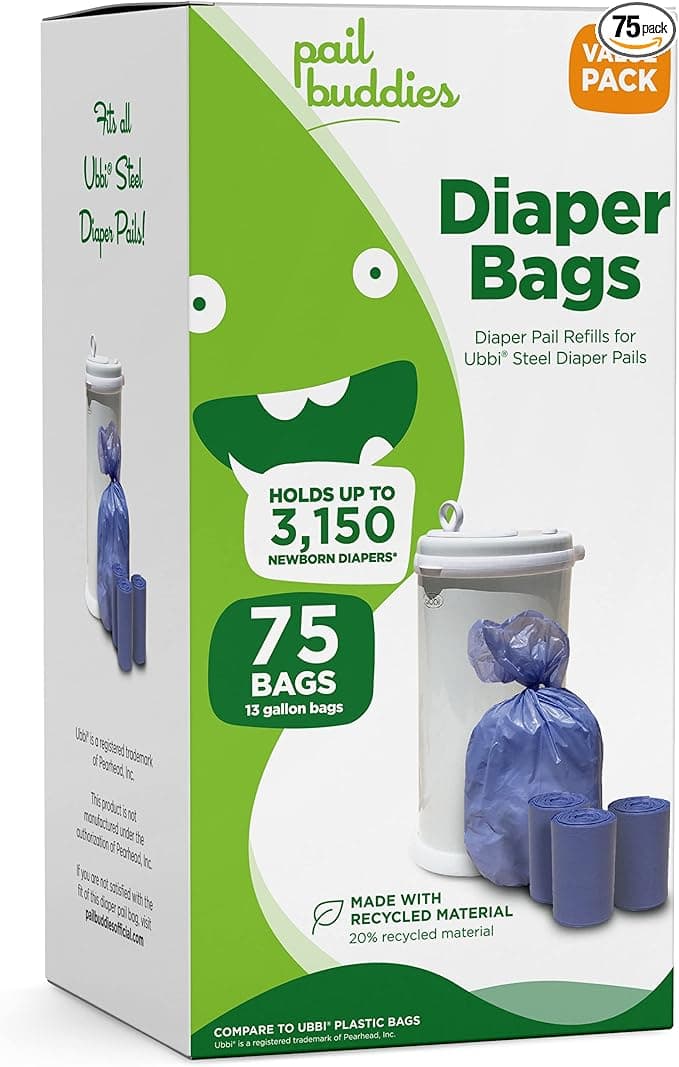
The compatible refill I switched to came in at about $15 for the same twin-pack. Same length of film, same style of tube that drops into the pail. That's eight bucks a pack, and across a year of refills it's real money — enough for a couple months of the good coffee I was rationing. So I did what I do with every OEM-versus-generic decision: I bought one pack, kept the last of my real Ubbi rolls as a backup, and ran them side by side to see if the cheaper one was actually the same or just cheaper.
Does it drop in like the real one?
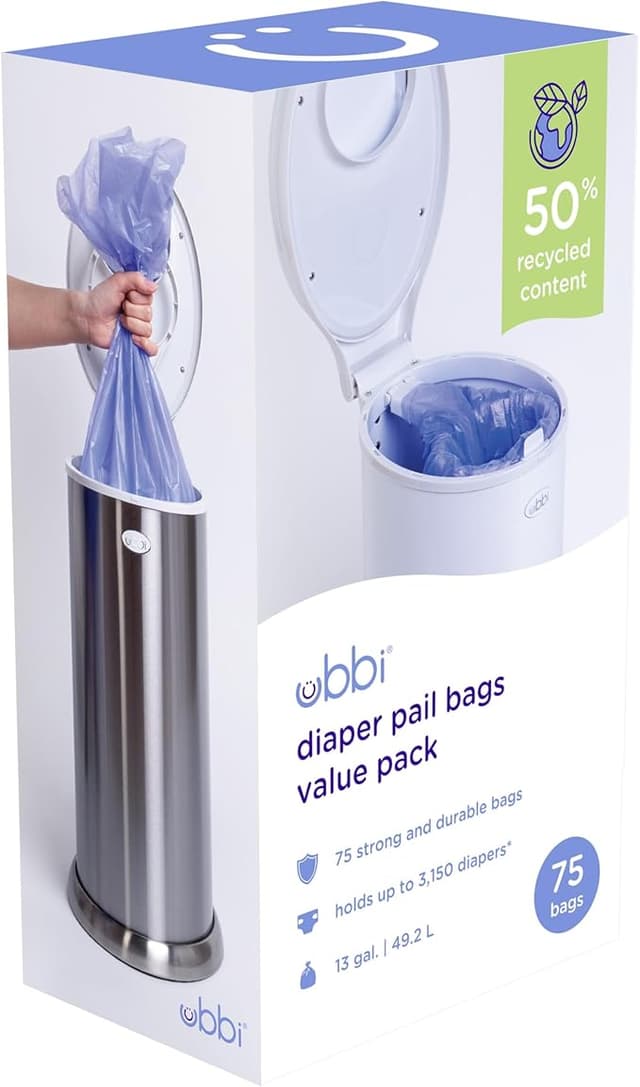
Install is genuinely nothing, and the compatible roll didn't change that. You pop the top of the pail, lift out the spent tube, drop the new one into the well, feed the end of the bag up through the center, tie a knot, and pull enough down to line the pail. That's it. The steps are identical to the branded roll because the pail doesn't know or care who made the plastic.
Fit was fine. The tube seated in the pail well without me forcing it, and the film pulled up through the center hole the same way. If you've done a couple of Ubbi refills you'll notice zero difference in the motion. First knot tied, first bag pulled — done in under a minute, one-handed, baby on my hip.
The honest performance take
Odor control is the whole ballgame here, and I'll tell you straight: the compatible film held smell about as well as the Ubbi roll for daily use. I'd twist the bag off after each diaper the way you're supposed to, and the pail stayed sealed and neutral between openings. Over a normal day of five or six changes, I couldn't tell the two apart with my nose, and I've got a sensitive one.
Where it's a hair behind: the plastic is a touch thinner. Not dramatically — but when I held a stretch of the compatible film up against the real Ubbi film, the branded one had a little more heft, a slightly heavier feel between my fingers. In practice that meant I was a bit more careful not to overload a single bag before twisting and tying off. With the thick Ubbi roll you can push a bag a little further. With this one I twisted off a shade earlier. Small habit change, not a dealbreaker.
The real downside, said plainly
So let's talk about that thinner film, because it's the one genuine knock and I'm not going to paper over it. On one bag — one, out of the dozens I've tied off — I got a small tear near the knot when I yanked the film down too aggressively to line the pail. My fault as much as the plastic's; I was rushing. But I'll be honest, I don't think a full-thickness Ubbi roll would've torn there. It made me slow my hands down for the rest of the roll.
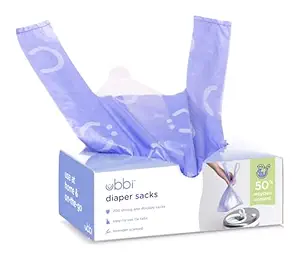
The packaging is also cheap. The branded pack comes in that clean printed box; this showed up in a plain sleeve that looked like it'd been through a rough shipping day. Cosmetic, sure, and it doesn't touch the actual film that matters — but if you're the type who wants the shelf in the nursery to look tidy, you'll notice. And there's a very faint plastic smell to the roll fresh out of the wrap for the first day or so. It aired out and I never smelled it again, but it was there.
One more real thing: consistency is the trade-off with any generic. Across the two rolls I've used I got the same quality both times, but I can't promise a bad batch never slips through the way it basically never does with the name brand. That's the deal you're making for the eight bucks.
Why letting it slide actually matters
Come back to that Tuesday morning for a second, because the smell isn't just unpleasant — it's the pail telling you the seal's failing. A pail full of decomposing diapers is a warm, damp box of bacteria, and once the odor's escaping into the room your kid is breathing it, night after night. For a baby with any allergy sensitivity that's not nothing. And a bag that fails at the seam means leaks pooling in the bottom of the pail, which is a genuinely gross cleanup and, over time, does the rubber gasket no favors. The refill is cheap insurance. The whole point is to swap it before it gets to landfill-o'clock, not after.
Who should skip this — and why I keep buying it
If the nursery aesthetic is sacred to you, or you tend to cram every bag to bursting and need that extra film thickness for the margin, buy the real Ubbi roll and don't think twice. Same if you just want the zero-variability guarantee of the brand. That's a fair reason to pay the premium.
But me? I've now been through two of these compatible packs, I know to slow my hands at the knot, and the pail smells like nothing between changes just like it always did. For eight dollars less a pack and a hundred bucks of diaper-bucket spending a year staring me down, doing the exact same job in the exact same pail — I'd grab this one again. And I have.