Troubleshooting & Analysis
Forty-something bucks for garbage bags. That was my breaking point.
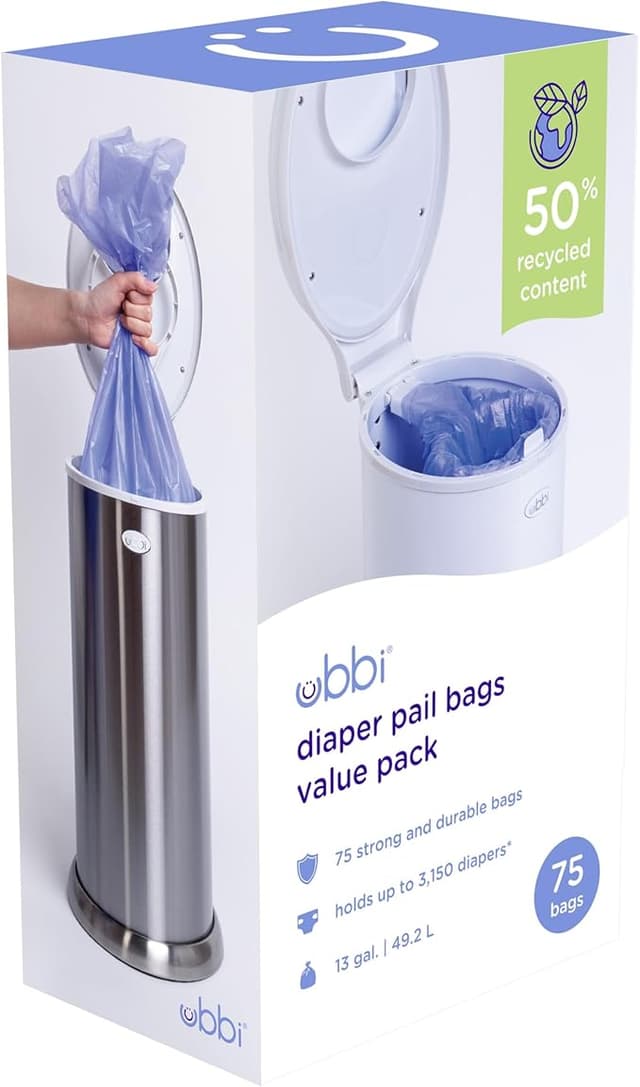
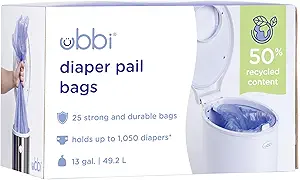
I stood in the nursery doing the math out loud like a crazy person. The genuine Ubbi refill three-pack was running me around $20, and at the rate a newborn goes through diapers I was burning through that in about two months. Call it $120 a year in bags to hold poop. Meanwhile a compatible Ubbi UBBI Pail Refill pack was sitting right next to it for closer to $11 — same three rolls, same claimed footage. Nearly half the price to do the exact same unglamorous job.
My gut said the cheap one had to be worse. Thinner film. Weaker seal. Something. So I bought both and ran them side by side in my own pail for a couple of months. Here's what actually happened.
What the OEM costs vs. what I actually paid
Let me put the numbers where you can see them, because this is the whole reason you're reading. The branded Ubbi refill hovers around $18–$20 for the multi-pack depending on where you buy. The compatible refill I've been running lands near $11 for a comparable amount of liner. That's roughly $8–$9 saved per pack.
Doesn't sound like a fortune until you remember how often you're replacing it. In the newborn stretch I was swapping a roll every three to four weeks. Over a year that's the difference between spending something like $120 on genuine refills and closer to $65 on the compatible ones. Fifty-plus dollars a year, on a consumable that you literally throw in the trash. That math is what made me stop feeling loyal to the label on the box.
The install: does the cheap roll actually fit the pail?
This was my first worry — that the compatible refill wouldn't seat into the Ubbi's internal mechanism and I'd be fighting it every time. It fits. I pull the pail open, lift the old liner out and knot it off, drop the fresh roll down into the well, feed the film up through the center, tie a knot in the end, and close the lid. Same motion as the genuine one. No adapter, no trimming, no wrestling.
The one honest note: the cardboard core on the compatible roll is a touch flimsier than Ubbi's. On my first swap I squeezed the roll a little too hard getting it out of the plastic and slightly crushed the tube, which made it want to unspool crooked. Handle it by the edges, drop it in gently, and it behaves. Rookie mistake on my part, but worth flagging so you don't repeat it.
Odor control — the part that actually matters
Nobody buys a diaper pail refill for fun. You buy it so your nursery doesn't smell like a nursery. This is where I expected the compatible roll to fall apart, and honestly it's where it surprised me most.
The Ubbi's real odor trick is the steel body and the sliding lid — the pail does most of the sealing work, not the liner. The refill's job is to be a continuous tube you can twist and cut, so smell doesn't escape between changes. The compatible film handled that fine. Two months in, lid closed, I couldn't smell anything standing over it. Open the lid to drop a new one in and yeah, it hits you — but that's true with the genuine refill too. That's diapers, not the brand of plastic.
Where I'll give the OEM a slight edge: the branded film feels a hair thicker and holds a twist a little more stubbornly. When I'd cut a full bag off and knot the new end, the compatible film occasionally wanted to untwist on me before I got the knot tied. Half a second of annoyance. Not a dealbreaker, but if you're clumsy at 3 a.m. — and you will be — it's a real difference you'll notice.
The downsides, stated plainly
Look, I'm not going to pretend this is a flawless swap. A few things I genuinely didn't love:
- The film is thinner. Not dangerously so, but you can feel it. On a heavy blowout day I double-knotted just to be safe, where the genuine liner I'd have trusted with a single tie.
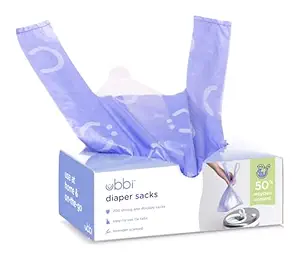
- The packaging is cheap. The rolls came in a thin plastic sleeve with a sticker label, not the tidy printed box Ubbi ships. Doesn't affect performance one bit, but if you're the type who winces at that, you'll wince.
- Footage math is fuzzy. The pack claimed the same length as the OEM, and I think it's close, but I didn't measure it to the inch. It felt like I got maybe a smidge fewer changes per roll. Even accounting for that, it was still cheaper per change.
- That flimsy core again. Store the spare rolls flat and don't crush them. The genuine ones survive a diaper-bag toss better.
None of those made me want to go back. But you deserve to hear them before you spend, because a review that's all sunshine is a review that's lying to you.
Why you don't want to stretch a dead refill
Quick, unsexy public-service note, because I learned it the annoying way. When a roll runs low and you keep cramming diapers past the point where the twist-and-cut still gives you a clean seal, the whole point of the pail collapses. Smell starts leaking around the lid. That stale-diaper funk is exactly what draws gnats and, in a warm room, gives bacteria a happy little home right next to where your kid sleeps. It's not just gross — it's the difference between a nursery that smells like nothing and one you apologize for when guests come over. Swap the roll a little early. At $11 a pack, there's no reason to ration it.
So who should skip the compatible one?
If you're deep in the twins-in-diapers phase, or you've had a genuine liner tear on you and the memory still haunts you, buy the OEM. The slightly thicker film and the sturdier core are worth the premium when your tolerance for a 3 a.m. surprise is zero. That's a real use case and I won't talk you out of it.
For everybody else — one baby, normal chaos, a pail that does the actual sealing — the compatible Ubbi UBBI Pail Refill has been genuinely fine in my house for two months and counting. It fits, it seals, it holds the smell in, and it costs me roughly half. The thinner film and the sad packaging are the tax you pay for saving fifty-odd bucks a year, and I'll pay that tax every time.
Honestly? I already reordered. That's the most honest verdict I can give you.