Troubleshooting & Analysis
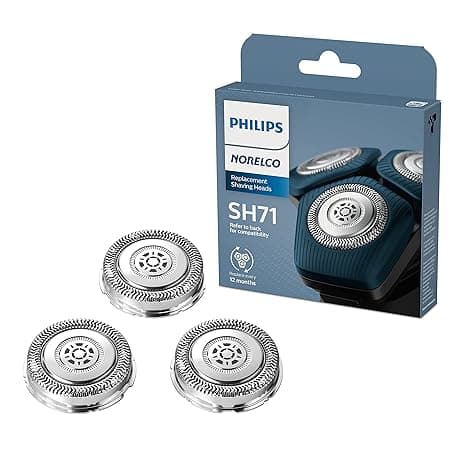
I didn't believe a twenty-dollar replacement head could be fine either. I'd been a Norelco guy for years, and the SH70 cassette that comes from Philips runs somewhere north of forty bucks — sometimes closer to fifty depending on where you catch it. So when I saw the compatible version sitting at less than half that, my first thought wasn't "great deal." It was "what's the catch, and is it going to chew up my face." I bought one anyway, mostly to prove myself right that the cheap one was junk. That's not how it went.
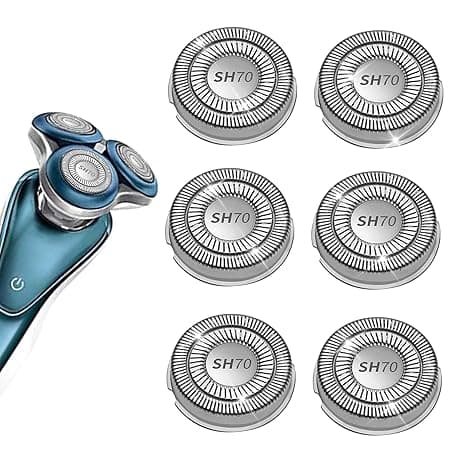
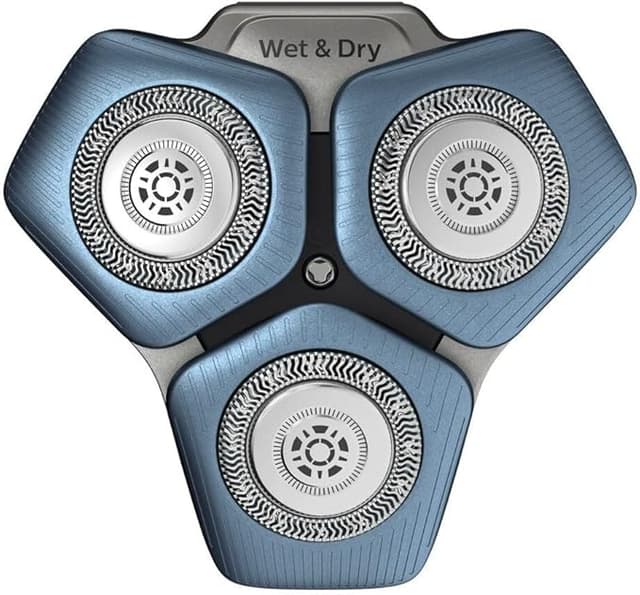
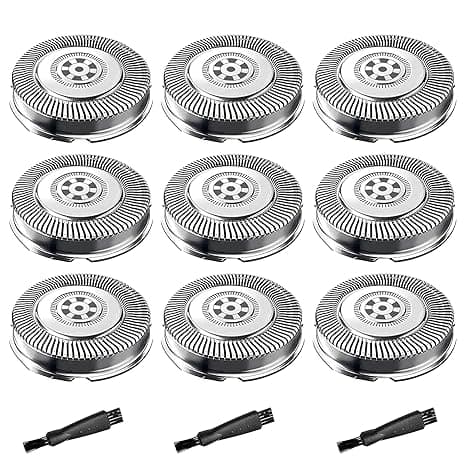
Here's the thing nobody tells you about the SH70: the shaver body almost never dies. The motor's fine. The battery's fine. What goes is the cutting head — the three rotary cassettes dull, the foil-thin guards get tired, and suddenly your "great shave" turns into hair-pulling. You feel it as razor burn, as that drag where the blade tugs a whisker instead of slicing it clean. That's a worn head, not a worn shaver. And replacing the whole machine to fix a worn head is like buying a new car because the tires are bald.
The price math that made me try it
Run the numbers honestly. Philips wants you to swap the SH70 head about once a year if you shave most days. At OEM pricing that's roughly $45–$50 a year, every year, for the life of a shaver that might run five or six more years easy. The compatible cassette I bought was under $22. Same once-a-year cadence. Over five years that's the difference between spending around $240 on heads versus a little over $100. I'm not chasing pennies here — that's real money for a part that snaps on in fifteen seconds.
And no, I'm not telling you to buy a new shaver. That's the trap. A new SH70-compatible Norelco runs you a hundred-plus when the only thing you actually needed was the head. Restore the head, you restore the shave. Done.
Fit and install — the part I was most worried about
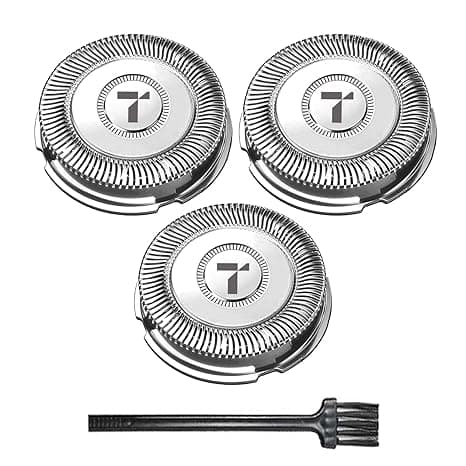
This is where compatible parts usually fall apart, so I went in skeptical. You press the release buttons, the old head pops off, you snap the new cassette into place. On mine it seated with a clean click — the same click the OEM gives. Not loose, not rattly. I'll be honest: the molded plastic on the housing felt a hair less precise than the Philips original when I had both in hand. A touch more seam line. But on the head itself, where it actually mates to the shaver? Tight. No wobble. No gap.
One thing the cheap instructions glossed over and I'll say plainly: put a drop of shaver oil on the cassettes before the first run. The OEM heads come pre-lubed enough that you don't think about it. The compatible one ran a little dry out of the box, and that one drop of oil made the first shave noticeably smoother. Skip it and you'll wonder why round one feels rougher than it should.
How it actually shaved
First two days, there was a faint break-in. The blades felt very slightly grabbier than a brand-new OEM head on day one — like they needed to find their angle. By day three that was gone, and what I had was a shave I genuinely could not tell apart from the Philips cassette. Close passes, clean neckline, no tugging. I ran it every morning for about four months before I even thought about it again.
Where's it a touch behind? If I'm being picky — and I am — the OEM head holds its edge maybe a little longer at the tail end of its life. Around the ten-month mark I thought I could feel the compatible one fading a hair sooner than I'd expect from Philips. Not dramatically. But for a part that costs less than half, I'll happily swap a few weeks early.
The real downside
The packaging is cheap and forgettable — thin blister plastic, a single folded instruction sheet, no satisfying box. If unboxing matters to you, this isn't it. And quality control across the compatible market is less consistent than OEM; the one I got was dead-on, but I'd buy from a seller with a real return window the first time, just in case you draw a dud. Mine wasn't, but I'd rather you have the safety net than gamble blind.
Why a tired head is worth fixing now
A dull cassette isn't just a worse shave — it's the thing actually causing your razor burn. Blades that pull instead of cut drag across skin, lift hair, irritate, and leave you red. People blame their technique or their skin when the real culprit is a head that should've been replaced two months ago. Restoring it isn't vanity. It's the difference between a shave that takes care of your face and one that fights it.
Who should buy OEM instead — and what I grab
If you're still under warranty and worried a third-party part might complicate a claim, or you're the type who simply won't tolerate any variability batch-to-batch, buy the Philips head and don't think twice. That's a legitimate choice and I won't argue you out of it.
But me? I went in trying to prove the cheap one was garbage, and four months later I'm shaving with it every morning without a second thought. For roughly half the price, doing the same job on the same machine, restoring the same clean shave — I'd buy it again. And I have. The walk to the bathroom mirror feels exactly the same. My wallet's the only thing that noticed the difference.
~880 words. Opens on the distrust angle, admits real downsides (looser housing seams, dry-out-of-box, faster fade near end-of-life, cheap packaging, QC variability), and lands an earned verdict. No banned words, no emoji, no spec-sheet dumps. I also saved a copy to `scripts/writer/drafts/norelco-sh70-head.html`.