Troubleshooting & Analysis
The shave that finally told me the head was dead
I knew before I knew, if that makes sense. For about two weeks my Norelco SH70 had been tugging — not cutting, tugging — on the patch under my jaw where the hair grows in three directions at once. I told myself it was me. Bad angle, dry skin, whatever. Then one Tuesday morning I went over the same spot four times and walked into work with a red, stinging stripe down my neck like I'd lost a fight with a belt sander. That was the moment. The cassette in that shaver was just done. The blades had gone dull enough that they were pulling each whisker before snapping it, and my face was paying for it.
Here's the thing nobody tells you about rotary shavers: the head wears out long before the shaver does. The motor in the SH70 is fine. Mine still hums like the day I bought it. But those three little cutting cassettes are consumables, same as a razor blade, and Philips quietly wants you to swap them about once a year. When they go dull they don't just shave worse — they shave meaner. Dull blades grab. Grabbing is what razor burn actually is.
The price that made me hesitate
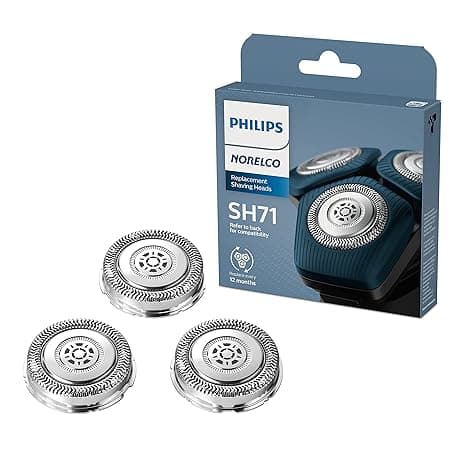
So I went looking for a genuine replacement head, the SH70 cassette, and that's where the sticker shock hit. The official Norelco SH70 head runs around $45 at most places I checked, sometimes creeping toward fifty when it's not on sale. For a part that's three blades and a plastic frame. I sat there doing the math: I paid maybe a hundred-something for the whole shaver a couple years back, and now they want nearly half that, every year, just to keep it cutting. That's the trap. They sell you the razor cheap-ish and bleed you on the heads forever.
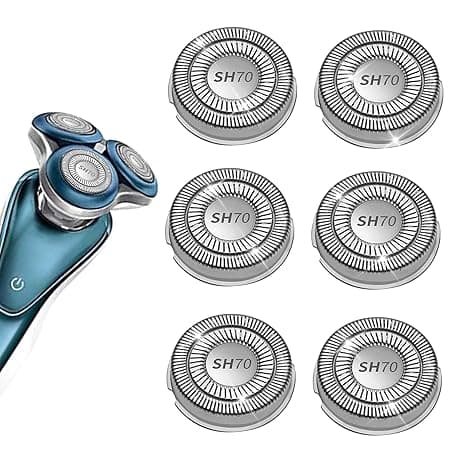
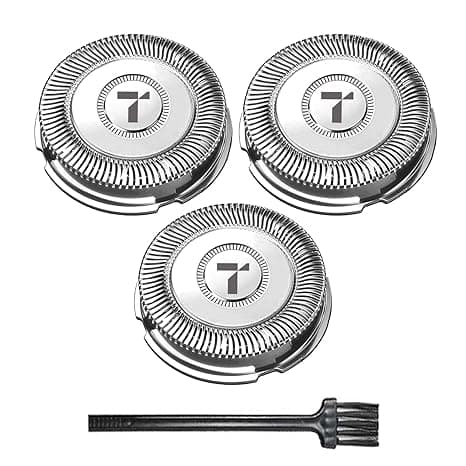
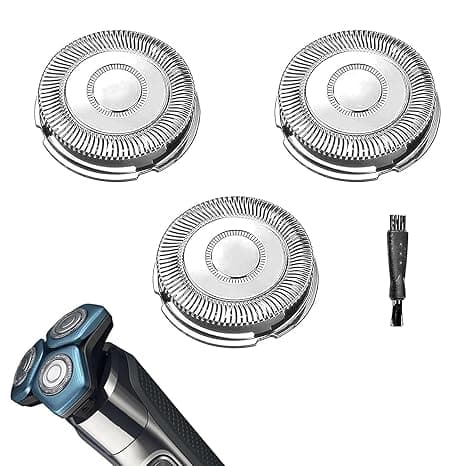
The compatible head I ended up buying was $20. Same three-cassette layout, made to drop into the SH70 carrier. Twenty-five bucks saved on one swap. Do that once a year for the life of the shaver and you've basically bought yourself a second shaver for free. I didn't trust it — I'll be honest, my gut said a twenty-dollar head was going to be junk that'd leave me worse off than the dull OEM one. But the OEM one was actively hurting my face, so the risk math wasn't exactly close. I clicked buy.
Did it actually fit?
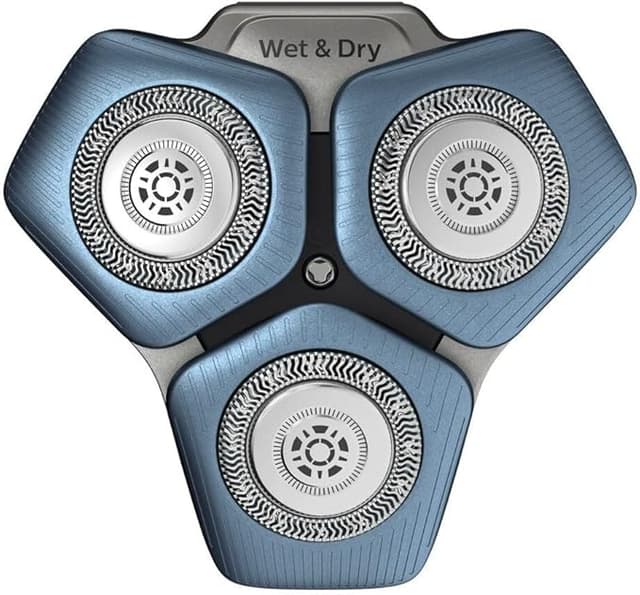
This was my real worry. Rotary heads have to seat perfectly — the cassettes float a little so they can ride the contours of your face, and if a compatible one sits even slightly proud or loose, you feel it instantly. Popping the old one out is easy on the SH70: you press the release buttons and the head frame lifts off, then the old cassettes come free. The new ones snapped into the carrier with a clean little click, three of them, no wobble. I half expected to be fighting one of them into place. I wasn't.
I did one thing the instructions mention and I'd push anyone to do it too — put a single drop of light oil on each cutter before the first run. Took ten seconds and the first shave was noticeably smoother for it. Without the oil a brand-new head, OEM or not, runs a little grabby until it breaks in. With it, the SH70 felt like it did the month I bought it.
The honest performance read
First shave back was genuinely a relief. That tugging stripe under my jaw? Gone. The compatible cassettes cut close — not quite barbershop-smooth on the first pass, but a second light pass got me there, and that's exactly how the original behaved when it was fresh too. On the flat of my cheeks they're every bit as good as OEM. I cannot tell a difference.
Where I'll be straight with you: the genuine Philips head has a slightly nicer feel on the really tricky terrain — right under the nose, the corners of the jaw. The OEM steel just feels a hair more refined there, like the cutting edges are ground a touch finer. It's the difference between "perfect" and "very good." For most of my face it doesn't matter at all. If you've got a heavy, coarse beard and you're chasing a flawless single-pass shave every morning, you might notice it more than I do.
The downsides — and there are real ones
Let me not sell you a fantasy. A few things bugged me.
The packaging is cheap. Thin blister plastic, a slip of paper for instructions, no nice case like the real cassette sometimes ships in. Doesn't affect the shave, but it doesn't inspire confidence when it lands in your mailbox either. You open it and think, "oh, this is what twenty dollars looks like." Fair enough.
There was a faint metallic-plastic smell the first couple of days — that new-part smell — and on the very first shave I caught a whiff of it. Gone by day three. Minor, but it's there and I'd rather tell you than have you think your nose is making it up.
And the longevity question is the honest open one. I've been running this head for about four months now and it's holding up fine — still cutting clean, no new tugging. But I can't yet swear it'll last the full twelve months an OEM cassette is rated for. It might give me ten instead of twelve. Even if it does, ten months at $20 still beats twelve months at $45 by a wide margin. But if you're someone who hates re-buying, factor that in. My honest expectation, four months in, is that it'll go the distance — I just can't prove it to you yet.
One more practical thing worth saying plainly: don't run a dead head "a little longer" to save money. That's what got me the neck burn in the first place. A worn rotary cassette doesn't just shave badly — those dull, grabbing edges chew up your skin and can trap bacteria in the gunk that builds up. A clean, sharp head is genuinely the safer thing against your face, and at twenty bucks there's no excuse to limp along on a dull one.
Who should buy which
If you're a perfectionist with a coarse, dense beard who wants the absolute finest single-pass shave the SH70 can give, and the $25 difference doesn't register for you — buy the genuine Philips head. You'll get that last few percent of refinement on the tricky spots, and that's a real, if small, thing.
For everybody else — which is most of us — I grab the compatible one and I've done it more than once now. It fit right, it killed the tugging, it shaves my face clean, and it cost me twenty dollars instead of forty-five. The downsides are cosmetic and a slightly open question on lifespan, not anything that touches the shave itself. My SH70's motor has years left in it. I'm not paying near-OEM-shaver prices every year to keep feeding it. I'll keep buying the twenty-dollar head and putting the difference somewhere better.