Troubleshooting & Analysis
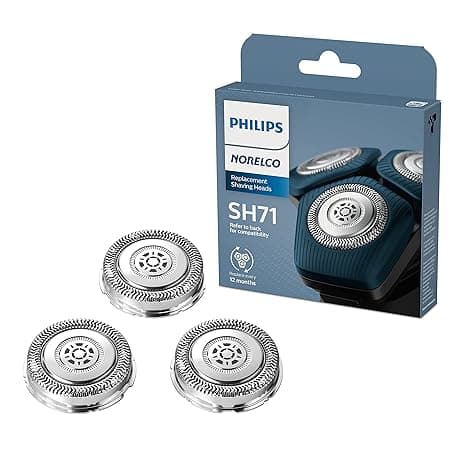
Forty-nine dollars. That's what Philips wanted for a genuine SH70 replacement head for my Norelco Series 7 — one little three-blade cassette, in a box barely bigger than a deck of cards. I stood in the aisle doing the math out loud like a crazy person, because a brand-new Series 7 shaver goes on sale for what, eighty? Ninety? So I'm paying more than half the price of the whole machine just to put a fresh head on the one I already own. That's the moment most people cave and buy a new shaver they don't need. I almost did too.
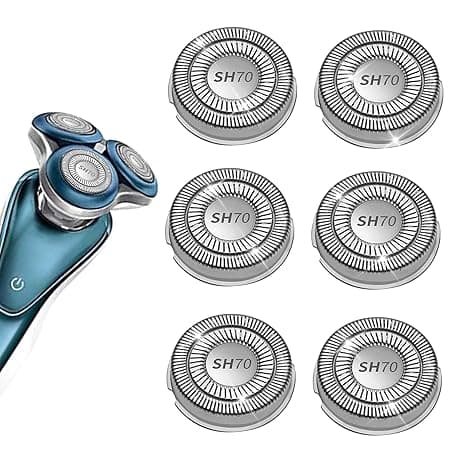
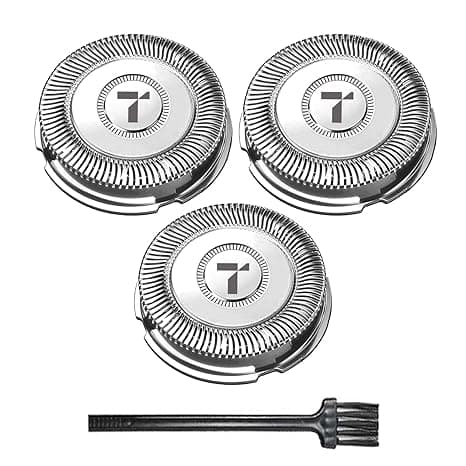
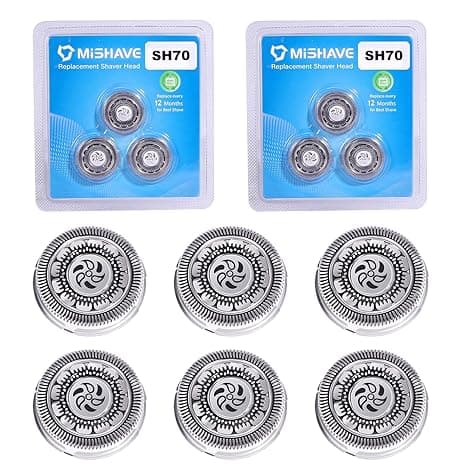
Then I found the compatible cassette for $19. Same blade count, same snap-in mount, made to drop into the exact same chassis. Thirty bucks cheaper for what is — on paper — the identical job. I bought it mostly out of spite, fully expecting to write a warning review about how the cheap one shredded my face. Four months later I'm on my second one and I haven't touched the OEM box since.
The real math, because the spite math matters
Here's why this part stings more than a fridge filter or a vacuum HEPA. A shaver head isn't a once-a-year thing you forget about. Philips says swap it every twelve months, and honestly with daily use that's about right — by month ten you can feel the blades getting lazy. So the OEM path is roughly $49 a year, every year, for as long as you keep the shaver. Five years of ownership, that's nearly $250 in replacement heads on top of the original purchase.
The compatible at $19 turns that into about $95 over the same five years. You're not saving thirty dollars once. You're saving thirty dollars on repeat, forever, and the savings quietly outgrow the price of the shaver itself. When I laid it out like that, the $49 head stopped looking premium and started looking like a subscription I never agreed to.
Does it actually snap in? Yes — with one honest caveat
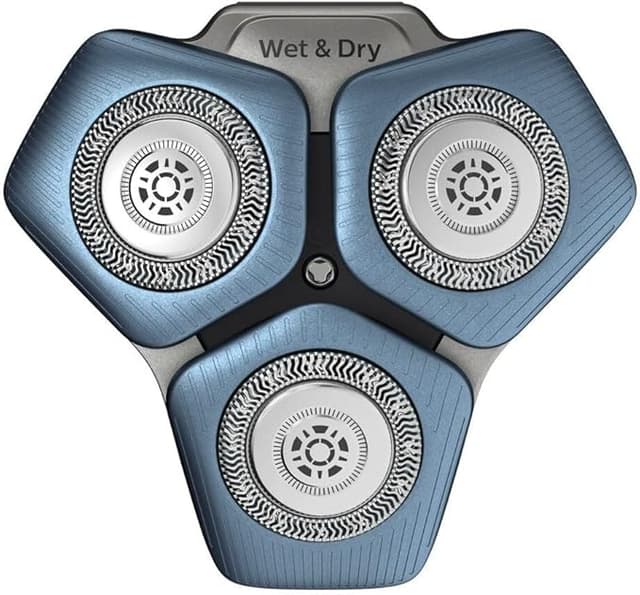
Install is genuinely a non-event, which is good because the Series 7 head mechanism is dead simple. You press the two release buttons on the sides, the old cassette lifts straight out, and the new one drops in until it clicks. I put a single drop of the little shaver oil on the blades afterward like the manual nags you to, ran it dry for ten seconds, done. Two minutes, no tools, no swearing.
The caveat: the click. On the genuine head there's a confident, deep snap when it seats — you feel it lock in both corners at once. On the compatible, the first one I installed clicked on one side a beat before the other, and for half a second I thought it hadn't seated. It had. I pressed it firmly and got the second click, and it's been rock solid since. But the molding tolerance is just a hair looser than Philips', and you can feel it in that first install. If you're someone who panics when something doesn't feel factory-tight, that half-second will spook you. Press it home. It's fine.
How it actually shaves
This is the part I cared about, because I have a coarse, fast-growing beard and a jaw that's basically a topographical map. A bad head means tugging, and tugging means razor burn under my chin for the rest of the day.
The first three days, the cut was excellent. Dead even with the OEM head I'd just retired — close, smooth, no pulling on the neck where the contour-following heads have to work hardest. If you handed me two shaved cheeks and asked which got the genuine head, I could not tell you.
Where it's a touch behind: longevity, and I want to be straight about this. The OEM head held its edge for a solid twelve months. The compatible started feeling slightly less crisp around month four — not bad, not painful, but I noticed I was doing a second pass on my chin that I didn't need to in week one. So the blade steel probably isn't quite OEM grade. That sounds damning until you remember the price. Even if a compatible head only lasts eight or nine good months instead of twelve, you're replacing a $19 part instead of a $49 one. The cost-per-good-shave still lands way in the cheap one's favor. I'd rather swap a little more often and keep my money.
The downsides, said plainly
I promised myself I'd write the warning review, so here's the warning part — it's just smaller than I expected.
One: the packaging is cheap. The OEM box has that satisfying retail-product weight; the compatible showed up in a thin blister pack that felt like a phone-case accessory. Cosmetic, doesn't touch performance, but if unboxing is part of why you pay for brands, you won't get that here.
Two: the first morning, there was a very faint plastic smell off the new cassette — that fresh-molded-ABS thing. It was gone by day two and I never noticed it on my skin, only when I brought the shaver up to my face the first time. Minor, but real, so I'm telling you.
Three, and this is the one to actually weigh: blade life, as I said above. You are trading a little durability for a lot of savings. If you are the type who buys a part and wants to forget it exists for a full year, the OEM head genuinely delivers that and the compatible asks you to pay a little attention around the eight-month mark.
Why a worn head is worth fixing now, not "eventually"
People put this off, and I get it, but a dull shaver head isn't just a comfort thing. When the blades go soft they stop cleanly slicing the hair and start grabbing and yanking it — that's the tug. That repeated pull on the same patch of neck is exactly what gives you razor burn and those little inflamed bumps. A fresh cassette, OEM or compatible, fixes that overnight because sharp blades cut on contact instead of dragging. I felt the difference the first morning: the neck irritation I'd been blaming on my technique was just a tired head all along.
So who should buy what
Buy the genuine $49 head if you shave daily, hate maintenance, and want a true set-it-and-forget-it twelve months with zero attention paid — and the cosmetics and that confident click matter to you. There's no shame in it; it's a good part.
For everybody else — which is most of us — grab the compatible. It seats in the same chassis, cuts dead even with OEM for the first several months, and costs $19 against $49. The frame's a hair looser on install and it won't quite go the full year, but at thirty dollars saved per swap, on a part you'll buy for as long as you own the shaver, I genuinely don't see the argument for the OEM box anymore. I bought the cheap one to prove a point. I'm still buying it because it works. That's the whole review.