Troubleshooting & Analysis
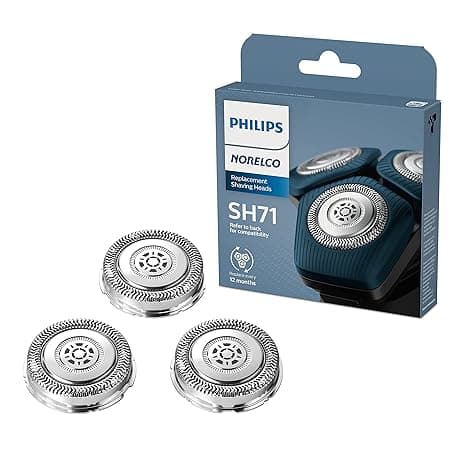
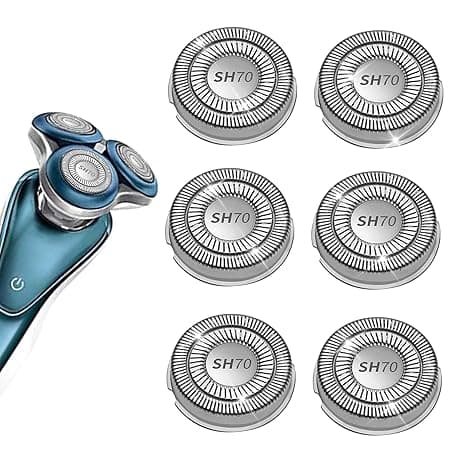
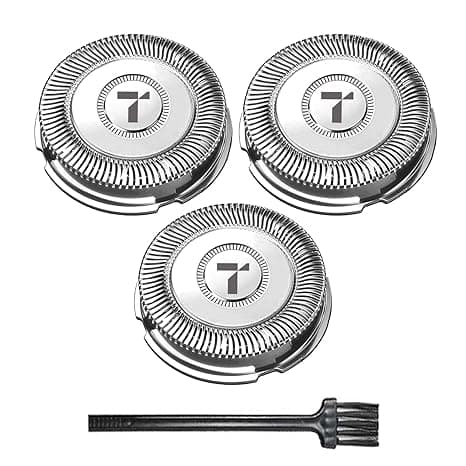
A brand-new Norelco Series 7 runs you somewhere north of $130 these days. I know because I almost bought one. My old one had started tugging — that little pinch on the jawline where the blade grabs a hair instead of slicing it — and my first instinct was the same one the marketing people are counting on: just replace the whole shaver. Then I did the dumb-obvious thing and looked up a replacement head instead. The compatible cassette I ended up with was a hair over $20. Twenty dollars versus a hundred and thirty. Same machine, suddenly shaving like the day I unboxed it. That gap is the whole story, and it still kind of annoys me that I almost paid the lazy tax.
So let me tell you what actually happened when I swapped it, because I didn't trust the cheap one either.
The math nobody does until they're frustrated
Here's the part the box doesn't spell out for you. The cutting heads on a Series 7 are a wear item. Philips themselves will tell you a shaving head is good for roughly two years before the blades dull and the foils thin out. After that, you're not shaving — you're dragging. The genuine replacement cassette floats around $45 to $55 depending on where you catch it. The compatible head I bought was $20. Both do the identical job: spin, cut, repeat. Over the life of a shaver you might replace the head two or three times. At OEM pricing that's $135 in heads alone — more than the shaver cost. At $20 a pop you're out sixty bucks total and the machine outlives the spreadsheet.
That's the number that flipped me. Not the single purchase. The fact that the OEM head replacement, done a few times, quietly costs more than buying a new razor — which is exactly the logic that pushes people toward a new razor. It's a loop built to make you spend.
Does it actually fit, or is that the catch?
This was my real worry. A shaver head sits right against your skin at speed. A bad fit isn't a minor annoyance, it's a nick on your neck. So I went in skeptical.
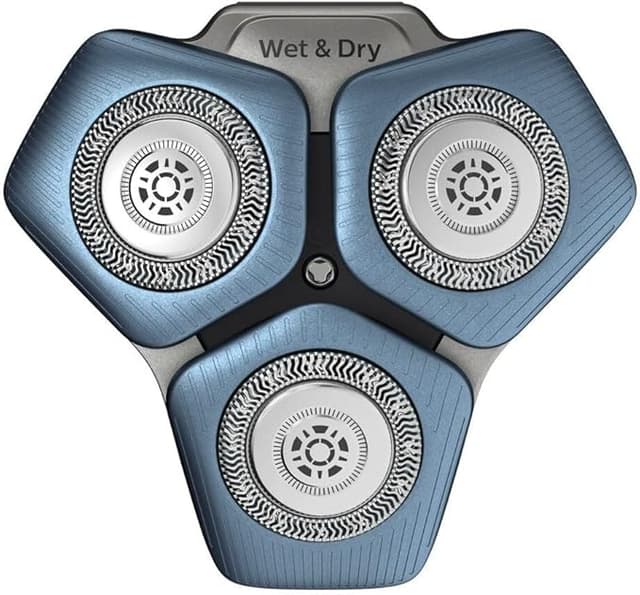
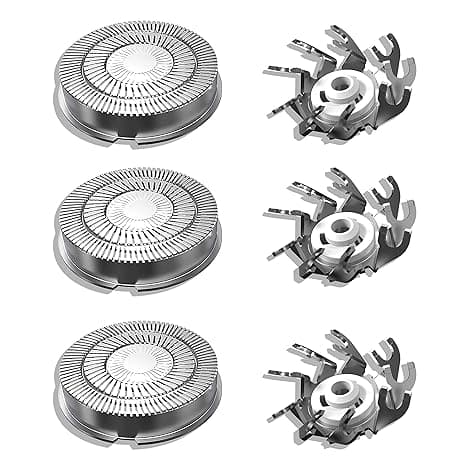
The swap took me under a minute. You press the release buttons on the head, the old cassette lifts off, and the new one snaps down into the same seat. There's a click — a real, positive click, not a vague "I think that's in there" — and the head locked flush with no rocking when I pressed on it with a thumbnail. I did add the one thing the instructions mention and a lot of people skip: a single drop of shaver oil across the foils before the first run. Costs nothing, takes ten seconds, and it genuinely smooths out that first pass. If you're going to do this, do that.
First shave was honestly a little startling. The pull was just gone. The blades caught hair and cut it instead of yanking, and that razor-burn sting along my neck — the thing that sent me shopping in the first place — didn't show up. Three weeks in now and it's holding.
Where it's a touch behind OEM — and the real downside
I'm not going to sit here and tell you it's indistinguishable from genuine Philips, because that's the kind of all-upside review that reads fake. There are differences, and you should hear them before you buy.
The first is the foils. The compatible foil feels a hair thinner under the fingertip than the OEM, and I'd bet against it lasting the full two years the genuine head claims. I'm planning on more like fourteen to eighteen months before this one starts pulling again. But — and this is the part that matters — at $20 versus $50, I can replace it twice and still be ahead, and I'd rather swap a cheap head a little more often than baby an expensive one.
The second thing, and this is the genuinely honest downside: the packaging and the smell. The box this came in was flimsy, no inner tray, the cassette just rattling around in a thin plastic clamshell. And for the first two or three shaves there was a faint plastic-and-machine-oil smell coming off it when the motor warmed up. Not strong, not on my skin, just a "this is new and cheap" odor near my nose for a few days. It aired out completely by the end of the first week. If you're someone who reads a cheap smell as "this is going to hurt me," it'll bug you for a minute. It's cosmetic. But it's real and I'd want to know going in.
One more practical note from actually living with it: the closeness on a flat cheek is dead even with OEM. Where I notice a small gap is the awkward spots — right under the nose, the corner of the jaw — where the genuine head's pivot feels a touch more sure-footed. I just go over those a second time. Ten extra seconds. For thirty dollars saved, I'll take the ten seconds.
Why a dull head is worth fixing now
It's easy to put this off and just push harder with the worn head. Don't. A dull cutting head doesn't only shave worse — it shaves rougher. Tired blades grab and tug hair instead of cutting it clean, and pressing harder to make up for it is exactly how you end up with razor burn, ingrowns, and that raw patch on the neck. The tugging you feel isn't your face being sensitive. It's the blades telling you they're spent. A fresh cassette fixes it at the source for the price of a couple of coffees.
Who should buy OEM instead — and who should grab this
I'll be straight about who this isn't for. If you have genuinely reactive skin that flares at the smallest thing, or you simply won't tolerate any break-in smell or a foil that might tap out a few months early, pay the extra thirty bucks for the genuine Philips cassette and don't think about it again. That's a legitimate choice and I won't talk you out of it.
But for me — normal skin, a regular face, a Series 7 that just needs to cut hair without pulling — the compatible head was an easy call. It snapped in with a real click, it killed the tug on the first pass, it cost a fraction of a new shaver and less than half of the genuine head. The packaging's cheap and it smelled like a factory for three days. And I'd still buy it again, because I already have. Skip the $130 new razor. Skip the $50 OEM head if you don't need it. Drop a clean cassette into the machine you already own and get on with your morning.