Troubleshooting & Analysis
The click is the tell
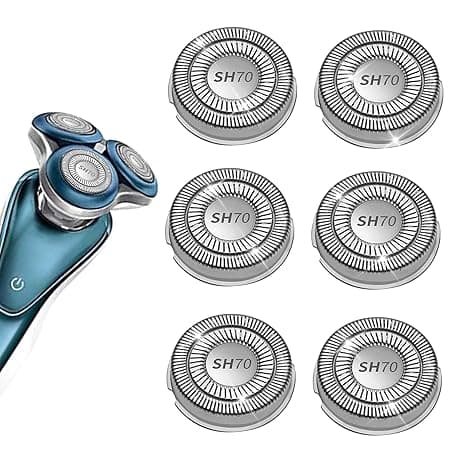
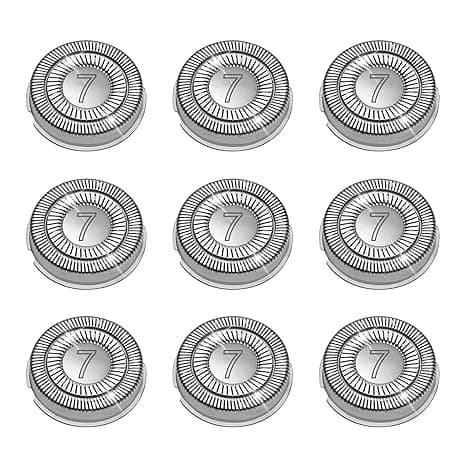
You know the SH70 cassette is seated right when it gives you that flat, plasticky snap — not a click, exactly, more of a muffled clunk as both arms drop into the slots. The first compatible head I bought for my Series 7 (a 7700-something, the one I've had since maybe 2019) didn't do that on the first try. I pressed it in, felt one side catch and the other float, and had to pop it back off and re-seat it. Annoying. But the second time it sat flush, gave me that clunk, and that was the last time it ever gave me trouble.
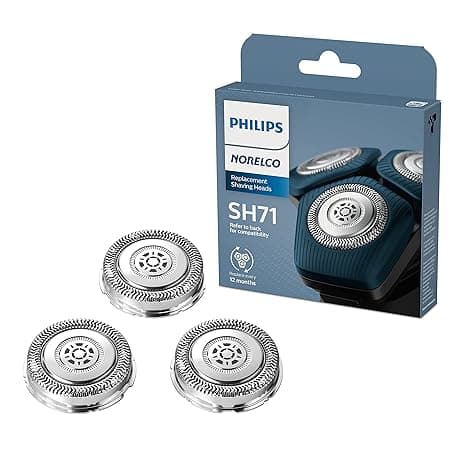
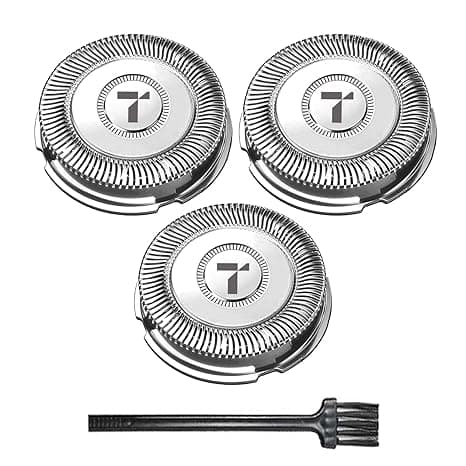
So let's talk about whether you should buy the $18 aftermarket head or the $45 Philips-branded SH70, because that's the actual decision you're standing in front of, and I've now done it both ways.
The price math nobody runs
Philips wants you to swap the head every 12 months. The genuine SH70 runs $40 to $50 depending on the day. The compatible ones float around $16 to $22 for a single, and you'll often see two-packs that drop the per-head cost under $12. Over the life of a shaver you keep for, say, five or six years, that's the difference between spending $250 on heads and spending $90. And here's the part Philips really doesn't want said out loud: a fresh compatible head turns a tired, hair-pulling shaver back into something that actually cuts. People throw out a perfectly good Series 7 because it "got dull" when the motor's fine — it's just the blades. A ten-dollar head fixes that.
I had exactly that experience. My shaver had gotten to the point where it would grab a hair, tug, and skip past it — that little sting on the neck, the patchy stubble under the jaw. I genuinely thought the thing was dying. New head, and the first pass the next morning felt like the shaver was a year old again. Close, quiet, no pulling.
Fit and install — it's three steps, and one of them matters
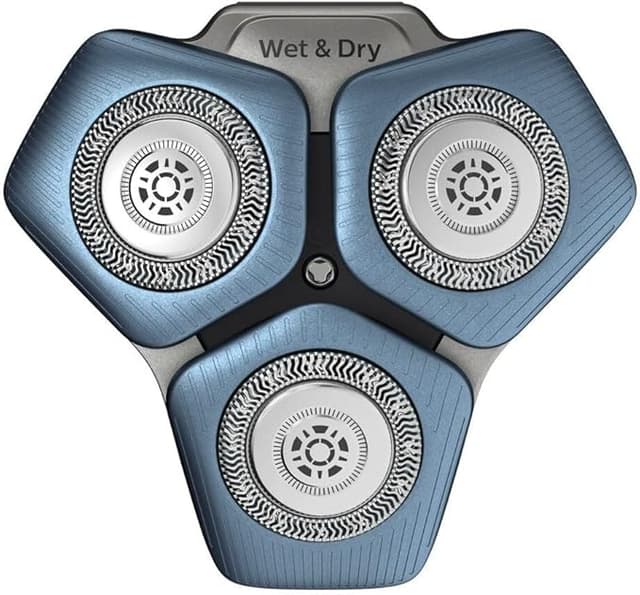
Removing the old head is the easy part: press the two release buttons on the sides and the whole top frame lifts off, then the cassette comes out. Snap the new cassette in — and this is the step where the cheap heads earn their reputation, fairly or not. On the genuine SH70 the cassette drops in like it was machined for the housing, because it was. On the compatible one, the frame tolerance is a hair looser. Not loose enough to rattle in use, but loose enough that you feel it during install and think "hm." Seat it firmly, listen for both sides to catch, and you're fine. I've had mine in for months with zero wobble once it's locked.
The third step, the one people skip: a single drop of shaver oil on each cutter after you snap it in. Philips buries this in the manual and the aftermarket sellers don't mention it at all, but it's the difference between a head that runs smooth and quiet for a year and one that starts sounding gritty by month four. One drop per cutter, run it dry for ten seconds, done. Do it. It matters more on the compatible heads than the genuine ones, honestly, because the blade steel isn't quite as slick out of the box.
Where it's honestly a touch behind
I'm not going to tell you it's identical, because it isn't. Two real things:
- The first three days, there's a faint plastic-and-machine-oil smell when you turn it on. It fades completely, but it's there at first, and it's a reminder you bought the budget part.
- On a three-day beard — when I've let it really grow out — the genuine SH70 clears it in one or two passes and the compatible head wants a third. For daily or every-other-day shaving I genuinely can't tell them apart. For heavy growth, the OEM is a little more efficient. Real difference, small difference.
The packaging is also cheap. Thin cardboard, sometimes a generic blister pack, no satisfying Philips box. Doesn't affect the shave. Just don't expect it to feel premium when it shows up.
Why a tired head is actually worth fixing now
Here's the thing people don't connect: a dull head isn't just a worse shave, it's a worse experience for your skin. When the blades stop cutting cleanly they pull each hair before they sever it, and that tugging is what causes razor burn and those little inflamed bumps along the neckline. You press harder to compensate, which makes the irritation worse. I spent a month blaming my skin and my technique when the real problem was a head that should've been replaced six months earlier. Swapping it cost me less than a sandwich and the burn went away in two days.
The verdict
Buy the genuine SH70 if you've got a heavy, fast-growing beard you only shave every few days, or if you're the kind of person who'll be annoyed every single morning by knowing you went aftermarket. That's a real preference and there's no shame in it.
For everyone else — daily or every-other-day shavers, people who just want a clean, quiet shave and would rather not pay $45 a year for the privilege — I grab the compatible head, and I've done it three times now. Seat it firmly, give it the drop of oil, push through the first few days of faint plastic smell, and you've got a Series 7 that performs like new for somewhere between a third and a quarter of the OEM price. For the money, doing the same job on my face every morning, I'd buy it again. I have.