Troubleshooting & Analysis
The click is how I knew it was seated right
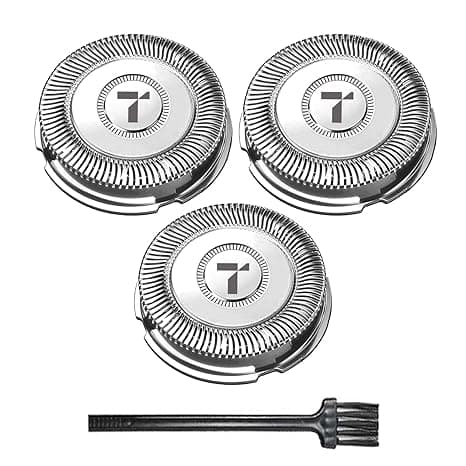
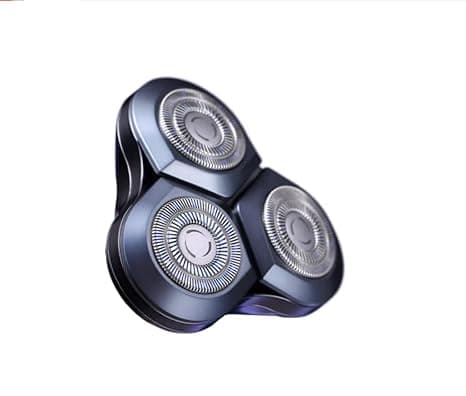
First thing I noticed wasn't the shave. It was the click. When you snap a new cassette into a Norelco Series 7, there's this small, definite tk — two of them, actually, one for each side of the holder — and the compatible head I bought clicked just as crisply as the SH70 that came with the razor three years ago. I'd half expected mush. Loose plastic, a wobble, that sinking feeling you get with cheap parts. Nope. It sat down flush and locked.
I'll back up, because I almost didn't buy it.
My Series 7 had gotten bad. Not "time for a change" bad — actually painful. The blades had dulled to the point where they were grabbing hairs on my jawline and yanking instead of slicing. You know that feeling, where a shaver stops cutting and starts plucking? Little red bumps along the neck for the rest of the day. I was genuinely about to drop $180 on a whole new razor because I assumed the machine was dying.
It wasn't the machine. It was the head. Three-year-old foils and cutters do exactly this.
The math that stopped me from buying a new razor
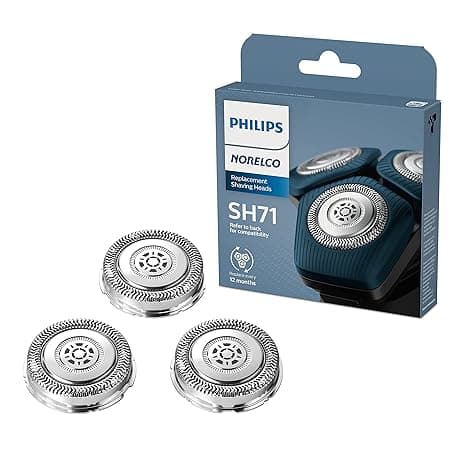
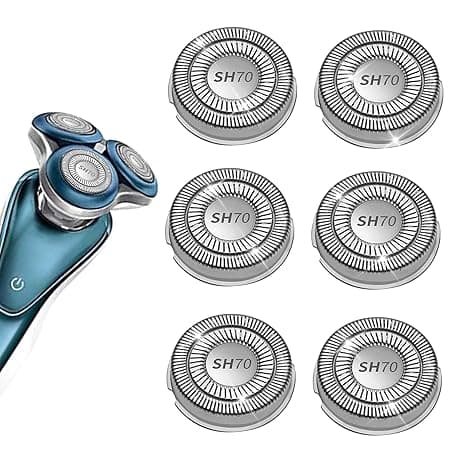
Here's the thing nobody tells you at the store. A Series 7 head is a wear part, like brake pads. Philips wants you to swap it about every two years. The genuine SH70 replacement runs around $42 most places I checked — sometimes $45 at the drugstore, occasionally $38 if there's a sale. The compatible cassette I bought was $17.
So the real comparison was never "new razor vs. old razor." It was $17 to bring my existing Series 7 back to life, versus $180 for a new one I didn't need, versus $42 to do the exact same $17 job with a Philips sticker on the box. Put that on a two-year cycle and the OEM route costs you an extra $50 every four years for, as far as I can tell, the identical maintenance.
I went with the $17 one. Skeptically.
Install: easier than I made it in my head
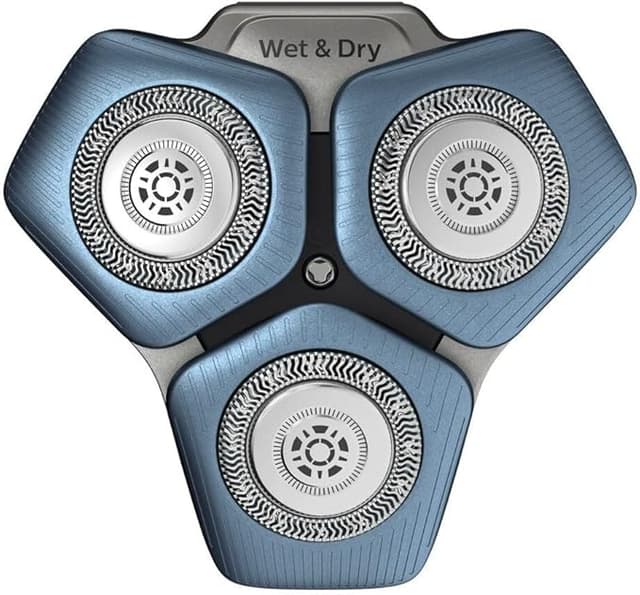
I built this up into a whole project and it took maybe ninety seconds. You press the two release buttons on the head holder, the old cassette pops off, and the worn rings basically fall out into your hand — mine were genuinely gross, full of three years of stubble dust. The new cassette drops in, you close the holder, and you get that click I keep going on about. Then a single drop of the little oil that comes in the box, right on the foils, run it dry for a few seconds to spread it.
One honest note here: the printing on my replacement told me which way the cutters face, but the ink was faint and a little smudged. I had to hold it under the bathroom light for a second to be sure I wasn't seating it backward. Philips embosses that marking so you can feel it. The compatible one just prints it, lightly. Minor — but it's the kind of corner-cutting you notice.
How it actually shaves now
First pass, morning of day one: clean. The pulling was gone — completely gone — and it cleared three days of growth on my neck without me going over the same spot four times. That alone justified the $17.
Where it lands honestly versus the genuine head: on the flat parts of my face, cheeks and jaw, I cannot tell the difference. None. On the trickier stuff — right under the nose, the corner where my jaw meets my throat — the OEM foils were maybe a hair smoother on the very first stroke. We're talking about the difference between "perfect" and "one extra little pass." If I weren't writing this and paying attention, I doubt I'd have clocked it.
The downside I'd want a friend to know
For the first three or four shaves, there was a faint metallic smell after I rinsed the head — that new-blade tang. It faded and hasn't come back. More real, though: the foils on a compatible cassette are thinner gauge than Philips uses. Mine are holding up fine four months in, but I'd bet money this head won't last the full two years the genuine one claims. Call it 14, 16 months before it dulls. Which is the whole point — at $17, I'll just buy another. Two compatible heads still cost less than one OEM and cover the same stretch of time.
And look, why this matters at all: a dull shaving head isn't just annoying, it tears at your skin instead of cutting cleanly, and that's what gives you the razor burn and the ingrown hairs. A worn head is a skin problem, not only a comfort one. Swapping it is the fix, OEM or not.
Who should skip this — and what I personally do
If you've got reactive, breakout-prone skin and that one extra pass under your nose is the thing that sets you off, spend the $42 on the genuine SH70. You'll get the slightly finer foil and the longer service life, and that's a fair reason to pay up.
For everyone else — meaning most of us — the compatible cassette did the same job for me at less than half the price. It clicked in tight, killed the pulling, and shaved my face clean four months running. The marking's faintly printed and it probably won't last as long as the Philips part. Honestly? At that price gap I don't care. I'll buy the cheap one, swap it a little sooner, pocket the difference. I already have, once. I'd do it again.