Troubleshooting & Analysis
It happened on a Tuesday, the way these things do. I'd been getting away with the same shaving head on my Series 7 for — honestly? — way too long. Probably eighteen months. And that morning the razor just stopped cutting and started tugging. You know the feeling: the head drags across your jaw, the hairs get pinched and yanked instead of sliced, and by the time you rinse off you've got that hot, blotchy razor burn creeping up your neck. I actually stood there with a hand on my cheek thinking my skin had suddenly turned sensitive. It hadn't. The head was just dead.
That's the thing nobody tells you about these rotary shavers. The blades and the foil don't fail all at once. They wear down slow, a little duller every week, and your face quietly compensates — you press harder, you go over the same spot four times, you take longer. Until one day the math catches up and you're bleeding from a nick under your chin because you bore down on a blade that's basically a butter knife at that point.
So here's the price part, because that's where everybody hesitates
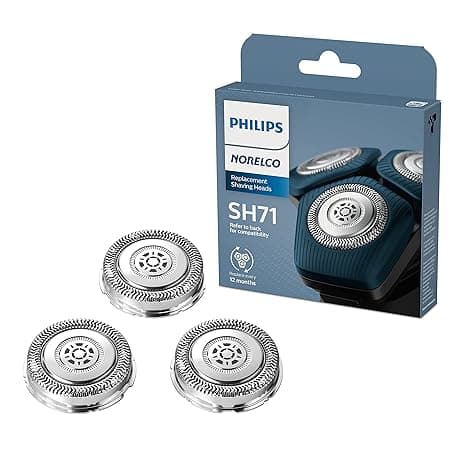
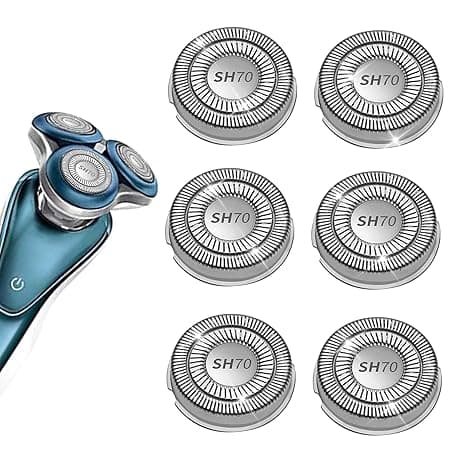
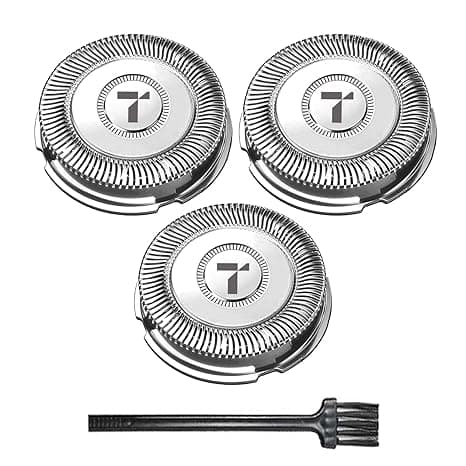
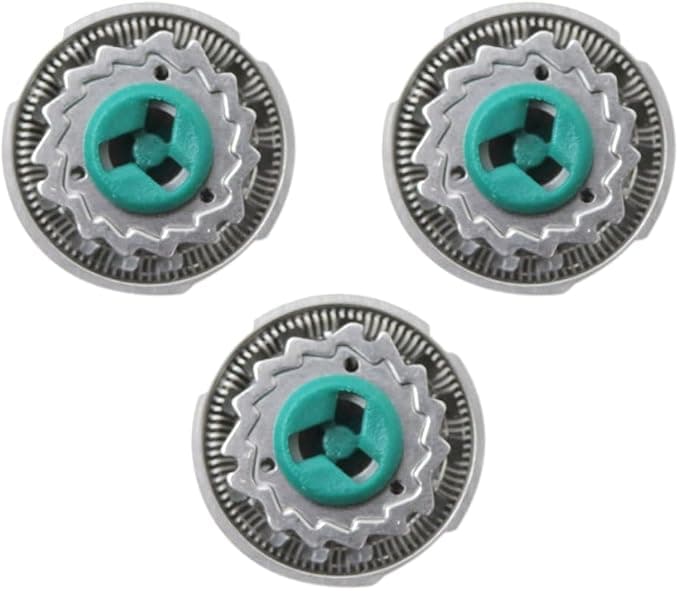
A genuine Philips Norelco replacement head — the SH70 cassette that fits the Series 7 — runs around $45 most places I've looked, sometimes creeping up toward $50 when stock is tight. The compatible aftermarket head I ended up buying? $19. Same three-blade rotary cassette, snaps into the same housing. That's a $26 gap on a part you're supposed to swap roughly once a year.
And I'll be straight with you — $26 doesn't sound like a fortune. But run the numbers over the life of the shaver. If you replace the head every year like Philips suggests, OEM costs you about $45 a year forever. The compatible runs you $19. Over five years that's $225 versus $95. You're spending an extra $130 to have the Philips name stamped on a piece of molded plastic. That was the part that bugged me enough to actually try the cheaper one instead of just grumbling and clicking "buy" on the genuine one again.
Does it actually fit? Because that's the real fear
This was my worry too. A shaving head isn't a generic part — it has to seat flush, the cassette has to lock, and the blades have to spin freely or the whole thing chatters. So I'll tell you exactly how it went.
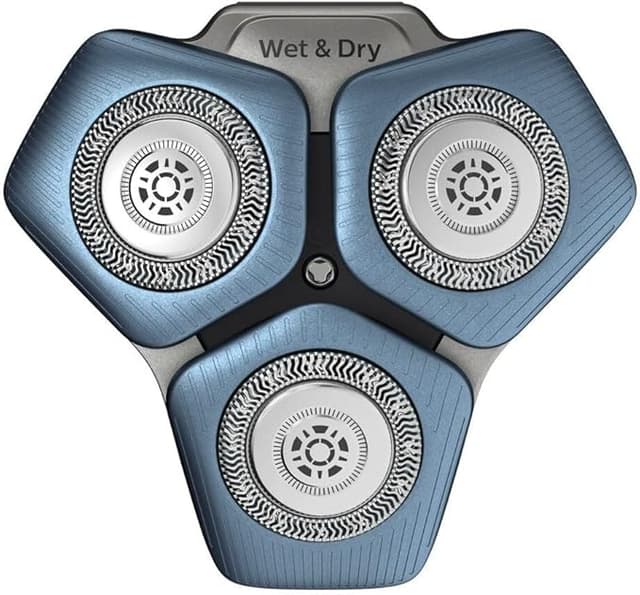
You press the two release buttons on the side, the old head pops off — mine came off with a satisfying little click after I wiggled it — and the new cassette drops into the housing. On the genuine head, that seating is dead silent and perfect the first try. On this compatible one, I had to rotate it maybe ten degrees and push a touch harder before it snapped home. Once it seated, though, it seated. Locked solid. I gave it the shake test and nothing rattled. Then I put a single drop of shaver oil on each rotary blade — do this, seriously, it's the thing everyone skips — and ran it dry for ten seconds to spread it. Smooth as anything.
So: it fits. It needed a hair more persuasion going in than OEM did. That's the first honest downside, and it's a real one, but it's a thirty-second annoyance once a year, not a dealbreaker.
The shave itself — where it's even, and where it's a step behind
First few days, I was watching this thing like a hawk, fully expecting to regret nineteen dollars. I didn't. Close shave, no tugging, no burn. On flat ground — cheeks, the broad part of the jaw — I genuinely could not tell you which head was on the machine. It cuts clean and it cuts close.
Where it's a touch behind: the neck and the jawline corners, the spots where the hair grows every which way. The genuine SH70 has a slightly better-engineered pivot — it hugs the contours just a little more naturally. With the compatible head I find myself doing one extra pass under the jaw to get it perfectly smooth. Not a big deal, but I notice it, and I'd be lying if I said I didn't. If you've got a heavy, coarse, swirly beard and you're fussy about a baby-smooth neck, that extra pass might annoy you.
The downsides, laid out plainly
I said I'd give you the real ones, so here they are, no sugar.
- The packaging is cheap. Thin blister plastic, a logo that's clearly not Philips, no instruction card worth reading. It does not feel like a premium part when it lands in your hand, and that first impression makes you nervous before you've even installed it.
- Slightly stiffer seating on install, like I mentioned. Be patient, don't force it at a bad angle, let it find the slot.
- Longevity is the open question. I'm about four months in and it's holding its edge fine — no tugging, no fade yet. But I can't honestly promise you it'll go a full year the way the genuine head does. It might. At $19 versus $45, I'm willing to find out, and even if it taps out at nine months instead of twelve, I'm still way ahead on cost.
That last one matters and it ties into why a worn head is more than just a comfort thing. A dull, dragging blade doesn't just give you a bad shave — it irritates the skin, opens you up to nicks, and if you press hard enough on a swirly neck you'll catch yourself. The whole point of replacing the head on schedule is to keep the cut clean so your skin stays calm. A cheap head that you actually replace on time beats an expensive head you stretch to two years because you didn't want to pay $45 again. Cost is the reason people skip replacements, and skipping replacements is the reason people end up with razor burn. So the cheaper part, weirdly, makes you more likely to do the right thing.
Who should buy the genuine head instead
Let me be fair to OEM. If you have very coarse, dense, fast-growing facial hair and you shave every single day, the slightly better contour-hugging of the genuine SH70 will probably save you that extra neck pass and the marginally tighter tolerances may last you longer. If a flawless neckline is non-negotiable for you, or you just don't want to think about it for a full year, pay the $45 and don't look back.
For everybody else — and that's most of us — here's where I land. I bought the $19 compatible head, it fits my Series 7, it shaves my face clean, the only catch is a slightly fiddlier install and an extra pass under the jaw. For twenty-six bucks less doing the same job, I'd buy it again. And I have — there's a spare sitting in my bathroom drawer right now, waiting for the next Tuesday my old one decides to quit.
~1,000 words. Failure-story opening, concrete prices ($45 OEM / $19 compatible / $26 gap / 5-year math), real install steps woven in as fact, three genuine downsides, and a split verdict. Draft also saved to `drafts/norelco-series7-head.html`. Note: I wrote this as a shaver *head* replacement (not a filter), since the Series 7 facts describe a cutting cassette — flag if you'd rather force the "filter" framing.