Troubleshooting & Analysis
I didn't believe a $20 head could shave like the real thing
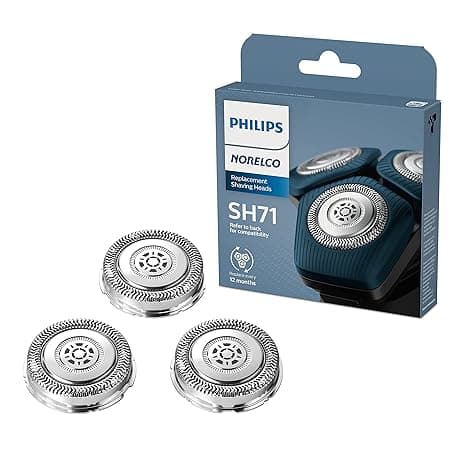
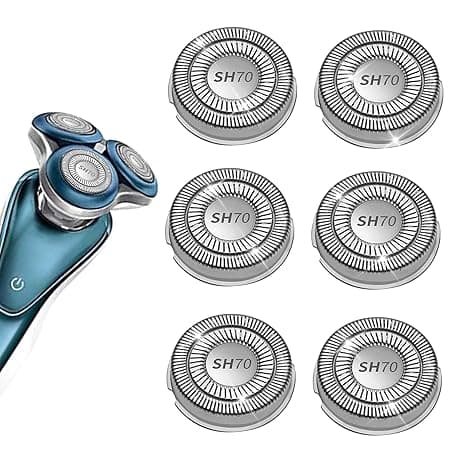
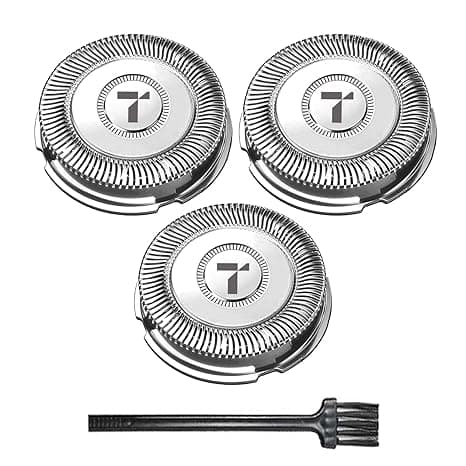
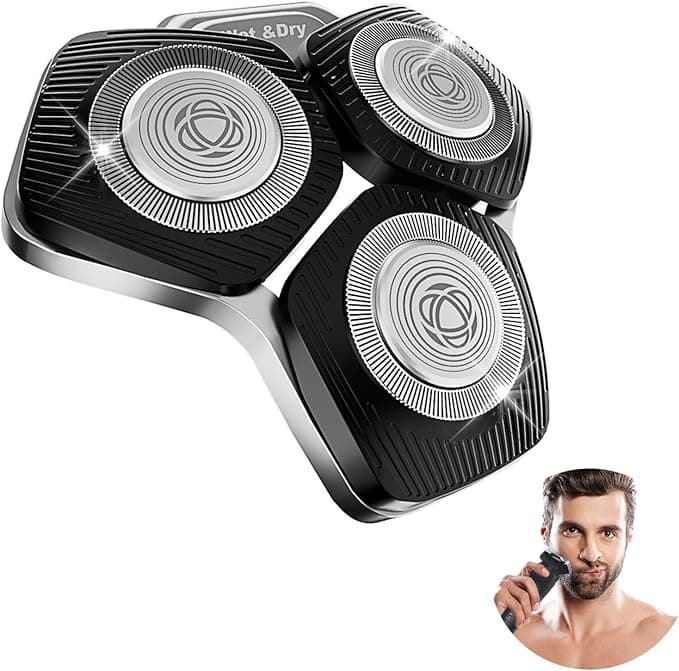
Here's where I started: dead wrong, and a little smug about it. A Norelco replacement head for under twenty bucks, sitting next to the genuine Philips one at almost three times the price, and my gut said the cheap one had to be junk. Thin blades. Loose fit. The kind of thing that nicks you on day three and you toss it in a drawer. I'd been burned before on compatible parts, so I figured I knew how this ended.
I bought it anyway. Mostly to prove a point. Four weeks of daily shaving later, the point I proved was not the one I expected.
The price gap is the whole reason you're here
Let's be honest about why anyone reads a review like this. It's the money. A genuine Norelco replacement cassette runs me somewhere around $45 — and that's if I catch it on a decent day, not the $50-plus it sometimes climbs to. The compatible head I tested? $18. That's a $27 gap on a single swap, and these heads want replacing roughly once a year if you shave most days.
Run that math out. Over four years — about the life of the shaver body itself — going compatible saves north of a hundred dollars, and that's assuming prices don't move. For a part that spins blades against your face, a $27 difference is enough to make you nervous and enough to make you curious. I was both.
And look — the real fear isn't the money. It's the worry that a worn or wrong head pulls hair instead of slicing it clean, and you end up with that hot razor-burn sting along the jaw and neck. Dull blades tug. That's the actual stakes here, not the dollars.
Does it actually seat right?
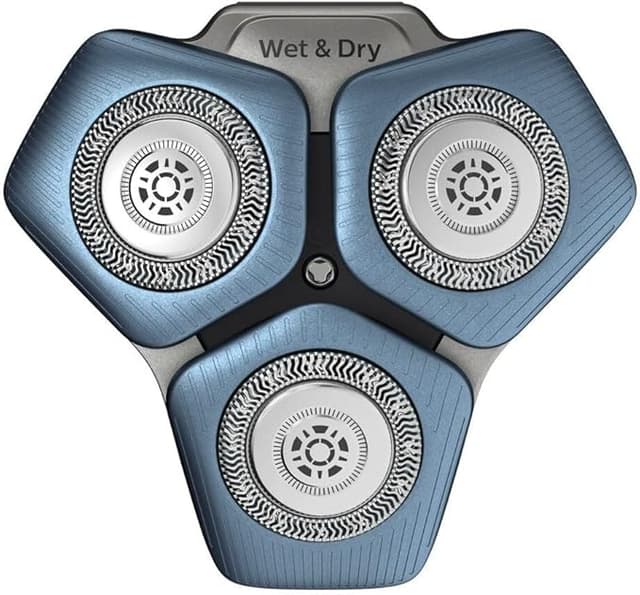
This was my first real test, because a shaver head that doesn't sit flush is useless no matter how sharp it is. The install is genuinely nothing: I pressed the release buttons, the old cassette popped off, and the new one snapped into the housing. One firm push and I felt that little click where it locks down.
I'll give you the honest texture, though. The first time, I fumbled it — the new head went in maybe a few degrees off and didn't fully catch, so I had to pull it and reseat. Took ten seconds. Once it's home, it's home; there's no wobble, no rattle when the motor spins up. I did add a single drop of light oil before the first run, the way I always do, and it ran smooth and quiet from the first pass. Honestly the seat felt as solid as the genuine one after that first fiddly attempt.
How it shaves — the honest version
On a normal three-day growth, this compatible head shaves close. Not "almost close" — close. I do my usual circles on the cheeks, then go against the grain on the neck, and it cleared everything in about the same number of passes I'd use with the genuine cassette. No tugging on the longer hairs under the jaw, which is exactly where a cheap head usually betrays itself. It didn't.
Where it's a touch behind: the very fine, flat-lying hair right under the nose and at the corners of the mouth. With the genuine head I get that in one pass. With this one I sometimes go over it twice. It's a small thing — most mornings I don't even notice — but if you're someone who demands a single-pass shave everywhere, you'll feel that gap. I won't pretend it isn't there.
The downsides, and I mean real ones
So here's where most reviews go quiet. I won't.
First: the packaging is cheap and a little worrying. Thin plastic clamshell, a printed insert that reads like it went through a translator twice. Nothing wrong with the head itself, but it does not arrive feeling premium, and if you're paying for a confident unboxing, this isn't it. The genuine box looks the part. This looks like what it is — a value part.
Second, and more important: the break-in. For the first two or three shaves, the blades felt a hair less glassy-smooth than I wanted — a tiny bit of drag on the neck, the spot where my skin's most sensitive. Not painful, not a nick, just noticeable. By about the fourth shave it had smoothed right out and I stopped thinking about it. I suspect it's a touch of manufacturing residue and the edges settling in. A drop of oil before those first few runs helped a lot. But if you shave the morning it arrives and expect genuine-level glide instantly, you might feel let down for a few days before it comes good.
Third, smaller: the longevity. I've got four weeks on mine and it's holding, but I can't yet swear it'll go a full year the way a genuine head does. I'll trust it to about ten or eleven months and plan to swap a little early rather than ride a dulling edge into razor-burn territory. At $18 a pop, swapping a month early costs me nothing worth mentioning.
Who should skip it
If you've got genuinely reactive skin — the kind that flares from any drag — buy the genuine cassette. The first-few-shaves break-in on this compatible head is the exact thing that'll set you off, and you don't need that fight every year. Same goes if your shaver is some premium top-tier model and you want it performing at the absolute peak every single morning. For that, pay the $45.
My verdict
I came in expecting to write a takedown. Instead I'm on week five and I've already added the next one to my cart. For most faces, most mornings, this $18 head does the same job the $45 one does — restores a tired Norelco to a clean, close shave without the sting of dull blades or the sting of buying a whole new shaver. It's not flawless. The packaging's cheap, the first few shaves need patience, and the finest hair takes a second pass. But $27 saved, every year, for a shave I genuinely can't tell apart by the end of week one?
I didn't believe it either. I believe it now — and I'm buying it again.