Troubleshooting & Analysis
Two filters on the shelf, one in my hand
I stood in the humidifier aisle holding the Honeywell OEM wicking filter in one hand — $27.49, that little branded box — and on my phone the compatible version, the FILTER A, sitting at $13 for a two-pack on the affiliate tab I'd left open. Same shape. Same job. Roughly half the cost per filter once you do the division. And I just stood there for a minute, honestly, doing the thing everyone does: is the cheap one going to grow mold faster, smell weird, or sit loose in my FILTER T base and rattle?
I'd been buying the OEM ones for two winters because I was scared not to. That's the whole reason I started testing the off-brand stuff — I got tired of being scared into a price I didn't fully believe in. So I bought the FILTER A, ran it next to a genuine one in the same unit, and here's what actually happened over four months of nightly use in a dry Colorado bedroom.
The money, plainly
The Honeywell OEM filter ran me $27.49 for a single. The FILTER A compatible came to about $13 for a two-pack, so call it $6.50 a filter. If you're swapping your wicking filter every two to three months during heating season the way Honeywell tells you to, that's roughly four filters a winter. OEM: about $110 a season. Compatible: about $26. That's an $84 gap every single winter, for a part that wicks water and gets thrown away. Eighty-four dollars to throw away. When I laid it out like that the nervousness started to feel a little silly.
Now — half the price doesn't mean half the worry is fake. Let me get to the part where it isn't perfect.
Fit and the first install
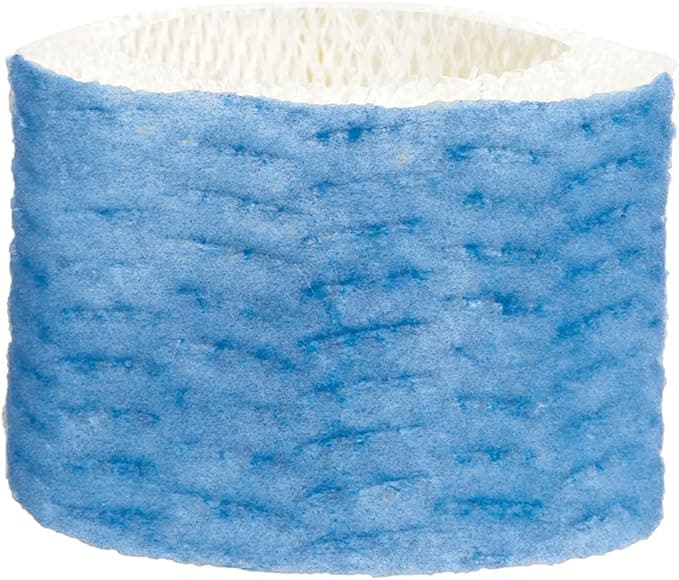
I powered the unit down first, popped the tank, and pulled the old wicking filter out of the tray. The FILTER A came out of the box a touch stiffer than the genuine one — paper-and-mesh wicking material, slightly crisper to the touch, like it hadn't been handled as gently in packaging. There's an airflow arrow printed on the frame, and yes, it matters here; I seated it the way the old one came out, lined the frame up with the tray slot, and pressed down until it sat flush.
The fit was good. Not perfect-perfect. The frame is maybe a hair narrower than the Honeywell original, so there was a sliver of play before I clicked the housing back down — the kind of thing you'd only notice if you'd handled the OEM one a hundred times like I have. Once the lid snapped shut it didn't shift, didn't buzz, didn't rattle when the fan kicked on. After a week of soaking and drying cycles the material relaxed and that sliver of play disappeared entirely. So: minor, and it resolves itself.
How it actually performed
This is a wicking filter, so "performance" means two things: how much water it pulls up to evaporate, and how clean it stays. On the first one, I genuinely couldn't tell the two apart. My bedroom hygrometer sat in the same 42–45% range overnight whether I had the genuine Honeywell or the FILTER A loaded. The tank drew down at about the same rate. Same quiet hum. If someone swapped them on me blind, I'd have no idea which was in there by feel of the air.
Where it's a touch behind the OEM: longevity at the very tail end. By month three the FILTER A had a bit more mineral crust building along the bottom edge than I remember the genuine one having at the same age — I'm on moderately hard water, so your mileage shifts with that. It still wicked fine. But I'd lean toward the shorter end of the replacement window with this one rather than babying it to four months. Honestly, at $6.50 a filter, swapping a few weeks early costs you nothing. That math only stings on the OEM side.
The real downside, not a fake one
Two things I'll be straight about. First: the smell. The first two or three days there was a faint papery, slightly plasticky smell off the new filter as it broke in — not chemical, not strong, but present if you put your face near the vent. It aired out completely by day four and never came back. The genuine ones do this a little too, but the FILTER A did it a touch more noticeably. If you're sensitive to that, run the unit a day with the window cracked before you sleep next to it.
Second: the packaging is cheap and there's no antimicrobial coating story like Honeywell prints on their box. The compatible just shows up in a plain two-pack sleeve, no fancy branding, no little desiccant insert. Does that change the wicking? No. But if part of what you were paying the OEM premium for was the reassurance of the brand printing "Protec" treatment on the box, you're not getting that printed promise here, and you should know that going in. I keep mine swapped on schedule and dry the tank between fills, which is the actual thing that keeps a wicking filter from getting funky — coating or no coating.
Why you can't just skip the swap
Quick word on why this part matters at all, because it's tempting to stretch a wicking filter way past its life to save money. A crusted-over, mineral-clogged filter stops wicking properly — the unit runs, the fan blows, but you're not getting humidity, and worse, a filter that stays damp and saturated past its life is exactly where mold and bacteria set up shop and then get blown into the room you sleep in. That's the real reason the interval exists. It's not a sales tactic. A dead filter isn't just useless, it's working against you. Which, again, is the argument for the cheaper one — when each filter is $6.50 instead of $27, you actually replace it on time instead of guilt-stretching it.
Who should buy OEM — and what I grab
If you're on very hard water and you know you forget replacement dates for months at a stretch, the genuine Honeywell's coating buys you a little margin for that neglect, and that might be worth the premium to you. And if the $84-a-winter gap genuinely doesn't register for you, there's nothing wrong with buying the branded box for the simplicity.
But me? After four months side by side in my FILTER T, same humidity, same quiet, same fit once it broke in — I'm not paying triple for a part I throw in the trash every two months. The FILTER A does the job. It's got a slightly looser frame for a week and a faint break-in smell for three days, and that's the honest extent of the compromise. For roughly $13 a two-pack against $27 a single, I bought it again the next season. And I'll buy it again this one.