Troubleshooting & Analysis
The day my humidifier started smelling like a wet basement
I knew something was wrong before I could name it. The bedroom had this faint, swampy edge to it every morning — that mildewy, been-sitting-too-long smell — and I kept blaming the laundry, the dog, the window. Took me almost a week to think to crack open the Honeywell and look at the wick. The filter inside was the color of weak coffee, stiff in spots, and crusted with a chalky white scale where the mineral water had been wicking up and drying. That's the moment a humidifier stops humidifying and starts farming whatever's living in it. Mold, basically. I'd been breathing that for who knows how long.
So that's how I got into the compatible-filter rabbit hole on the HAC-504. Not because I'm cheap. Because I got tired of forgetting, and then paying a premium to fix my own neglect.
What Honeywell wants vs. what I actually pay
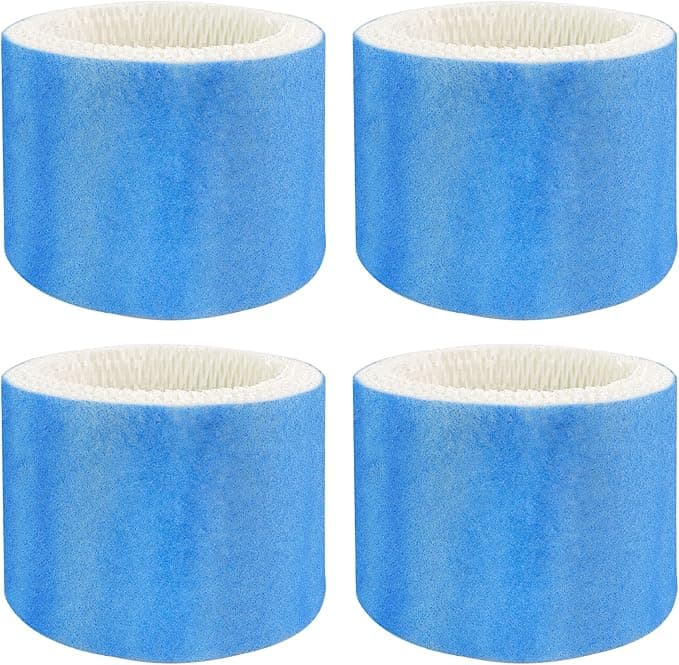
Here's the math that pushed me. A genuine Honeywell HAC-504 wick (the one that fits the FILTER H / FILTER V / FILTER D units) runs about $22 for a single in most places, sometimes $25 if you're caught buying it in a panic at the only store that has it. The compatible version I've been running costs me around $13, and I usually grab a two-pack so the spare is already sitting in the closet when the smell tips me off again.
Doesn't sound like a fortune, I know. But run the year out. These wicks are a swap-every-one-to-three-months part if you've got hard water like I do — call it four filters a year, conservatively. That's roughly $88 a year on OEM versus about $52 on the compatible. Nearly forty bucks, every year, for a piece of pleated paper that gets thrown away. Over the life of the machine that's real money, and it buys me exactly nothing extra.
Does the cheap one actually fit?
This was my worry too. A wick that's a millimeter off doesn't seat, wobbles, and lets dry air sneak around the edges — which defeats the whole thing. So I paid attention the first time I installed one.
Unplug the unit first. Always. Then lift the top housing off — on my FILTER V it just pulls straight up once you've got the tank off — and the old wick lifts out of its frame. I make a mental note of which way the seam faces before I pull it, because the new one wants to go in the same orientation. The compatible HAC-504 dropped into the frame and sat down with that same little settled-in feel the OEM has. No trimming, no forcing, no gap at the corners. I pressed the housing back down, heard it close, filled the tank, plugged it in. Done in under three minutes.
Honest note on fit, because I promised myself I'd always give you one: the frame on the compatible is a hair less rigid than Honeywell's. Not loose — it seats fine — but if you squeeze it you can feel it's a slightly thinner plastic skeleton. In the machine, running, it makes zero difference. It's the kind of thing you only notice because you're looking for a reason to feel ripped off.
How it actually performs
Wicking is the whole job, and this is where I expected the gap to show up. It didn't, really. Filled tank in the evening, by morning the bedroom hygrometer was reading the same 43–46% it always did with the genuine wick. The paper drinks the water up the same way, the fan pushes evaporated moisture out the same way, and the room feels the same — no more dry-nose mornings, no static shocks off the doorknob.
Where I'll give OEM a slight edge: longevity, by maybe a couple of weeks. My honest read after running a few of these is that the compatible wick stiffens and scales up a touch faster in hard water than the Honeywell did. So if the genuine one was a clean three-month part for you, plan on the compatible being more like a two-and-a-half-month part. Set a phone reminder. That's the whole trick — the failure isn't the filter, it's me forgetting the filter.
The downside I want you to hear
Two things, and I'd rather you know them going in.
First: the break-in smell. The first day or two, a fresh compatible wick has a faint papery, slightly cardboard smell when the fan kicks on. It's mild and it's gone by day three — but it's there, and the OEM had less of it. If you're sensitive, run the unit a few hours with the bedroom door open before you sleep on it the first night.
First impressions of the packaging aren't winning any awards either — thin plastic sleeve, a label that looks photocopied, none of Honeywell's glossy box. I genuinely don't care what the wrapper looks like, but if a budget look makes you nervous about what's inside, that's a fair gut reaction to name. What's inside is the part that matters, and the part that matters is a correctly-sized, correctly-shaped wick that does the job.
Second, and this is the real one: do not let either filter — OEM or compatible — go the way mine did. A saturated, scaled-up wick isn't just less effective. It becomes a damp surface that grows mold and bacteria and then aerosolizes it into the air you sleep in. That's not a marketing scare line, that's literally what was making my bedroom smell like a basement. The single most important thing you can do for your lungs here isn't buying the expensive filter. It's actually changing the cheap one on time. A $13 wick swapped on schedule beats a $22 wick left in for six months, every single time.
So who should still buy OEM?
If you run distilled water, change your wick like clockwork, and the $36-a-year difference genuinely doesn't register for you — buy the Honeywell. You'll get those couple extra weeks of life and a slightly sturdier frame, and there's nothing wrong with that.
But me? After running the compatible HAC-504 through a full heating season in a unit my family sleeps next to, I'm not going back. It fit right, it wicked the same, it kept the room at the humidity I wanted, and it cost me a little over half. The faint first-day smell and the chintzy packaging are the entire list of complaints, and neither one touches the actual performance. For the money it saves doing the identical job, I'd buy it again — and the two-pack in my closet says I already did.