Troubleshooting & Analysis
I'll be honest: the first time I dropped a $20 third-party wick into my Honeywell, I did it expecting to be disappointed. I'd convinced myself there was some secret sauce in the genuine HAC-504 — some paper density or coating you only got by paying the brand tax. So I bought the compatible one half as an experiment and half so I could write a smug little "see, the cheap one is junk" note to myself. That note never got written. The thing just... worked.
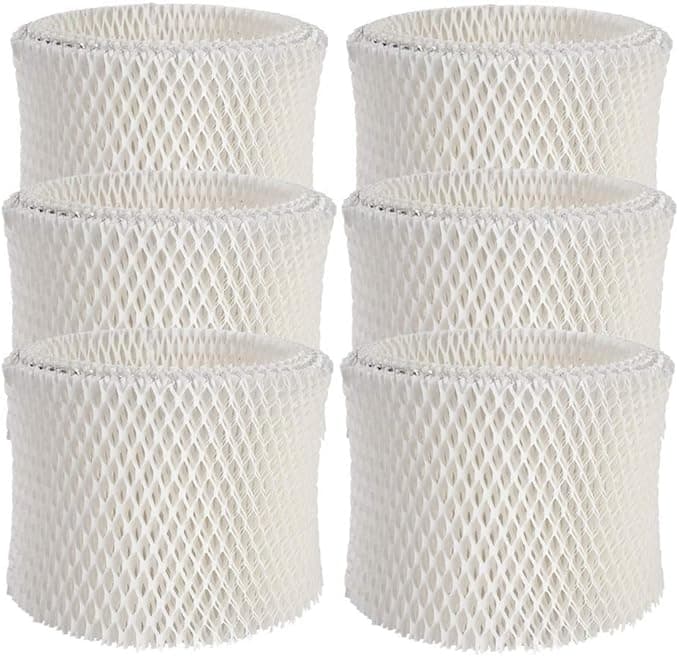
Here's the setup. I run a Honeywell humidifier — the FILTER D / FILTER O family, the units that take the HAC-504 wick — in my bedroom every winter, because the dry forced-air heat in my place turns the back of my throat into sandpaper by February. The wick is the consumable heart of the machine. It's the part that soaks up water and lets the fan push moisture into the room, and it's the part that goes stiff and crusty and quits doing its job after a few months. So you replace it. Forever. That's the trap, and that's where the math gets interesting.
The price gap that started this whole thing
The genuine Honeywell HAC-504 wicks, last time I bought a brand two-pack, ran me around $24 — call it $12 a wick on sale, more like $14-16 each if you don't catch one. The compatible set I switched to landed closer to $20 for three. So per wick I went from roughly $14 down to under $7. Doesn't sound like a fortune until you do the yearly arithmetic.
I swap mine about every two months during heavy use — Honeywell's own guidance is every one to two months, depending on how hard your water is and how much you run the thing. My tap water is on the hard side, so I'm closer to the six-week mark before the wick grows that chalky white shell. Call it four to six wicks a winter for me. At OEM pricing I was looking at $60-80 a season just to keep one humidifier breathing. On the compatible wicks that same season runs me maybe $30-40. Over the three winters I've now done this, that's well over a hundred bucks I didn't hand back to the brand — for a part I genuinely cannot tell apart in use.
Does it actually fit, or do you have to wrestle it?
This was my real fear. Aftermarket parts that are "compatible" right up until you try to close the lid. So here's the actual install, because I've now done it more than a dozen times, half-asleep, in the dark, before bed.
Power down and unplug first — not because the swap is dangerous, but because you do not want the fan kicking on while your fingers are in the housing. Lift the top housing off; on my unit it comes straight up off the base tank. The old wick sits in a plastic frame collar. You pull the crusty old one out — do this over the trash or the sink, because dried mineral scale flakes off everywhere — and you seat the new wick down into that same collar. New one slides in, housing back on, refill the tank, plug in. Two minutes, maybe three if you rinse the base while you're in there.
On fit specifically: the compatible wick seated into my frame with the same snug press as the genuine one. No trimming, no folding, no "good enough, I'll just force the lid." The dimensions matched. If anything the cardboard frame edge on the aftermarket wick felt a hair less rigid than the brand's — but once it's pressed into the collar that doesn't matter, because the plastic frame holds the geometry, not the wick's own edge.
Performance — where it ties OEM, and where it's a step behind
Moisture output is the whole game, and here the compatible wick genuinely matches what I got from genuine Honeywell. My bedroom hygrometer climbs from the low 30s into the mid-40s percent overnight on the medium setting, same as it ever did. The wick drinks water at the same rate — I empty the tank on roughly the same schedule, which tells me it's wicking just as thirstily as the brand part. My throat is the real test instrument, and it doesn't know the difference come morning.
Where it's a touch behind: longevity, slightly. I get the sense the genuine wick held out a week or two longer before it crusted hard. Could be the paper's a hair denser, could be I'm imagining it. But even if the aftermarket wick lives 10-15% shorter, I'm buying it at less than half the price, so the value math still buries the OEM. You'd have to make the compatible wick last barely a third as long for the brand to win on cost — and it's nowhere near that gap.
The downsides I actually have to flag
Two things, and I'd be lying by omission if I skipped them. First, the packaging is cheap. The brand wicks come in a tidy printed box; these showed up in thin plastic sleeves, a little squished from shipping. Purely cosmetic — the wicks inside were fine — but if you like things that feel premium out of the box, this isn't that.
Second, and this one matters more: there was a faint paper-and-glue smell off each new wick for the first day, maybe two. Not chemical, not strong — more like the smell of a fresh cardboard box — but with a humidifier you're literally aerosolizing whatever sits near that water, so I noticed it more than I would with a dry filter. It aired out completely by day three, every time, and I've never smelled it again mid-cycle. Still, if you're sensitive to that, run the unit a few hours with the bedroom door open before you sleep on the first night of a fresh wick. Cheap insurance, and worth the one habit.
Why you can't just skip replacing it
This is the part people ignore until it bites them. A wick that's gone hard and crusty doesn't just stop adding moisture — it sits there damp and starved of airflow, which is exactly the condition mold and bacteria love. Run a saturated, scaled-over wick long enough and you'll get that musty, swampy smell off the unit, and now you're misting that into the air you breathe all night. The whole point of the humidifier flips on you. So whatever wick you buy, brand or compatible, the real failure isn't the part — it's not changing it. The low price is honestly a feature here, because it kills the excuse to stretch a dead wick one more month.
So who should buy what
If you run a single humidifier a few weeks a year, and a $30-40 yearly difference is noise to you, and you just want the box with the Honeywell logo for your own reassurance — fine, buy the genuine HAC-504. No shame in it.
But me? I run mine hard all winter, I go through wicks like coffee filters, and I've now done three full seasons on the compatible version with zero performance complaints, identical moisture output, and a clean fit every single time. For more than half off, doing the exact same job, I grab the compatible wick — and I've reordered it three winters running, which is the only review that really counts. Buy the cheap one. Just actually change it on schedule.