Troubleshooting & Analysis
I knew something was wrong when my cat started drinking from the toilet again. She'd done it as a kitten, before I bought the fountain, and I figured those days were behind us. Then one morning I caught her, tail twitching, lapping at the bowl — and I went and looked at her Catit Flower Fountain. The water had a faint film on top, the kind you only catch when the light hits it sideways. I pulled the filter out and it was a slimy gray brick. I'd let it go way too long. Six, maybe seven weeks. The thing was supposed to come out every two to four.
That's the moment that turned me into someone who actually pays attention to these filters. And it's why I've now gone through more compatible Flower Filter replacements than I'd care to admit — testing whether the cheap third-party ones actually do the job, or whether I was about to make my cat sick to save a few bucks.
The price that made me look at the cheap ones
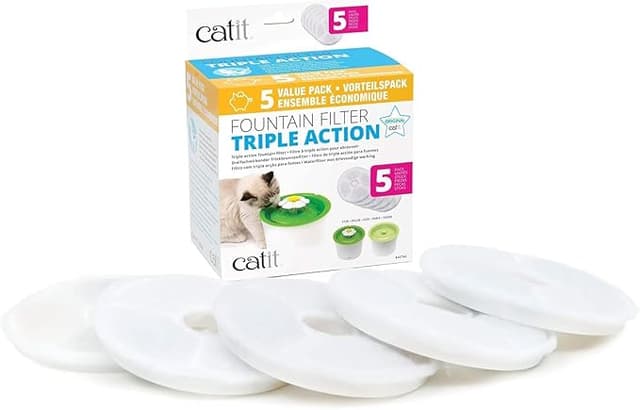
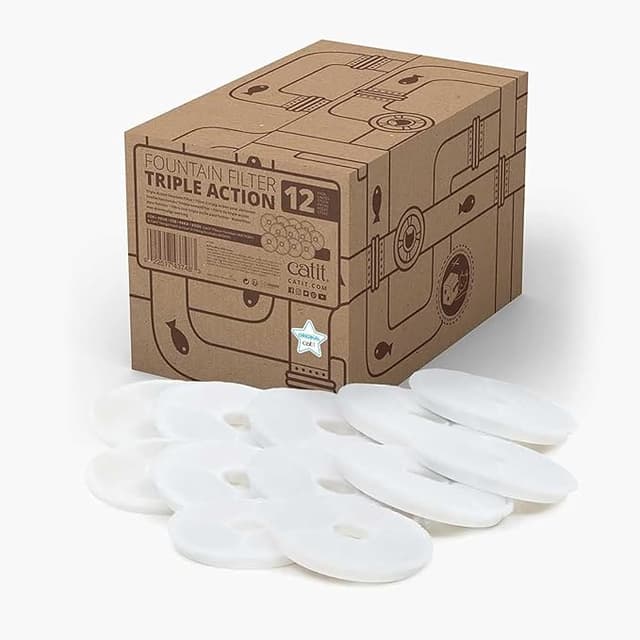
Here's the math that started it. Catit's own filter packs run me around $13 for a three-pack at most places — call it about $4.30 a filter. Change them every three weeks like you're supposed to, and that's roughly $75 a year on filters for one fountain. The compatible Flower Filters I've been buying come in six-packs for around $9, which works out to about $1.50 each. Same cadence, and I'm spending closer to $26 a year. That gap — call it $49 every single year, for a part that gets thrown in the trash three times a month — is what got me skeptical of the OEM premium in the first place.
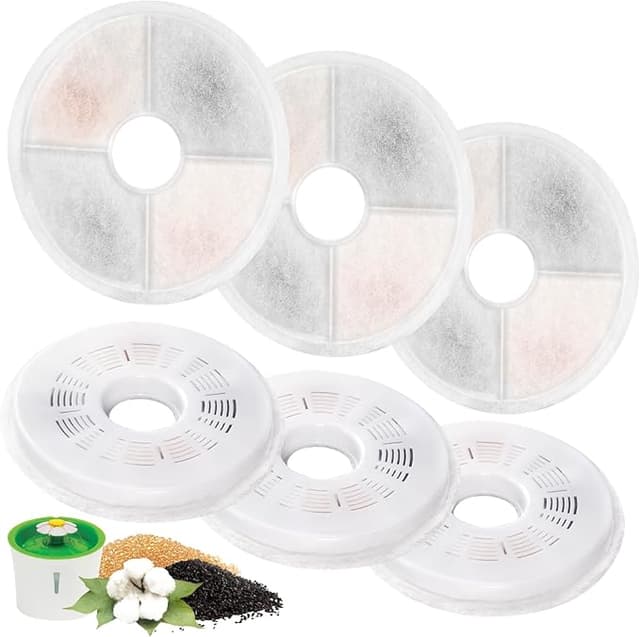
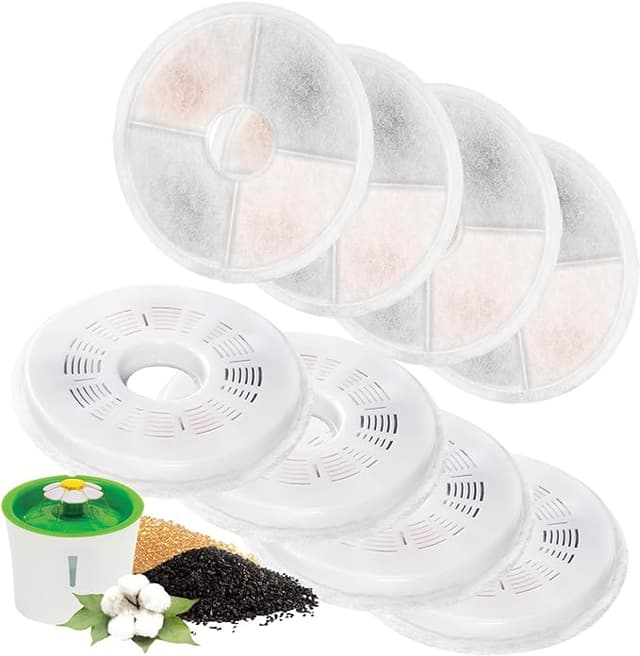
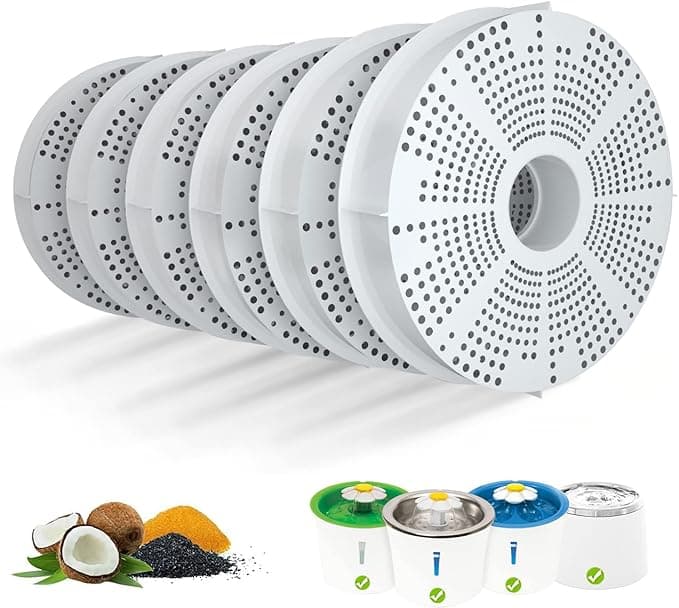
And these aren't some mystery part. The compatible Flower Filter is built for the Catit Flower Fountain, the stainless steel version, and the Veken fountains too — that triple-layer setup that pulls hair, grit, and the bad tastes out so the water actually stays drinkable 24/7. The cat doesn't read the box. She just knows whether the water smells off.
Does it actually seat right?
This was my first worry. A fountain filter that fits loose is worse than useless — water just routes around it instead of through it, and you're filtering nothing. So I paid attention.
The prep is the same as OEM: soak it in water for a solid ten minutes before it ever goes in. Don't skip this. A dry filter floats and channels, and the first time I rushed it I had water spitting over the rim. After the soak, rinse it hard under the tap — really work the running water through it, because there's a fine carbon dust that comes off the first time and you don't want that going into the bowl. Then it drops into the filter compartment.
The fit? Honestly, a hair looser than the genuine Catit one. Side by side, the OEM filter has a slightly firmer edge that snugs into the compartment with a bit of resistance. The compatible one sits a touch more relaxed. But — and this matters — once the fountain's running and the foam pad is pressing down on top of it, it holds position fine. I've never had one shift or float once it's seated and weighted. The looseness is something you feel with your fingers, not something the water notices.
How it actually performs over a few weeks
I run two fountains, so I did the obvious thing: OEM in one, compatible in the other, same room, same two cats. For the first two weeks I genuinely couldn't tell them apart. Both kept the water clear. Both grabbed the floating cat hair before it could sink and turn into that gross bottom-of-the-bowl sludge. The carbon layer did its job on taste — neither cat snubbed either fountain.
Where I'll give OEM a slight edge: longevity at the tail end. Around week three, the compatible filter starts looking a little more spent than the genuine one does at the same point. The carbon seems to tap out a touch sooner. If you're the type who stretches a filter to four weeks, the compatible one is closer to done at that mark than the Catit is. But here's the thing — at $1.50 a filter, I just change it at week two-and-a-half and stop worrying. The cheaper part actually pushed me toward a healthier replacement habit, because I'm not mentally rationing an expensive filter anymore.
The real downsides — and there are a couple
I'm not going to pretend these are flawless. First, the smell out of the bag. The compatible ones I've bought have a slightly stronger first impression than OEM — a faint chemical-and-plastic note when you open the pack. That ten-minute soak and a thorough rinse knocks it down to nothing, and the cats never reacted, but it's there and you'll notice it. Don't shortcut the rinse.
Second, the packaging is cheap. The filters come loose in a thin plastic sleeve instead of individually wrapped like Catit does it, so the ones at the bottom of the bag can get a little crushed on the edges. I've had maybe one filter in a six-pack come slightly misshapen. It still worked — the foam reshapes once it's wet — but if you're a perfectionist it'll bug you.
Third, and this is the honest one: quality control is a notch less consistent. Across the packs I've bought, most filters are dead-on, but every so often one has a thinner carbon layer than its neighbors. With OEM, every single filter is identical. With the compatible packs, there's a little variance batch to batch. At this price I treat it as the cost of admission, but you should know it's not the machined-identical experience.
Why the dead-filter thing actually matters
Go back to my slimy gray brick for a second. That's not a cosmetic problem. A saturated, neglected filter doesn't just stop cleaning — it becomes the thing fouling the water. Stagnant, biofilm-coated water in a fountain breeds bacteria fast, and a cat that won't drink it is a cat heading toward urinary trouble, which is exactly the expensive, miserable vet visit a fountain is supposed to prevent. The whole point of the thing is moving, filtered water the cat actually wants. A spent filter quietly defeats that.
So the filter you'll actually replace on schedule beats the premium one you stretch to save money. For me, the cheaper compatible filter won on that alone — it made staying on schedule painless.
Who should buy OEM instead — and what I do
If you've got a cat with a sensitive system, a history of urinary issues, or you're just the kind of owner who wants zero variance and identical parts every time, buy the genuine Catit filters and don't think about it. The extra $49 a year is cheap insurance and the consistency is real.
But for a healthy cat and a normal household? After running both side by side for months, I grab the compatible Flower Filter every time. Same fit once it's seated, same clear water, same happy cats — for about a third of the cost, which means I change it more often, not less. I've reordered the six-pack three times now. That's the most honest endorsement I can give: I keep spending my own money on it.