Troubleshooting & Analysis
The click was the first thing I trusted
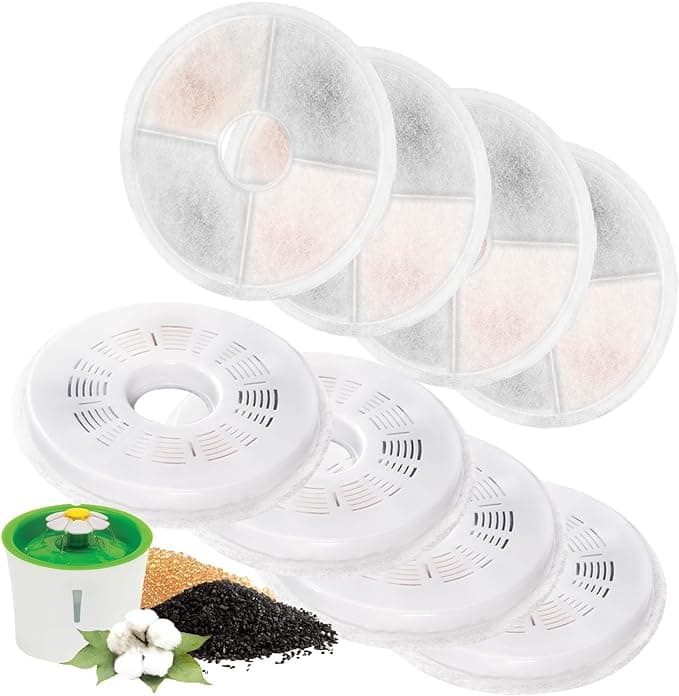
I'll be honest — I didn't expect to notice anything when I dropped the first compatible flower filter into my Catit fountain. A filter's a filter, right? But there's this small click when the foam-and-carbon disc seats down into the basket, the moment it sits flush under the flower top and the little tabs catch. My cat's fountain makes that exact click with the OEM Catit pads. The compatible one did too. Same seat, same flush fit, no gap where the water could sneak around the edges. That mattered more to me than I figured it would, because a filter that doesn't seat right just lets water bypass it — and then you're paying for a filter that filters nothing.
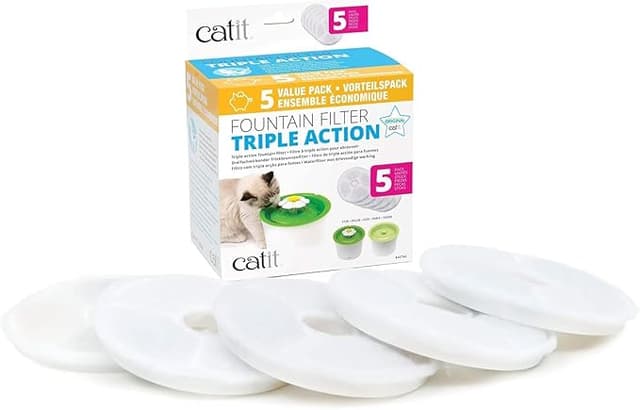
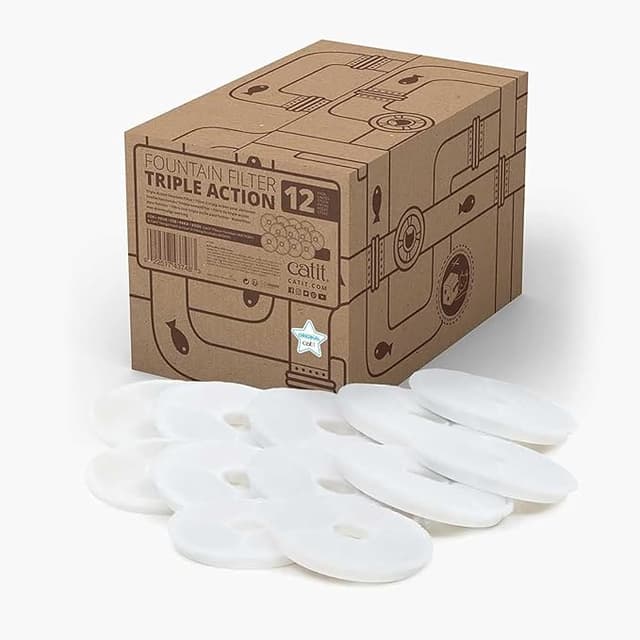
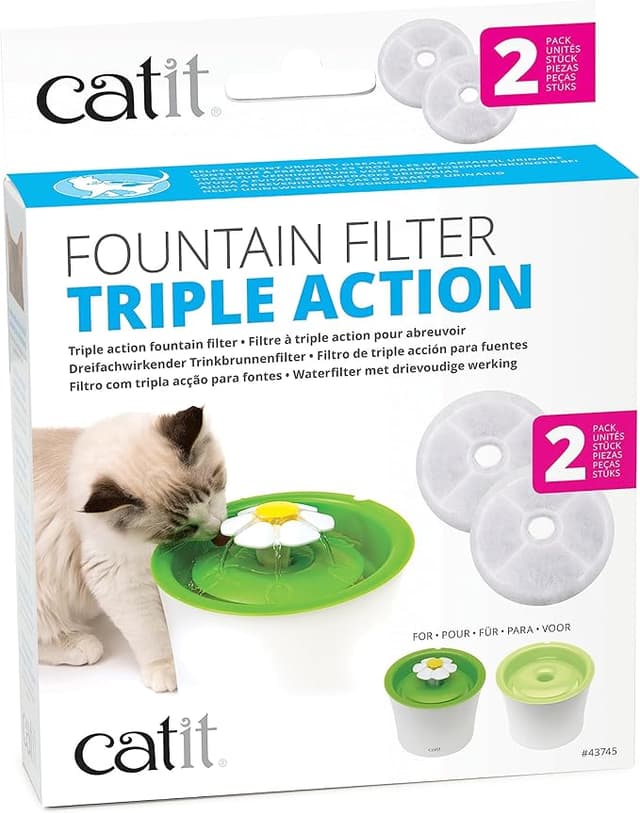
So that's where I started: a $13 box of eight compatible flower filters sitting next to the Catit-branded 8-pack that wanted closer to $24. Same job. Same fountain. Let me tell you what four months of actually running them taught me.
The price gap is the whole reason you're here
Cat fountain filters are a consumable — you swap them every two to four weeks depending on how many cats are drinking and how dusty your house is. With one cat I get a solid three to four weeks per filter. That's roughly 13 to 17 filters a year. At Catit's price, an 8-pack runs you about $24, so you're buying two boxes a year and change — call it $50 to $55 annually just to keep clean water in a bowl.
The compatible 8-pack I've been buying lands around $13. Two of those covers a full year for under $30. So you're looking at twenty-some dollars a year saved on a part that, functionally, does the identical thing. That's not life-changing money. But it's twenty bucks a year for the rest of your cat's life, on a part you flush down the trash anyway. Why pay the brand premium on a thing you throw out every three weeks?
Fit and install — genuinely a non-event
This is the part people worry about and it's the part that turned out to be nothing. The flower filter on a Catit is dead simple to change. You unplug the fountain first — always unplug it, the pump should never run dry or get yanked under power. Lift the flower top off, pull the old filter out of the basket (note which way it sits, the softer foam side faces up toward the water flow), and give the basket a quick wipe with a dry cloth to knock out the gunk and hair that collects under there. Drop the new one in the same orientation, set the flower top back on, refill, plug back in.
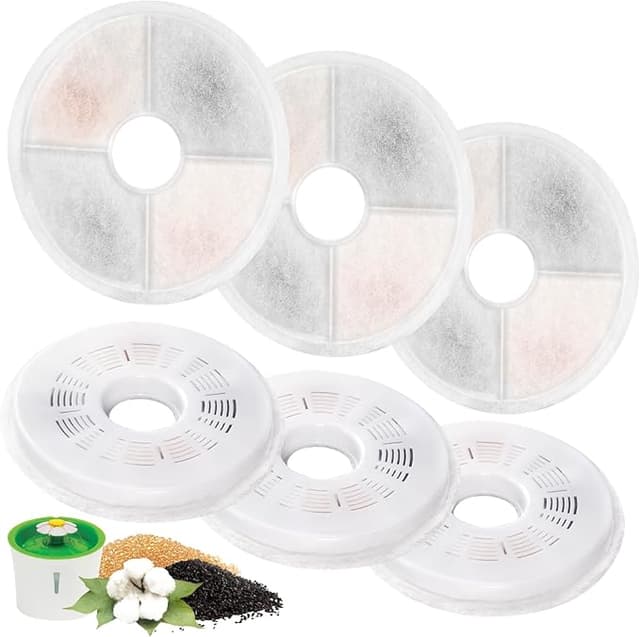
The compatible filter dropped into the basket with the same dimensions as the original. No trimming, no forcing, no "well it sort of fits if I press it." The carbon layer and the foam layer are stacked the same way. When I powered the fountain back up the water came up through the flower exactly like it should — no dry spots, no weird trickle, pump primed in a few seconds.
Performance: where it matches, and where it's a hair behind
The honest read after four months: the water stays clean, clear, and odorless, which is the entire point. My cat drinks from it the same as ever — and cats are picky little snobs about water, so if something tasted off she'd have walked away. She didn't. The carbon does its job knocking down the flat, plasticky taste tap water can have, and the foam catches the hair and food bits that float in.
Where it's a touch behind OEM? The carbon layer feels slightly thinner when you hold the new and old side by side. Not dramatically — but enough that I'd say the compatible filter is at its best for the first two to three weeks, and by week four it's a little more "time to swap" than the Catit pad was at the same age. In practice I just change it a few days sooner. Given the price, swapping a $1.60 filter a couple days early instead of a $3 one is still the cheaper play by a mile.
The downsides — real ones, not for show
First, the smell. Out of the bag, the compatible filters have a faint activated-carbon smell — that dry, slightly dusty charcoal scent. It's normal for carbon, but it's a touch stronger than the OEM ones the first day. The fix is the one you should do anyway: rinse the new filter under cold running water for ten or fifteen seconds before you install it, until the water runs clear of carbon dust. Skip that rinse and your first day of fountain water can pick up a bit of carbon grit. Do the rinse and it's a non-issue. I now rinse every filter, OEM or not, out of habit.
Second, the packaging is cheap. The Catit box is a tidy printed thing; these came in a plain box with the filters in a simple sleeve. Doesn't affect the filter one bit, but if you were expecting retail polish, it's not that. I genuinely do not care what the box looks like for something I'm throwing away, but you should know going in.
Third — and this is the one to actually watch — quality across the 8-pack was a hair less consistent than OEM. Out of my eight, seven were perfect and one had a slightly compressed foam edge. It still seated and worked fine, but it's the kind of small variance you don't get from the branded pack. On a $13 box of eight, one slightly-squashed-but-functional filter is a trade I'll take. If you demand eight identical units, that's a point for OEM.
Why you can't just stretch an old filter
Here's the thing people get wrong, and it's not about the filter's brand — it's about not changing it on time. A saturated cat fountain filter doesn't just stop cleaning the water. It becomes the problem. Trapped hair and food slime build into a film, the foam clogs, water flow drops, and the pump starts working against resistance it wasn't built to fight. A pump straining against a gunked filter runs hot and dies early — and the pump costs far more than the filter. A clogged filter also means your cat is drinking water that's been sitting in contact with weeks of trapped organic gunk, which is exactly the thing the fountain was supposed to prevent. The filter is the cheap insurance. Use it, and replace it on schedule, whichever brand you buy.
The verdict
Who should stick with the Catit OEM filters? If you've got a multi-cat household running the fountain hard, or you're the type who'll be annoyed by one slightly-imperfect unit in a pack, the branded consistency is worth a few dollars to you. No shame in that.
But for me — one cat, a fountain that's been humming on my kitchen counter for years, and a filter I rinse and toss every few weeks — the compatible flower filter does the same job, seats with the same satisfying click, and keeps the water just as clean for about half the price. I've now bought it three times. At roughly $13 for eight versus $24 for the brand name, doing genuinely identical work, I grab the compatible box every time. And I'll grab it again next month.