Troubleshooting & Analysis
The first thing you notice is the dust
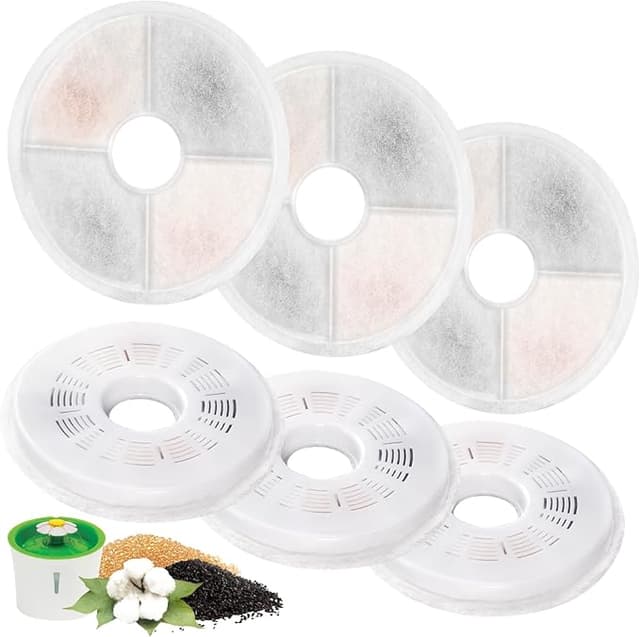
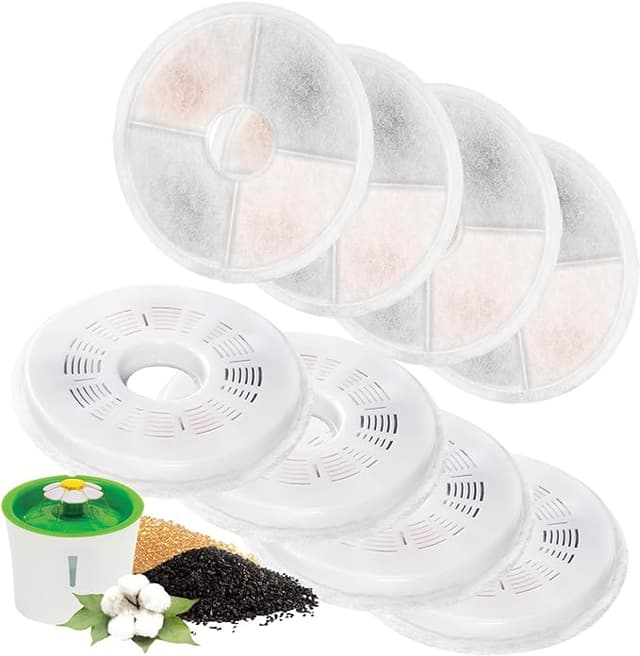
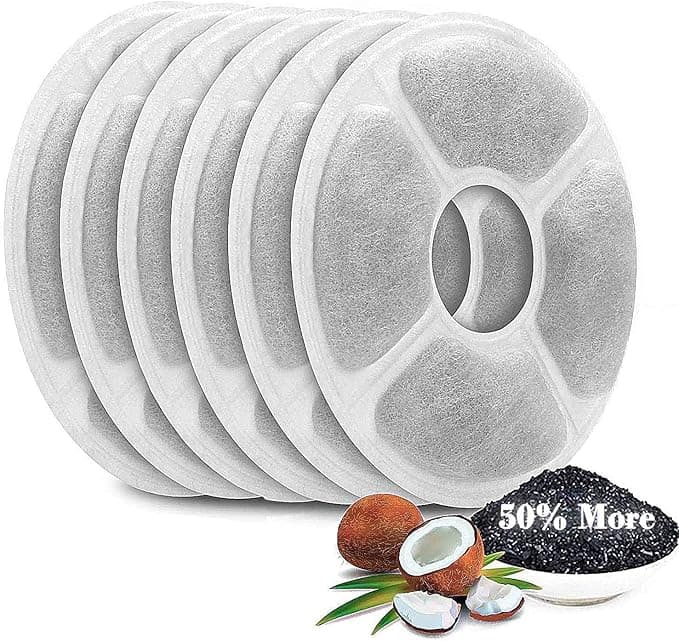
Pull a fresh Catit carbon filter out of the sleeve and run your thumb across the black side. You get this fine, charcoal-gray powder on your skin — that's the activated carbon, and the first time I saw it I genuinely thought I'd gotten a defective one. I hadn't. That's just what loose carbon does before you rinse it. The OEM ones do the exact same thing; nobody tells you that either.
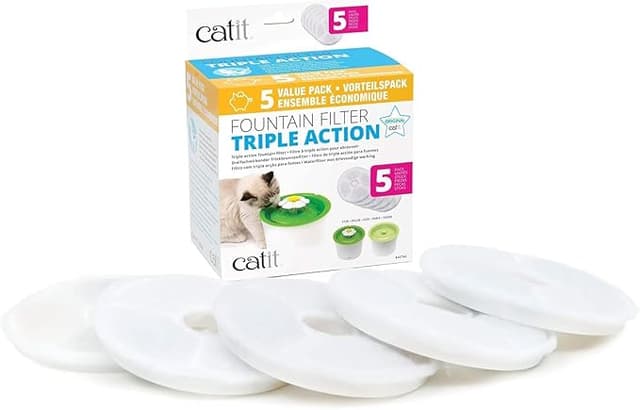
I've got a Catit Flower Fountain on my kitchen floor for two cats, one of whom will stage a hunger strike over slightly-off water. So I've gone through a lot of these triangular foam-and-carbon pads. For a while I bought the official Catit replacements without thinking. Then I did the math and got annoyed, which is usually how these experiments start.
The price gap, and the math nobody runs
Here's the part that actually matters. A genuine Catit 3-pack runs me around $13 at the big-box pet store — call it $4.30 a filter. The fountain wants a fresh one every two to four weeks. If you're honest with yourself and your cat drinks a lot, you're closer to the two-week end, so that's roughly two filters a month. Two filters a month on OEM is about $8.60, every month, forever, for a chunk of foam.
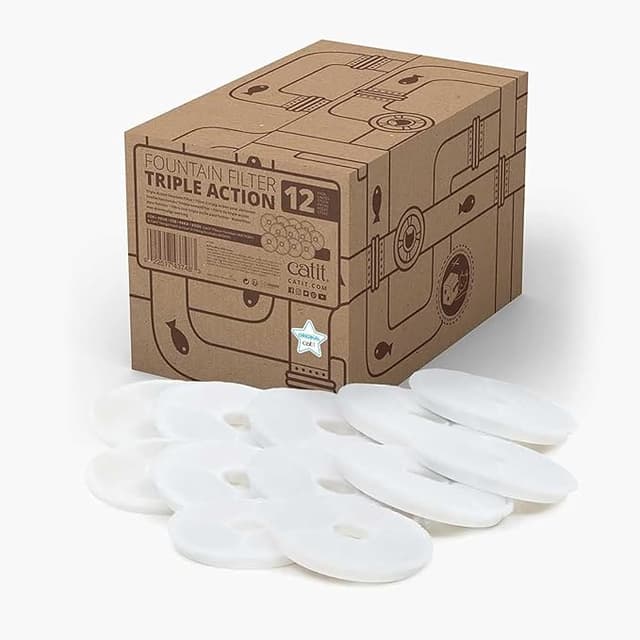
The compatible packs I switched to come twelve to a box for about $15. That's $1.25 a filter. Same two-a-month habit drops to $2.50. Over a year you're looking at something like $30 instead of $100-plus, on a part you throw in the trash. For a cat fountain. I felt a little dumb for not doing this sooner.
So the question isn't "is the cheap one cheaper" — obviously. It's "does the cheap one actually do the job, or am I going to wreck the pump and poison my cats to save sixty bucks." That's the nervous part, and it's the right thing to be nervous about. Let me tell you what I actually found.
Fit and install: does it seat right?
The install is the same ritual either way. Soak the new filter in a bowl of water for about ten minutes first — this isn't optional fussiness, a dry carbon pad floats and won't pull water through properly. Then rinse it hard under the tap until the water running off it goes clear instead of gray. That carbon dust I mentioned will keep coming for a good thirty seconds. Then it drops into the filter compartment under the flower top.
On fit, the honest answer: the compatible ones are a hair less precise than Catit's own. The OEM filter sits in that recess like it was molded for it, because it was. The third-party version is cut a touch smaller — maybe a millimeter or two of play around the edge. The first time I noticed the gap I assumed water would just sneak around the side and skip the filter entirely. In practice the foam swells a bit once it's wet and the pump suction seats it down, and it filters fine. But I'd be lying if I said it clicked into place with the same satisfying snugness. It doesn't. You nudge it down with a finger and it's good.
Performance: where it matches, where it lags
Triple-action is the marketing phrase — hair, debris, bad tastes. On the first two, I genuinely cannot tell the compatible filter apart from OEM. Cat hair and the little gritty bits that end up in any floor-level water bowl get caught the same way. The foam layer doesn't care whose name is on the box.
The carbon — taste and odor — is where there's a real, small difference. A brand-new OEM Catit filter seems to knock down that faint "been sitting out" smell maybe a day or two longer into its life than the compatible one. Both work. Both keep the water tasting like water, which is the whole point, since my picky cat will walk away from a fountain that's gone stale. But if I run a compatible filter the full four weeks, the last few days I can catch a very slight flatness to the water smell that I didn't get from OEM at week four. Solution is dumb and obvious: I just swap the cheap ones a little sooner. At $1.25 each, swapping at three weeks instead of four costs me nothing and I'm still way ahead.
The genuine downsides — more than one
I promised honesty, so here's the full list, not the flattering version.
First, that fit slack I mentioned. It's minor, but on a couple of filters out of a twelve-pack the foam was cut just unevenly enough that I wanted to double-check it sat flat before walking away. Quality control across a cheap bulk box is not identical unit to unit. The OEM ones are more consistent. You're trading a little consistency for a lot of money.
Second, the packaging is junk. The official ones come in a tidy printed box; the compatible twelve-pack showed up in a flimsy plastic bag, filters loose, a little carbon dust already shaken off inside. Cosmetic, doesn't affect the filter, but it's the kind of thing that makes you second-guess at the moment of opening.
Third — and this is on you, not the filter — the lower price tempts you to be lazy and leave one in too long. Don't. Which brings me to the part that actually matters for your cat's health.
Why a dead filter is the real danger
The thing that hurts your pet isn't a slightly-loose aftermarket filter. It's a saturated one of any brand left in the fountain past its life. Once the foam is clogged with hair and the carbon is spent, water still circulates but it stops getting cleaned — and a warm, recirculating bowl is a near-perfect place for bacteria and that slimy biofilm to set up shop. You'll see it as a slick coating on the fountain walls, and your cat will tell you by refusing to drink, which for a cat is genuinely dangerous because they're already bad about hydration.
Here's the quiet argument for the compatible filter that nobody makes out loud: when replacements cost $1.25 instead of $4.30, you actually change them on schedule. I used to stretch OEM filters an extra week to "get my money's worth," which is exactly the wrong instinct. Cheap filters changed on time beat expensive filters changed late. Every time.
The verdict — who should buy what
If you've got a single cat, you run the fountain occasionally, and the few dollars a month genuinely doesn't register for you, buy the OEM Catit. The fit is marginally better, the consistency is better, and you'll never think about it. No shame in that.
For everyone else — multiple pets, a fountain running 24/7, anyone who flinched at $100 a year for foam — I grab the compatible carbon filter, and I've bought it again three times now. Soak it, rinse it well, press it flat, and swap it a touch sooner than the box says. Same clean water my picky cat will actually drink, for roughly a third of the price. The frame's a little loose and the bag is cheap, sure. For that kind of savings on something I'm throwing away anyway, I made my peace with both.