Troubleshooting & Analysis
I let a fountain filter go three weeks too long, and my cat told me about it before I noticed
The first sign wasn't the filter. It was Biscuit standing at the kitchen sink at 6 a.m., headbutting the faucet, ignoring the perfectly good fountain six feet away. I figured he was being a cat. Then I actually leaned over the Catit Flower Fountain — the stainless steel one — and got a whiff. Sour. A little swampy. The water looked fine on top but the filter compartment had gone slimy, that grayish-green film you can feel before you can see it. I'd left a saturated filter in there for going on three weeks because I kept forgetting, and the thing had basically turned into a tiny pond.
That's the moment most people start paying attention to fountain filters. Not when they buy the fountain — when something goes wrong. So let me save you the 6 a.m. faucet-headbutt.
The price thing, because that's why you're here
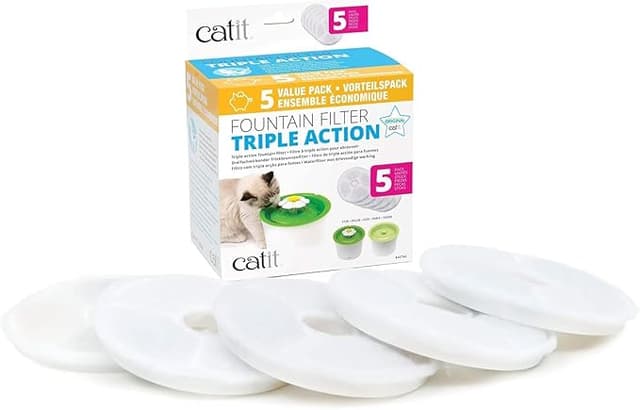
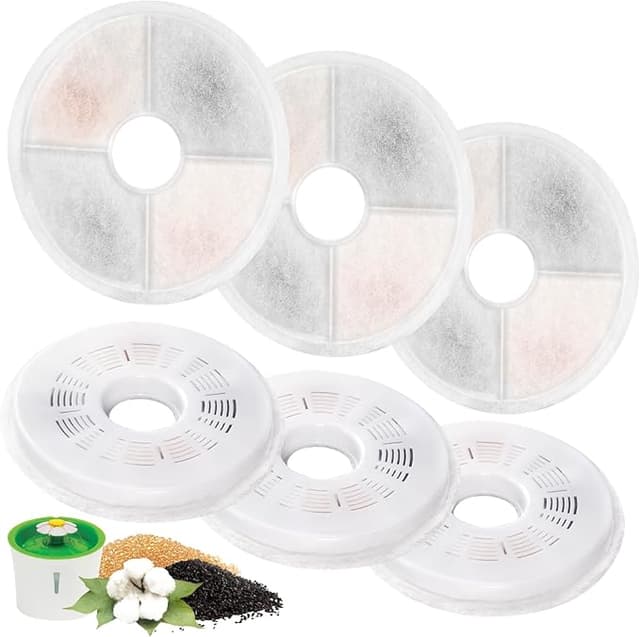
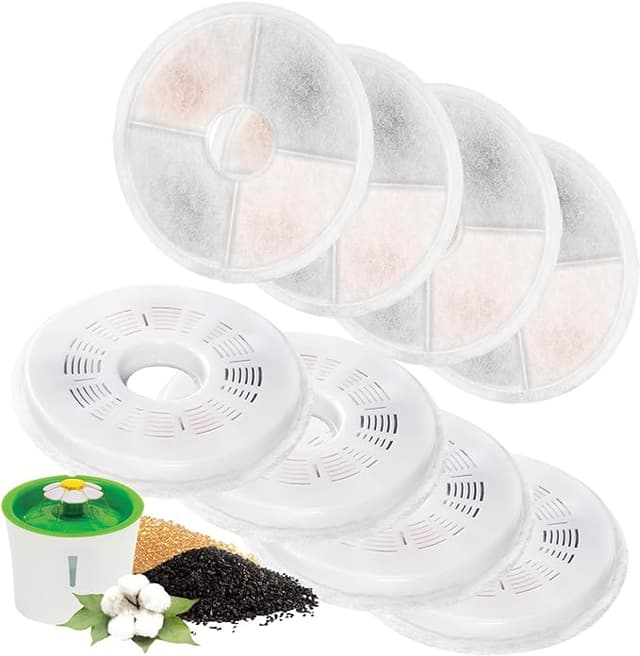
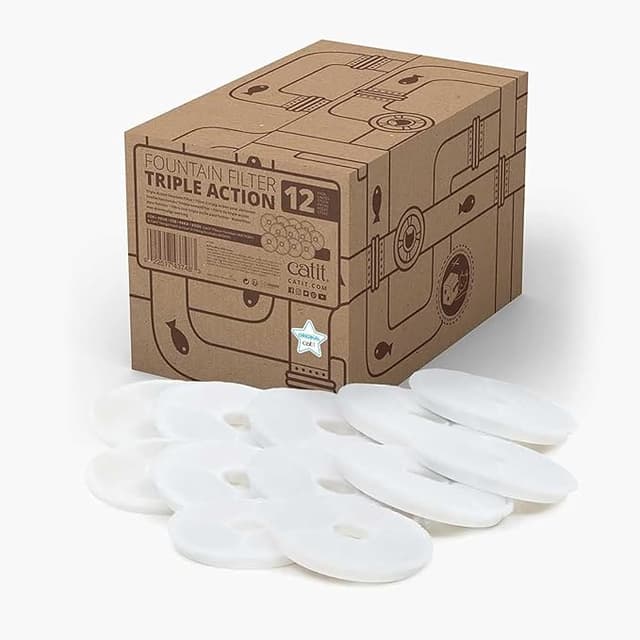
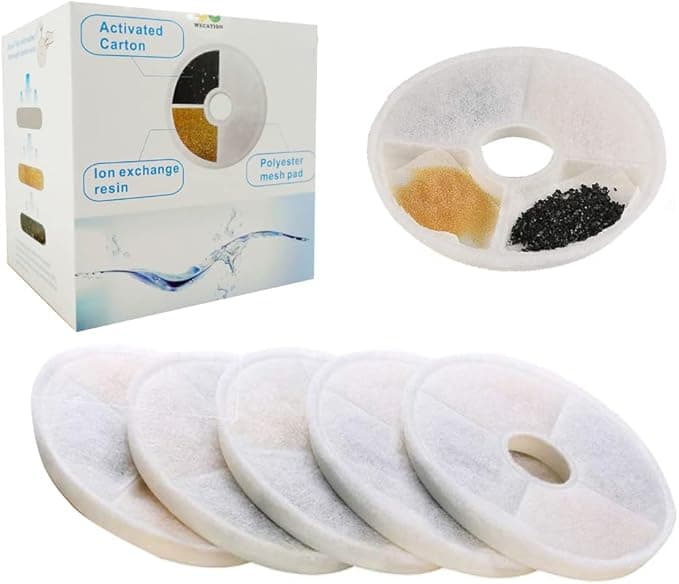
The Catit-branded Flower Filter replacements aren't outrageous, but they add up. A 3-pack of the OEM triple-action filters runs me around $13 when I grab them, sometimes a touch more depending on the week. The compatible Flower Filter packs I switched to come in around $9 for a 6-pack — so roughly half the per-filter cost, and you get double the count. Do the math on a real year: you're supposed to swap these every two to four weeks. Call it every three weeks to be honest with yourself. That's about 17 filters a year. On OEM, you're looking at something like $74 annually. On the compatibles, closer to $26. That's a $48 gap, every year, for a part that sits in water and gets thrown away.
For a fifty-cent piece of carbon and foam, that gap always struck me as steep. So I tested the cheap ones. Across two of these fountains, for the better part of a year now.
Do they actually fit the stainless Flower Fountain?
This was my real worry. The stainless steel version of the Catit fountain has a slightly different basin than the plastic one, and aftermarket filters love to be a millimeter off. The compatible Flower Filters seat correctly — they drop into the same compartment, the pump cover clicks down over them the way it should, no bowing, no gap on the sides where unfiltered water can sneak past. I will say the foam ring on the compatible ones is a hair denser than the OEM, so the very first time you press the cover on, it feels a touch tight. It gives after a minute. Nothing I'd call a problem, just a thing you notice.
One install note the box doesn't emphasize enough, and I learned it the annoying way: soak the filter in water for a full ten minutes before you use it, then rinse it hard under the tap. If you skip the soak, the carbon dust hasn't settled and you'll get little black flecks circulating for the first day. Ten minutes in a bowl, a good rinse, and that's gone. Same routine OEM needs, honestly — people just don't read the steps.
How it actually performs
Day to day, I can't tell the difference in the bowl. The triple-action claim — hair, debris, taste — holds up on the part that matters most to me, which is hair. I have a long-haired cat who sheds into everything, and the compatible filter catches the floating fur and the gritty bits at the bottom just as well as the Catit one did. Water stays clear. No taste complaints from either animal, and Biscuit is a picky drinker who will absolutely boycott a fountain he doesn't like.
Where it's a touch behind: longevity. The OEM filter, in my experience, holds its shape and stays effective right up to the three-week mark. The compatible one starts looking tired a few days sooner — the foam gets that compressed, loaded look around day 16 or 17 instead of 20. It's not failing, it's just telling you it's full. Since you're swapping every two to four weeks anyway, I just lean toward the shorter end of that window with these, and at half the price per filter that's an easy trade. You've got six in the pack. Use them freely.
The honest downsides
Two real ones. First, the packaging is cheap — the filters come in a thin plastic sleeve, sometimes a little squished, and once I got a pack where one filter had a slightly crumpled corner on the foam. It still worked fine once it expanded in the water, but it looked rough out of the bag, and if you're the type who wants everything pristine, the OEM box presents better. You're paying for that box, partly.
Second — and this is the one that actually matters — a compatible filter does not excuse you from cleaning the fountain. Neither does an OEM one, to be fair. No filter, branded or not, stops the slime if you let the water sit. That sour film I found is bacteria and biofilm building up on the stainless basin and the pump, and a saturated filter actually feeds it. Stagnant, over-loaded water is exactly where the bad stuff breeds, and a cat that smells it will quietly stop drinking — which is its own health problem, because a cat that drinks less is a cat heading toward urinary and kidney trouble. The filter buys you clean water between cleanings. It does not replace the cleaning. Pull the pump every couple of weeks, scrub the impeller with an old toothbrush, rinse the basin, drop in a fresh filter. That habit matters more than which brand of filter you buy.
Who should skip these
If you run the fountain in a high-shed, multi-cat house and you know yourself well enough to admit you won't swap on time, the OEM's extra few days of life might genuinely be worth the premium — that buffer covers your forgetfulness. And if a slightly squished sleeve is going to bug you every single time, buy the box. No shame in that.
For everyone else — which is most of us — I grab the compatible Flower Filters and I have re-ordered them three times now. Same clean water, same fit in the stainless basin, my picky cat drinks from it without complaint, and I'm keeping about $48 a year that used to go into a part I throw in the trash. The cheap one does the job. Just don't let it sit there for three weeks like I did. Set a phone reminder. Your cat's nose is more honest than any review, including this one.