Troubleshooting & Analysis
The smell hit me before anything else
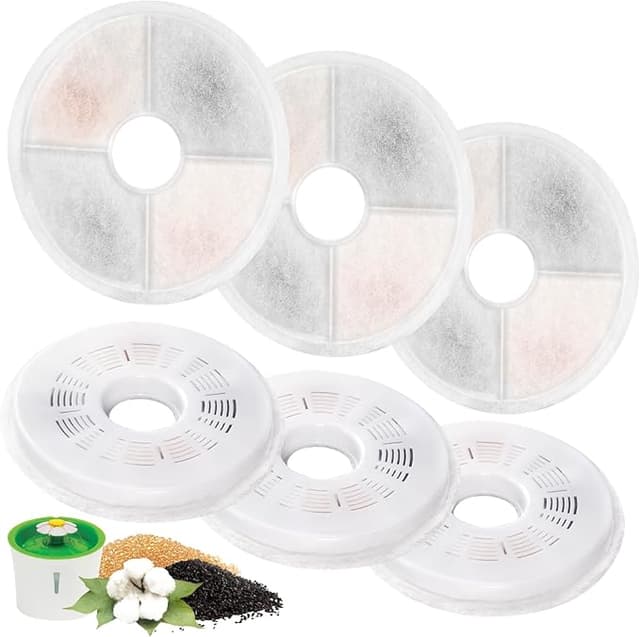
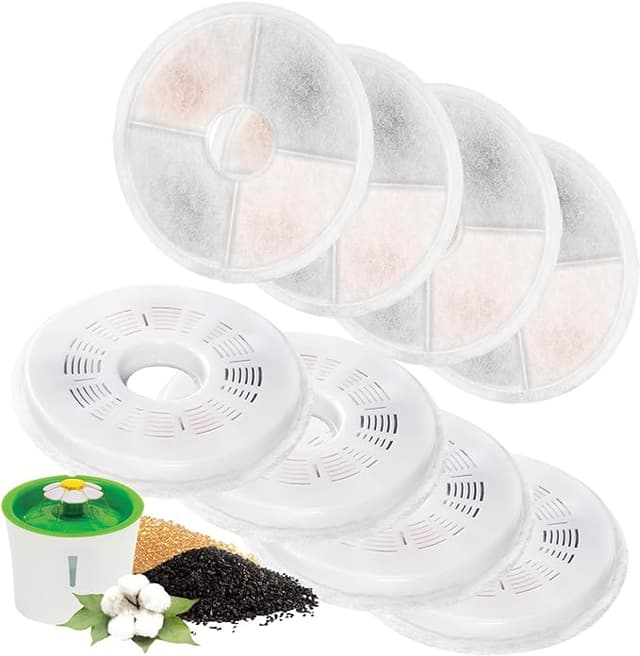
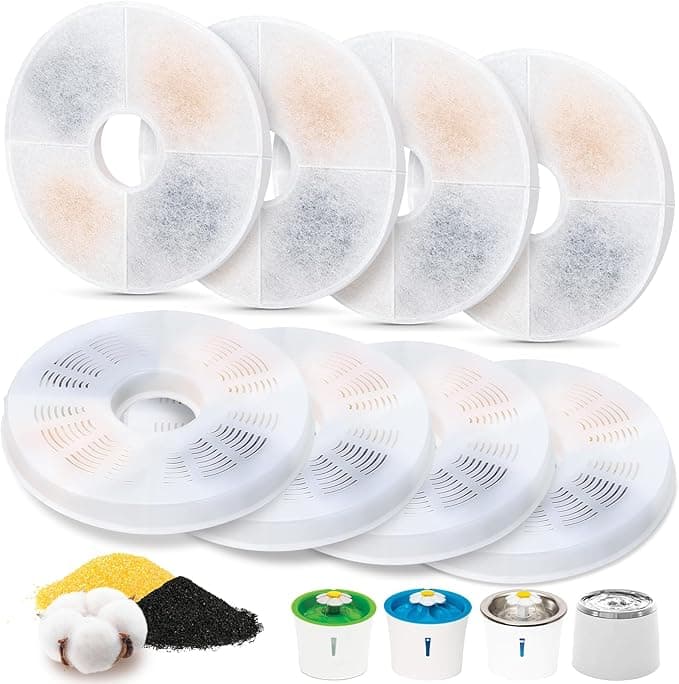
First thing I noticed pulling the new filter out of the bag wasn't the fit or the color — it was that wet-cardboard, faintly carbon smell when I soaked it. Ten minutes under water, like the instructions say, and the whole thing kind of bloomed open and softened. That's the activated carbon waking up. If yours smells a little like a damp aquarium store on day one, that's normal. It's not a defect. It's the charcoal doing exactly what it's supposed to do before the water ever touches your cat's tongue.
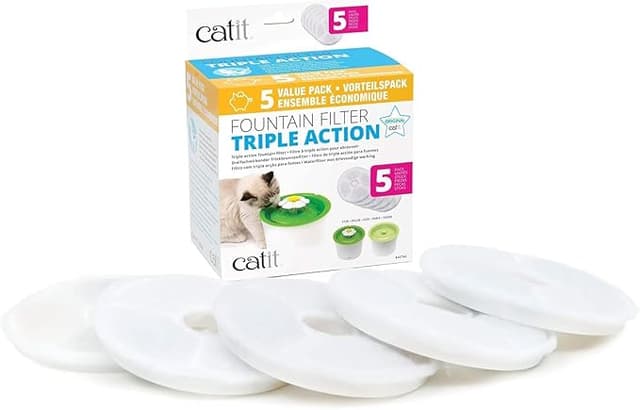
I've got a Catit Flower Fountain — the stainless steel one — running on my kitchen counter for two cats who are, frankly, dramatic about water. And I got tired of the OEM filter math. So I bought the compatible Flower Filter packs instead and ran them for a few months to see if my cats, or the fountain, could tell the difference.
The price gap is the whole reason you're here
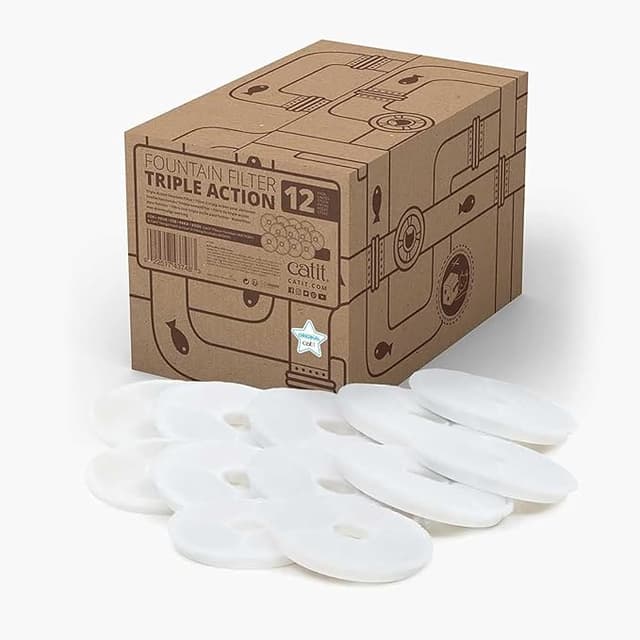
Let's be honest about why anyone reads a filter review. It's the money. A Catit-branded triple-action filter, bought one or two at a time, works out to roughly $4 to $5 per filter once you account for shipping on a small order. The compatible Flower Filters I've been buying come in a 6-pack that lands around $12 — call it $2 a filter, sometimes less on a multipack deal.
Now do the yearly math, because that's where it actually bites. You're swapping this filter every 2 to 4 weeks. I run mine on a tight schedule — every three weeks — which is about 17 filters a year. At OEM pricing that's somewhere near $75 to $80 annually just to keep one fountain clean. On the compatibles, that same year runs me a little over $30. That's a $45-ish gap, every year, for a part that gets thrown in the trash. For something disposable, that difference is hard to argue with.
Does it actually seat right?
This was my real worry going in. Fountains are fussy — a filter that sits a hair proud lets water sneak around the edges instead of through the carbon, and then you're basically running an expensive splash toy. So I paid attention.
The compatible filter drops into the filter compartment of the Flower Fountain and seats flat. No fighting it, no trimming. I will say the foam edge on the third-party one is cut a touch less crisp than the Catit original — under good light you can see the die-cut isn't quite as clean. In the compartment, though, it doesn't matter. It sits flush, the pump cover clicks down over it the same way, and I haven't had water bypassing the edges. The first time I installed one I pressed around the rim with a fingertip just to be sure it was sitting in its seat. It was.
One thing I learned the hard way and want to save you from: rinse it after the soak. Really rinse it. The instructions say soak ten minutes, then rinse thoroughly under running water, and the first time I half-skipped the rinse step my fountain had a little black carbon dust floating on top for a day. Run it under the tap until the water coming off it runs clear. Two extra minutes, no dust.
How it actually performs
Here's the part people care about and nobody measures honestly. The job of this filter is three things: catch hair and grit, hold back the slimy gunk, and pull the off-tastes out of the water so your cat keeps drinking. On the first two, the compatible is dead even with OEM in my experience. I pull hair and bits of kibble out of the foam every swap — it's catching debris just fine. And the biofilm, that slick film you feel on the fountain walls when a filter's overdue, stayed away on the normal interval.
On the taste-and-odor side, the carbon side, I'd give OEM a slight edge — but slight. Brand-new, both run identically. The difference shows up at the tail end of the cycle. Around week three to four, the compatible's carbon seems to tire a touch sooner than the Catit one did. Not dramatically. My cats didn't stage a protest. But if you're the type to push a filter to four full weeks, you might notice the water's not quite as "fresh" by the end as it would be with the OEM. Swap a few days earlier and it's a non-issue — and at $2 a filter, swapping early doesn't hurt the wallet the way it would at OEM prices.
The real downsides — because there are some
I won't pretend this is flawless. The packaging is cheap. The 6-pack shows up in a thin plastic sleeve, no individual wrapping, and a couple of mine arrived with slightly squished corners. Cosmetic — they soaked back into shape and worked fine — but it doesn't inspire confidence when you open the bag.
That break-in smell I mentioned up top is the other thing. For the first day, sometimes two, there's a faint plasticky-carbon note. It runs off in the rinse and the first day of circulation, and honestly the OEM does a milder version of the same thing, but the compatible is a little more noticeable out of the bag. If you've got a particularly suspicious cat, run the fountain a few hours before they discover it's "new."
And the consistency isn't perfectly uniform. Across two different 6-packs, one filter had a foam layer that felt a millimeter thinner than its siblings. It still worked. But OEM, you pay for that boring sameness — every filter identical. With the cheaper packs, you're accepting a little variance.
Why a dead filter is genuinely worth caring about
This isn't just hygiene theater. When a fountain filter saturates and you leave it, the carbon stops adsorbing and the foam turns into a bacteria sponge sitting in warm, recirculating water. That slimy buildup is exactly what makes a cat walk up, sniff, and refuse to drink — and a cat that's drinking less is a cat heading toward urinary trouble, which is a vet bill that dwarfs every filter you'll ever buy. The whole point of the fountain is to keep them drinking. A tired filter quietly defeats it. Stagnant water breeds bacteria fast, so the schedule matters more than the brand.
Who should buy OEM — and who should grab this
If you've got one cat, one fountain, and you swap filters maybe ten times a year, the dollar gap is small enough that buying the brand-name Catit filter for the slightly-better consistency is a perfectly reasonable call. No shame in it.
But if you're like me — multiple animals, a fountain that runs hard, a filter habit that adds up to real money over twelve months — the compatible Flower Filter does the same job for less than half the price, and the only things you give up are nicer packaging and a hair more end-of-cycle carbon life. Rinse it well, swap it on time, and your cats will never know the difference. I've gone through several packs now, and when this one runs out I'm buying the compatibles again. I already have.