Troubleshooting & Analysis
Eleven bucks for three squares of foam. That's where this started.
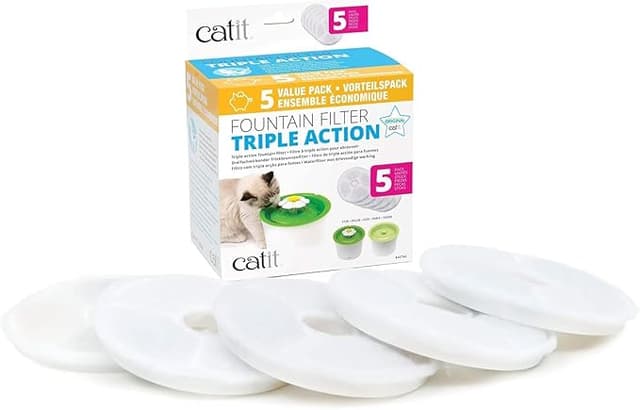
I was standing in the pet aisle holding a genuine Catit triple-action pack — three carbon filters, $11 and change — and doing the math in my head. My cat goes through one every two to three weeks. Call it eighteen filters a year. That's roughly $66 a year to keep a $40 water fountain from turning into a science experiment. Sixty-six dollars on foam. For one cat.
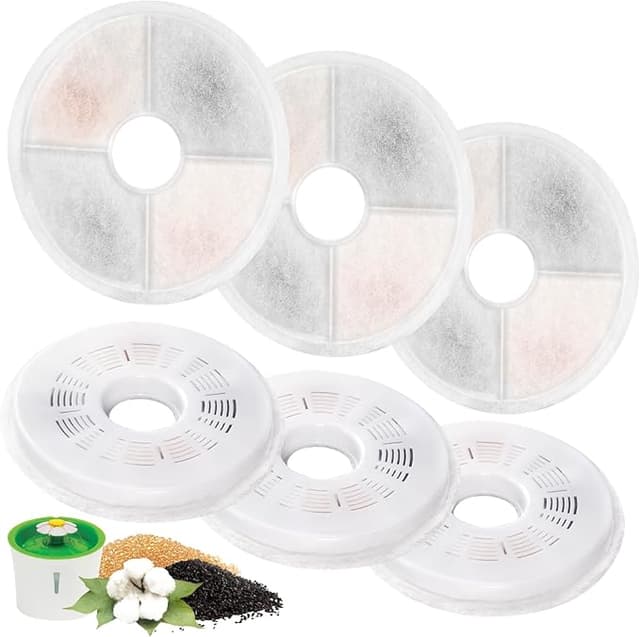
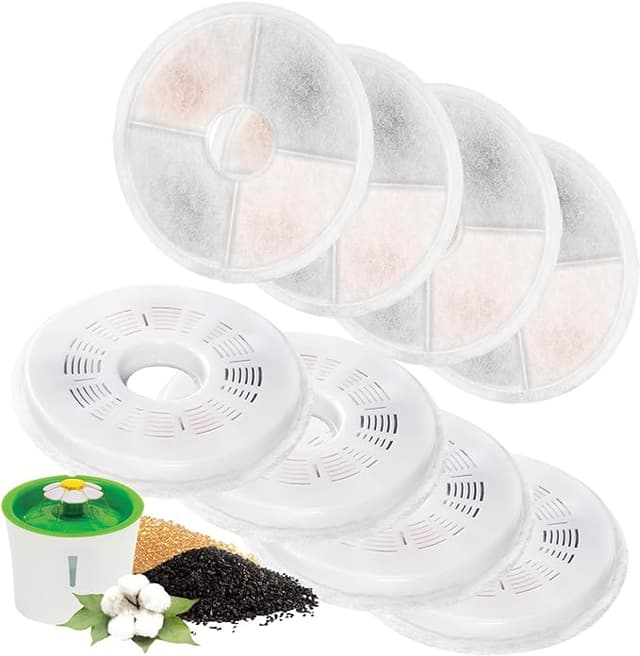
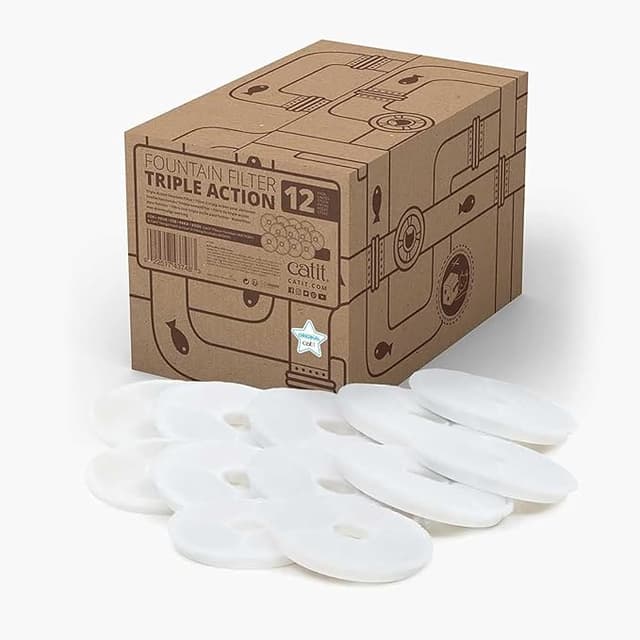
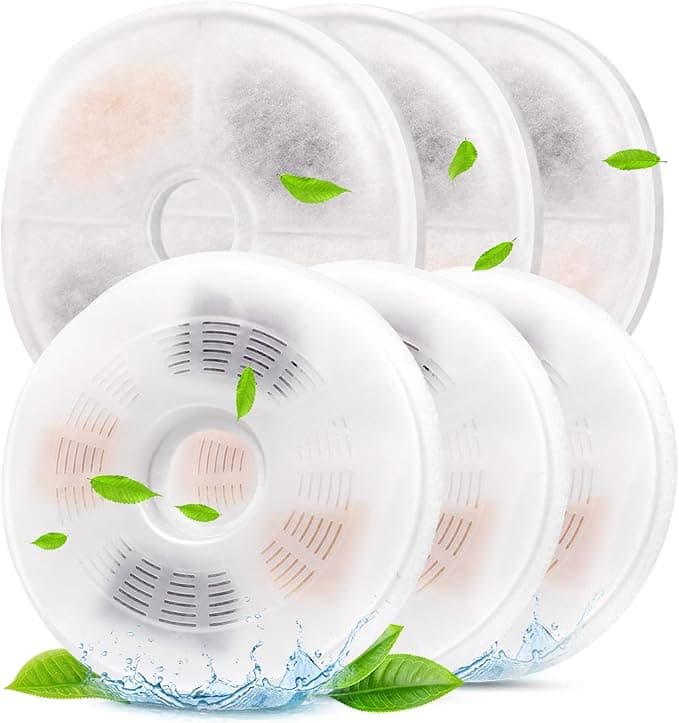
So I did what I always do when an OEM price feels like a tax: I bought the compatible ones instead. A 12-pack of third-party Catit-fit carbon filters ran me about $10 — under a dollar each, versus the roughly $3.70 each I was paying Catit. Same fountain, same compartment, half a year of filters for the price of two OEM refills. I've been running them in my Catit Flower fountain for going on five months now, and here's the honest report.
Do they actually fit the compartment?
This was my first worry. Cheap filters that don't seat right are worse than no filter — water just sluices around the edges and you're filtering nothing. The compatible ones I got drop into the Catit filter slot the same way the originals do. The triangle-ish foam-and-carbon shape matches. They click down flat under the pump cap with that same little resistance you feel on the real ones.
One caveat, and it's real: the frame is a hair less crisp than OEM. On two filters out of the first twelve, the foam edge was cut a touch proud, and I had to press it down into the corner with my thumb so it sat flush. Ten seconds of fiddling. After that they held. But if you're the kind of person who's going to be annoyed by squaring a filter into its slot by hand once in a while, you should know that going in.
The soak step matters more than people think
Catit's own instructions tell you to soak the filter ten minutes before use, then rinse it under running water. With the OEM ones I used to skip the soak half the time and got away with it. With these compatible ones — don't skip it. I tried dropping a dry one straight in once because I was lazy, and the fountain ran with a faint plasticky edge to the water smell for about a day. My cat sniffed it and walked off. Lesson learned.
So now I run every one of them under the tap, give it a full ten-minute soak in a bowl, then a hard rinse to flush the loose carbon dust out. After that the water's clean and the smell is gone. The first day or two of a fresh filter there's a very slight new-carbon taste-neutral-ish smell if you put your nose right down at the bowl — it clears completely by day three. OEM had a little of this too, just less of it.
Performance: where it ties OEM, where it's a step behind
The job a Catit filter does is threefold — catch cat hair and gunk, soften the water taste so the cat actually drinks, and slow down the slimy biofilm that builds up in any standing-water fountain. On the first two, I genuinely can't tell these apart from the originals. Hair and floaty debris get caught in the foam exactly like before. My cat drinks the same amount; she didn't stage a protest, which is the only review metric that really counts in this house.
Where I think the OEM has a slight edge: carbon longevity. The genuine Catit filters felt like they held their water-sweetening for a touch closer to the full three weeks. With the compatible ones, by the back half of week three I notice the bowl starting to get that faint stale edge a day or two sooner than the OEM did. Not a dealbreaker — it just means I lean toward the two-week end of Catit's "every 2 to 4 weeks" window rather than stretching it. At under a dollar a filter, swapping a few days early costs me nothing. With the OEM, swapping early actually hurt.
The downside I won't sugarcoat
The packaging is cheap and the quality control is not OEM-tight. My 12-pack came in a flat plastic sleeve, no individual wrapping, filters stacked loose. Two of the twelve, like I said, needed an edge pressed down. One had a little more loose carbon dust than the rest and took an extra rinse. None of them were defective — none failed to filter — but if you opened this pack next to a genuine Catit box you'd immediately clock which one cost more. You're trading a little consistency for a lot of money. That's the deal. I'm at peace with it; you might not be.
The other thing worth saying plainly: a dead filter in a water fountain is not a cosmetic problem. When the carbon's spent and the foam's loaded, the fountain stops being a filter and starts being a warm, moving petri dish. Slimy buildup, stagnant pockets, bacteria multiplying — and a cat that quietly decides the water's gross and stops drinking enough. Dehydration in cats is a genuine health issue, urinary stuff especially. So whichever filter you buy, the actual safety move is changing it on schedule. The cheap compatible ones make that easier, because you're not wincing at $3.70 every time you do the responsible thing.
So who should buy which?
Buy the genuine Catit if you want every filter to drop in perfectly with zero thumb-pressing, if you stretch your replacement interval to the full four weeks and want the carbon to go the distance, or if loose packaging genuinely bothers you. That's a legitimate preference and the OEM earns its price for some people.
But me? I've got one fountain, one picky cat, and a pretty clear-eyed view of what $66 a year versus $20 a year buys. The compatible filters catch the same hair, keep my cat drinking, and cost me about a buck apiece. I soak them, I rinse them well, I swap them a touch early, and I've had clean water for five months straight. For the roughly $46 a year I'm keeping in my pocket, doing the exact same job — I'd buy them again. And the reorder's already sitting in my cart.