Troubleshooting & Analysis
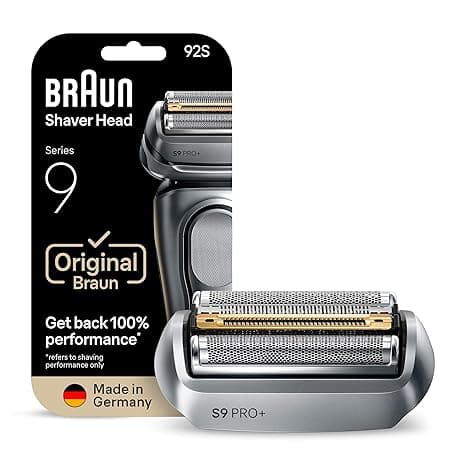
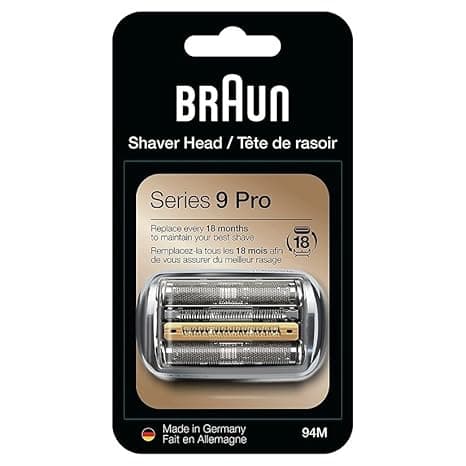
I stood at the bathroom counter with both boxes open. On the left, the genuine Braun Series 9 cassette — the 92S, the one the little manual swears by — at right around $48 once you account for shipping. On the right, the compatible head a buddy swore worked fine in his, sitting at about $22. My old head was three years gone, blades shot, and every morning had turned into a tug-of-war on my jaw. I had to pick one. And I'll be honest: I almost grabbed the Braun box out of pure guilt, the way you do when a machine cost you three hundred bucks and you feel like you're betraying it.
I bought the compatible one instead. Here's what actually happened.
The math that made me pause in the aisle
Your Series 9 isn't a cheap razor. It's a real piece of hardware, and Braun knows it — that's why the replacement cassette is priced like a small appliance instead of a consumable. Forty-eight dollars, give or take, every twelve to eighteen months if you shave most days. Do that for the life of the shaver and you've quietly spent more on heads than you did on the shaver itself. The compatible cassette I bought was $22. That's a $26 gap on a single swap, and if you keep the machine five or six more years, the difference stacks into real money — a couple hundred dollars that just stays in your pocket instead of going back to Braun.
And the thing people forget: a worn head isn't a cosmetic problem you can ignore. Dull foils and a tired cutter block don't slice hair cleanly — they grab it, pull it half a millimeter, and let go. That's the burn. That's the redness on your neck you blame on "sensitive skin" when really your blades have just gone blunt. Replacing the head at all is the right call. The only real question is whether you pay Braun's price to do it.
Does it actually fit? The part everyone's nervous about
This was my whole worry. The Series 9 cassette isn't a generic clip — it seats with those two side release buttons, and if a third-party part is even slightly off, you get rattle, or worse, it pops loose mid-shave. So I went slow. Pressed the release buttons, lifted the old cassette straight off, and snapped the new one down until I heard it. And there was a click. A real one — the same seat-and-lock feel the original gave me.
I'll give you the honest caveat, because I promised myself I would: the new cassette sits a hair tighter on one side than the OEM did. Not loose — tighter, like the tolerances were cut a touch aggressive. The first time I pressed it on, I genuinely thought it wasn't going to go, then it dropped in with a firmer snap than I expected. After that it was solid. No wobble, no rattle when the motor spun up. A drop of the oil that came in the box along the foils, a quick run to spread it, and it moved smooth from the first stroke.
Four months of actual mornings
I've been running this head daily-ish for about four months now. On a clean two-day stubble it cuts as close as the genuine head did when that one was new — honestly, I can't feel a difference rubbing my jaw afterward. The foils glide, the trimmer pops up and handles the under-nose and sideburns the way it always has.
Where's it a touch behind? Long growth. If I skip three or four days and let things get scraggly, the compatible foils need a second and third pass over the same patch where the original Braun head would've mowed it in one. The cutting elements just aren't quite as eager on dense, long hair. For a daily or every-other-day shaver — which is most of us — you will not notice this. For a guy who lets it go a week and expects one-pass magic, the OEM still has a small edge.
The downsides, said plainly
So here's the full ugly list, because a review with no flaws is a sales pitch wearing a disguise. One: the packaging is cheap. Thin cardboard, a plastic clamshell that felt like it'd crack, none of the reassuring heft Braun gives you. It doesn't affect the shave, but it does make you second-guess in the first ten seconds. Two: there was a faint plastic-and-machine-oil smell for the first two or three days — not strong, but I noticed it against my face that first morning. It aired out completely by day three and I haven't caught it since. Three: that tighter-on-one-side fit I mentioned. It locks fine, but the install isn't quite as buttery as dropping in a genuine cassette, and if you're rough with it you could feel like you're forcing it.
And one more practical note that matters over time — I can't promise this head lasts the full 18 months Braun quotes for theirs. Four months in it's holding strong, no degradation I can feel, but the honest answer is I don't have three years of data on it the way I do on the brand. At less than half the price, though, even if it tapped out a couple months early, I'd still be ahead. You're not betting much.
Who should just buy the Braun head
Look, if you shave maybe once a week and let real beard build up between shaves, the OEM cassette's stronger cut on long hair is worth the extra $26 to you — you'll feel the difference where it counts. Same if you're the type who simply won't tolerate any first-week smell or any install that needs a firmer press. There's no shame in paying for the brand when the brand genuinely does the one thing you need slightly better. Buy the 92S and don't think about it again.
What I actually do
But for the rest of us — the daily and every-other-day crowd who keep stubble short — I grab the compatible cassette, and I've now done it twice. It seats with a real click, it shaves my two-day growth as close as the original did new, and it does it for less than half the money. The smell goes away, the packaging never touches your face, and the only real trade-off shows up on a week of neglect most of us never give it anyway.
Pop the old head off with the release buttons, snap the new one in, a drop of oil, done in under a minute. My jaw stopped burning the first morning. For $22, doing the same job five days a week, I'd buy it again — and like I said, I already have.