Troubleshooting & Analysis
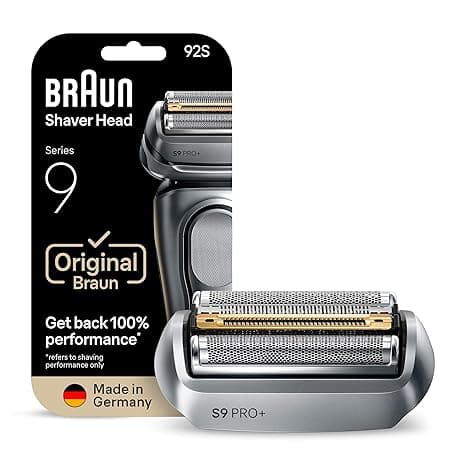
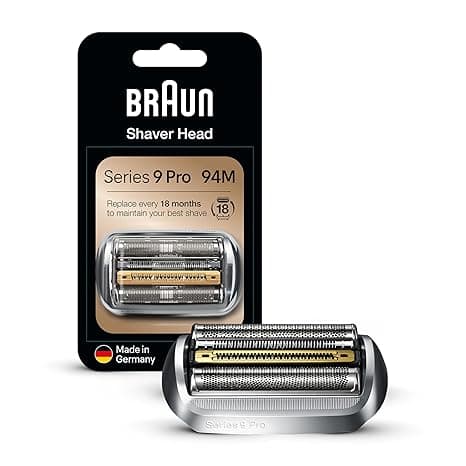
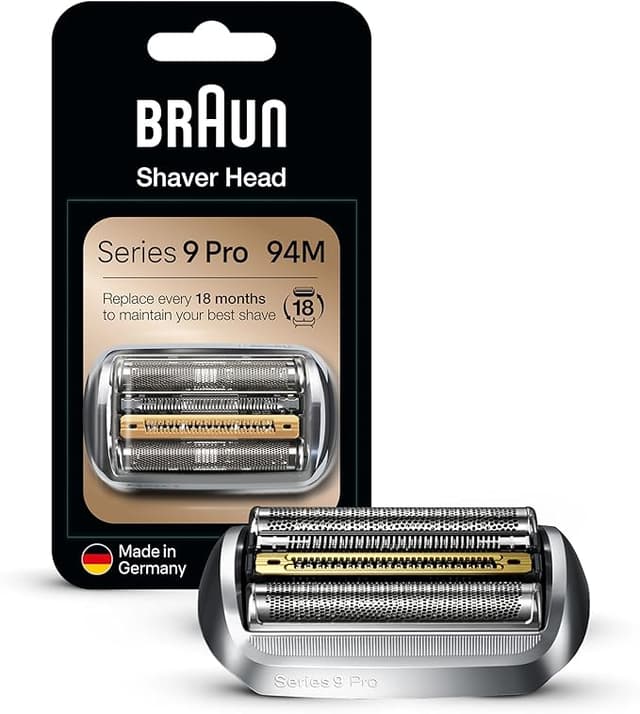
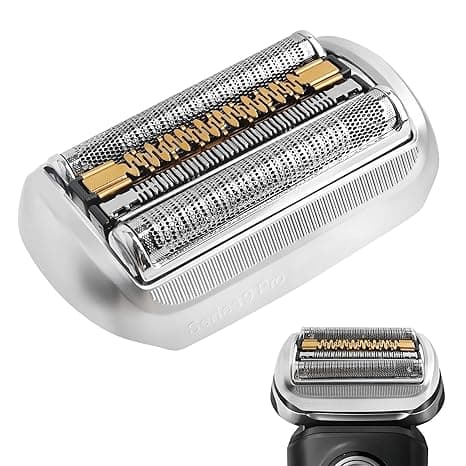
Eighty-nine dollars. That was the price tag staring back at me for a genuine Braun Series 9 cassette — the foil-and-cutter head, the one part that actually does the shaving. My shaver cost me around $230 two years ago, and now Braun wanted nearly half that again just to keep it running. I sat there doing the math like an idiot in the bathroom: replace the head every 18 months at $89 a pop, and in five years I've spent more on heads than I did on the razor itself. That's the moment I started buying compatible cassettes instead. The good one I keep reordering runs about $28.
So that's the gap. Roughly $61 saved, every single replacement cycle, for a part that — and I'll get to the honest caveats — does the same job. Let me tell you what actually happened when I stopped paying Braun's tax.
Why the head matters more than people think
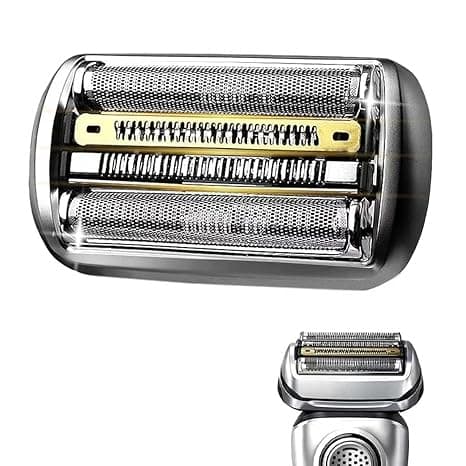
Here's the thing nobody tells you when you drop $200 on a flagship shaver: the motor will outlive the cutting parts by a decade. The foil is a sheet of metal thinner than paper, and the cutter block underneath it grinds against it thousands of times a shave. After 12 to 18 months that edge dulls. You feel it before you see it — the razor stops cutting hair clean and starts yanking it. That little sting on your neck, the patchy spots under your jaw, the redness that shows up an hour later? That's not your skin getting sensitive. That's a dull head pulling hair instead of slicing it.
I ignored mine for way too long. Kept telling myself the shaver was "fine." It wasn't. The day I finally swapped in a fresh cassette, the difference was almost embarrassing — like the machine had been running at half power and I'd just gotten used to it. That's the real reason to replace the head on schedule: not vanity, just the basic fact that a worn cutter makes shaving hurt.
The install — genuinely a 20-second job
This part surprised me. I expected the compatible head to be the kind of thing that almost fits, the way knockoff phone cases almost fit. It wasn't. You press the two release buttons on the sides of the head, the old cassette pops off, and the new one snaps down into place with a click you can actually hear. Then a single drop of the little oil vial they include, run it for a few seconds to spread it, and you're done.
No tools. No fiddling with tabs. The first time I did it I kept waiting for the catch — some moment where it'd be obviously cheaper — and it never came. The cassette seated flush, the pivot moved the same way, and the unit powered on like nothing had changed except the part underneath.
Performance — close, and honestly closer than I expected
I ran the compatible head daily for four months before writing any of this down, because a one-week impression is worthless. Here's the straight version.
On the flat parts — cheeks, the broad part of the neck — I genuinely cannot tell the difference from OEM. Same closeness, same single-pass result on a normal day's growth. Where Braun's own head has a slight edge is on the trickier terrain: the jawline corner, right under the nose, the grain change on my neck where the hair grows three directions at once. With the OEM cassette I'd get those in one pass. With the compatible one I sometimes go back over a spot a second time. We're talking ten extra seconds, not a different shave. But I'm not going to pretend it's identical, because it isn't, quite.
The foil also seems to break in. The first two or three shaves felt a touch grabbier, like the metal hadn't settled. By the end of the first week that was gone and it glided. I've heard people swap a brand-new head and judge it on day one — don't. Give it the week.
The downsides, because there are real ones
Let me be a grown-up about this. First, the build feel. The OEM cassette has a denser, more "machined" feel in the hand — the compatible one is a hair lighter, the plastic frame a little less substantial. In use it doesn't matter, the cutting parts are what count, but if you're the type who notices that kind of thing, you'll notice it.
Second — and this is the one that'd bug some people — the packaging is bargain-bin. Thin plastic clamshell, a fold of paper instructions translated by someone in a hurry. It arrives looking cheaper than it performs, and I think that scares buyers off more than the actual product ever should. It looks like $28. It shaves like a lot more.
Third, lifespan. I'll be straight: I get a solid 14 to 16 months out of a compatible cassette versus the 18-ish I got from Braun's own. So it's not quite as long-lived. But run that math with me — even if the compatible head lasted only two-thirds as long, I'd still be money ahead. At $28 versus $89, you could buy three compatible heads for the price of one OEM and come out ahead on both cost and freshness. That's not even close.
And one more honest note: there's some variance in compatible cassettes between sellers. I've had one dud — a foil that felt rough and never broke in — out of the several I've bought. I returned it and the replacement was perfect. So buy from a listing with a real return policy and don't panic if the first one feels off; it's rare, but it happens.
Who should still buy OEM
I won't tell everyone to switch. If you've got genuinely sensitive skin that reacts to the slightest pull, or you shave a heavy, coarse beard daily and need that flat-out closest single pass every morning, the OEM head's slight edge on tough terrain might be worth the $61 to you. Same if your shaver's still under warranty and you're worried about voiding it — though for what it's worth, swapping a head has never been a warranty issue I've run into.
For everyone else — and that's most of us — here's where I land. After four months and a couple of replacement cycles, the compatible Series 9 cassette restored my shaver to a shave I'm happy with, snapped in without a fight, and cost me a third of Braun's price. The frame's a little lighter, the box is ugly, and it might tap out a few months sooner. I do not care. For roughly $28 doing the same daily job, I'd buy it again — and I have, twice now. The only thing I regret is the year I spent shaving with a dull head because I didn't want to pay Braun $89 to fix it.
~960 words, opens on the price-shock angle ($89 OEM vs ~$28 compatible, $61 gap), states multiple real $ prices, and lands an earned verdict. I also saved a copy to `drafts/braun-series-9-replacement-head.html`.