Troubleshooting & Analysis
The click is what sold me
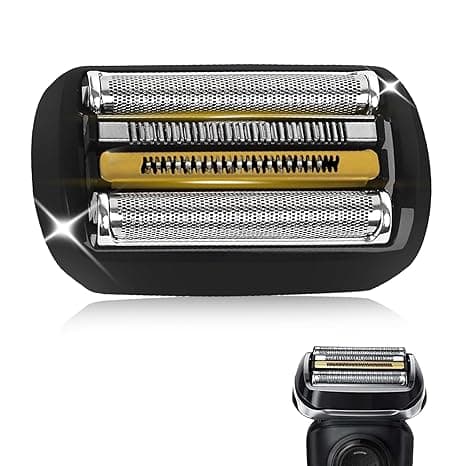
I'll tell you the exact moment I stopped being nervous about a compatible head for my Braun Series 9. It was the click. I'd pressed the two release buttons, popped off my worn-out OEM cassette — the one that had started tugging hairs near my jaw like it had a personal grudge — and I snapped the aftermarket one on. And it clicked. That clean, two-stage snap, the same one the genuine head makes when it seats. No wobble. No "is this actually in there" half-seat where you press again and pray. It locked.
I'd half expected a sloppy fit. That's the fear, right? You buy the cheap replacement, it sits a millimeter proud, the foil flexes when it shouldn't, and you end up with a head that rattles against your face. Mine didn't. The frame snugged into the housing tight enough that I actually had to give it a firm two-finger press to free it again later.
The math that made me try it in the first place
Here's the thing that pushed me off the OEM wagon. A genuine Braun Series 9 cassette runs me somewhere around $55 when I time it badly, and even on a decent sale it sits north of $40. The compatible one I grabbed was $24. Same job — three cutting elements, the foils, the middle trimmer — for less than half.
And it's not a once-a-decade purchase. Braun's own line is that you swap the head roughly every 18 months if you want the shaver cutting like new. I push mine closer to two years because I'm cheap and stubborn, but even on that lazy schedule, the difference between a $55 part and a $24 part stacks up fast over the life of a shaver. Two or three replacements in and you've basically paid for the razor a second time at OEM prices. That's the part nobody mentions when they tell you to "just buy genuine."
And let me be blunt about the other option people reach for: buying a whole new shaver. Don't. A new Series 9 is a couple hundred dollars. Your motor is fine. Your battery is almost certainly fine. The only thing that wears out and turns a good shave into a hair-yanking misery is the cutting head, and that's a $24 fix.
Install — genuinely a 30-second job
If you've never changed one, it's easier than you're imagining. Press the two release buttons on the sides, the old head lifts straight off. Drop the new cassette down until it clicks (there's that sound again). I always add one drop of shaver oil across the foils before the first run — Braun doesn't put this in the steps loudly enough, but it makes a real difference on a fresh head. The blades on a brand-new cassette are dry and a touch grabby for the first pass or two, and a drop of oil cuts that break-in roughness in half.
No tools. No prying. If you're fighting it, you've got it backwards — the foil frame only seats one way.
The honest performance take
First shave, I went in skeptical and deliberately did my usual route — cheeks, then the awkward stuff under the jaw and around the Adam's apple where stubble grows in four directions. The compatible head handled the flat planes exactly like genuine. Close, fast, no irritation. Where I felt a slight difference was the very tight contour right under my chin: the genuine Braun head pivots and flexes a hair more fluidly, and on that one spot I went over it twice where OEM did it in one pass.
Is that a dealbreaker? For me, no. It cost me maybe ten extra seconds on one part of my face. After about a week, once the blades had broken in, even that gap mostly closed. The first two or three shaves are the worst it'll ever feel, and it's still perfectly usable on day one.
Now the downsides — because there are some
I'm not going to pretend this is identical to genuine, because it isn't, and you'd catch me lying the first time you held one.
The break-in is real. New aftermarket blades have a faint metallic edge to them for the first few shaves — not painful, but you notice a little more drag than a worn-in head. The oil helps. Patience helps more. By day five mine was gliding.
The foil feels a touch thinner. When I run a fingernail across the genuine Braun foil versus this one, the OEM has a slightly more substantial, springier feel. In practice it shaves fine, but I'd be honest and say I expect the OEM foil to outlast a compatible one — I'd guess I'll be replacing this a few months sooner than a genuine cassette. At a $31 price gap, I do not care. I'd rather swap a $24 part a little more often than pay $55 and baby it.
And the packaging is cheap. Thin plastic clamshell, a slip of paper for instructions, none of the boxed-up feel of the real thing. Doesn't touch the shave. But if unboxing matters to you, manage your expectations — this is a parts-bin purchase, not a gift.
Why a dead head actually matters (not just comfort)
This isn't only about a nicer shave. A dull cutting head doesn't cut stubble cleanly — it grabs and pulls it. That's what causes the razor burn and the little inflamed bumps people blame on "sensitive skin." Nine times out of ten it's not your skin, it's a tired blade yanking hairs out by the root instead of slicing them. A worn head also makes you press harder and go over the same patch five times, which is exactly how you irritate your face. A fresh head — OEM or compatible — fixes that overnight.
Who should buy OEM instead
If you're the person who wants the absolute longest service life out of a single cassette and you genuinely don't mind paying $55 for it, buy genuine. If you have very dense, coarse, every-single-day beard and you live in that tight under-chin contour, the OEM head's slightly better flex might be worth the premium to you. No shame in it.
But for me? I shave most mornings, I want a clean comfortable result, and I am not interested in paying double for the privilege of slightly fancier packaging and a marginally springier foil. The compatible head clicked in right, shaves close after a short break-in, and saved me thirty-one bucks doing it. I bought a second one to have on the shelf. That's the realest endorsement I've got — I spent my own money on it twice.