Troubleshooting & Analysis
Sixty bucks. That's what Braun wanted for a single Series 9 replacement cassette the day mine finally gave up — and I stood there in the bathroom doing the math on a $60 part for a shaver I'd already paid a small fortune for. Meanwhile the compatible head I eventually bought ran me about $24. Same foil-and-cutter setup, same snap-in cassette, twenty-four dollars instead of sixty. I didn't trust it. I want to be honest about that up front. I figured a third of the price meant a third of the shave.
It didn't. But let me back up, because the reason I was even shopping for a head matters.
The "why does my expensive shaver suddenly hurt" problem
My Series 9 didn't die dramatically. It got worse so slowly I blamed my skin. Mornings started ending in that hot, stingy razor-burn feeling along my jaw, and I'd run the shaver over the same patch four, five times trying to catch the hairs it was missing. That's the tell, by the way — when the blades dull, they stop slicing the hair clean and start tugging it, plucking it, dragging it out before they cut. You feel that as burn and as a shave that just won't get close no matter how long you stand there. I thought I needed a whole new $300 machine. I didn't. I needed the $24 part.
The actual cost picture
Here's the math that pushed me, laid out plain. Braun says replace the cassette roughly every 18 months. OEM at around $60 a pop means you're feeding this thing about $40 a year on top of the original price. The compatible at $24 cuts that to maybe $16 a year. Over the life of a shaver you keep for, what, five or six years? That's the difference between paying another hundred-plus dollars in heads versus under fifty. And — this is the part nobody tells you — a fresh head turns a "should I just buy a new shaver" machine back into the thing you spent $300 on in the first place. Restoring the cutter is the cheapest upgrade in the bathroom.
Does it actually fit a Series 9?
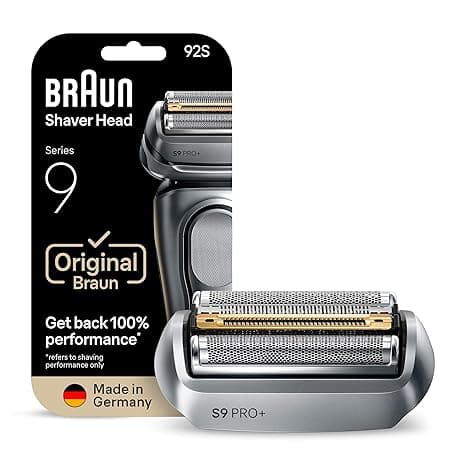
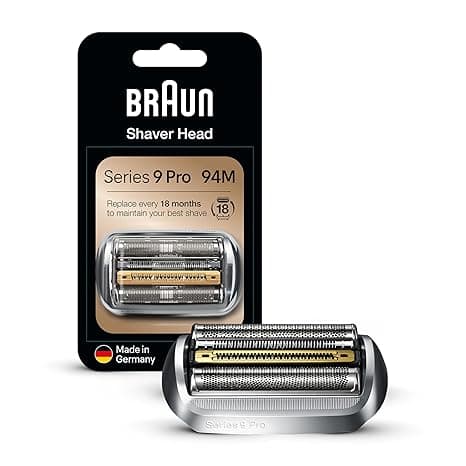
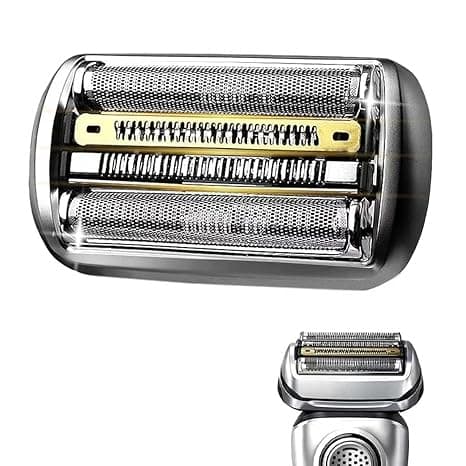
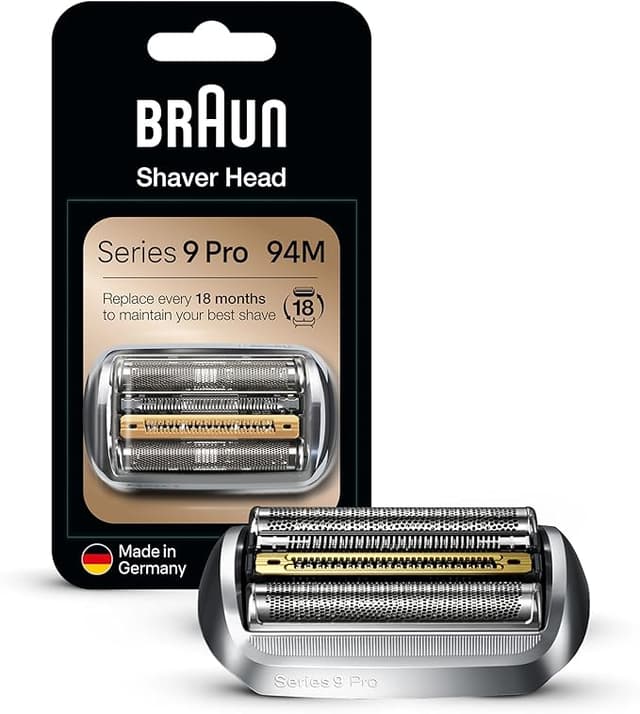
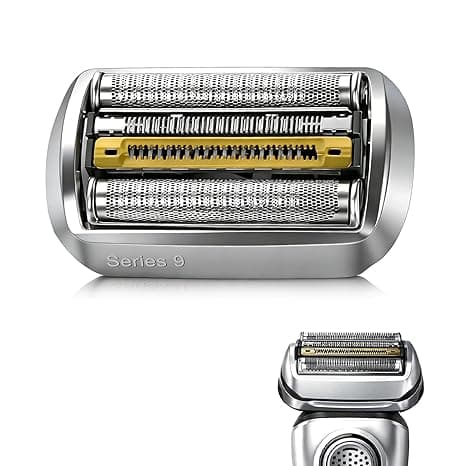
This was my big worry. The Series 9 cassette isn't a simple foil — it's that whole floating block with the two trimmers and the foils, and I assumed an aftermarket version would be a sloppy approximation. Install was almost insultingly easy, though. You press the two release buttons on the sides of the head, the old cassette pops off, and the new one snaps down into the same rails. I heard the click on both sides — and that click matters, because if it doesn't seat fully you get rattle and a worse shave. Then I did what I always do with any new head, OEM or not: put a single drop of clipper oil on the foils, ran it dry for ten seconds to work it in, and wiped the excess. That step isn't optional in my book. It's the difference between a smooth first week and a scratchy one.
The fit was tight. Honestly tighter than I expected. No wobble, no gap where the cassette meets the body.
How it shaves — the honest version
First shave was a genuine surprise. The tug was gone. That clean, slightly cool slice you forgot the shaver used to do — it was back, full closeness, no going over the same spot. For the first two weeks I genuinely could not tell the compatible head from a factory-fresh Braun one on closeness alone.
Now the honest part, because a review with only good news is worthless. A couple of real things.
- The foil metal feels a hair less premium than OEM. Side by side, the Braun foil has a slightly finer, more polished mesh. In practice I couldn't feel a difference on my face — but if you run your fingertip across both, the OEM is a touch smoother. It's there.
- The first two or three days there was a faint plastic-and-machine-oil smell off the new cassette. Not strong, gone by day three, but it's the cheap-part tell. Speaking of which — the box it came in was flimsy and the little plastic cap over the head was loose in transit. Cosmetic, but it's the kind of thing that makes you side-eye the part before you've even installed it.
The bigger downside is the one you only find out over months: longevity. My honest read after running one for a full cycle is that the compatible cutters seem to dull a little faster than Braun's. I got strong, close shaves out of it well past the four-month mark, but somewhere around month five I felt the edge softening a touch earlier than I remember the OEM doing. Not a cliff — a gentle fade. So the real comparison isn't just $24 versus $60 at the register. It's "this might run fifteen months instead of eighteen." Even penciling that in, the math still lands hard in the compatible head's favor. You'd have to assume it dies in half the time to make the OEM the smarter buy, and mine didn't come close to that.
The part nobody thinks about
People treat a dull shaver as a minor annoyance. It's not. Dragging worn blades over the same patch of skin again and again is how you get ingrown hairs, irritation, and little nicks from pressing too hard to compensate. A spent head makes you work the skin harder, and the skin loses every time. Swapping the cassette the moment the tug starts isn't fussiness — it's the thing that keeps your face from paying for a $36 saving you refused to spend.
So who should skip it?
If you've got sensitive, reactive skin and you've found that only the genuine Braun foil keeps you irritation-free — stay OEM. That last bit of foil polish is real, and for some faces it's the whole ballgame. Same if you just want the longest possible stretch between swaps and you'd rather not think about it for eighteen months straight. Pay the $60, sleep easy.
For everyone else? I've bought the compatible Series 9 head twice now. It snapped in clean, it killed the razor burn, it gave me back the close shave I thought I'd lost — for $24 instead of $60. The foil's a hair less fancy and it might fade a few weeks sooner, and I still grab it without hesitating. That's not me selling you anything. That's just what's sitting in my bathroom cabinet right now.