Troubleshooting & Analysis
The morning it finally gave up, I knew before I even rinsed my face. Every pass over my jaw felt like the shaver was arguing with me — tugging a hair, dropping it, grabbing the same patch again on the third try. My neck was lit up red by the time I gave in and just wet-shaved the rest with a disposable. That was my Braun Series 9, a machine I'd genuinely loved, suddenly shaving like a $12 drugstore toy. The motor sounded fine. The battery was fine. The head was just dead — the foil worn paper-thin and the cutter underneath rounded off after about eighteen months of daily use.
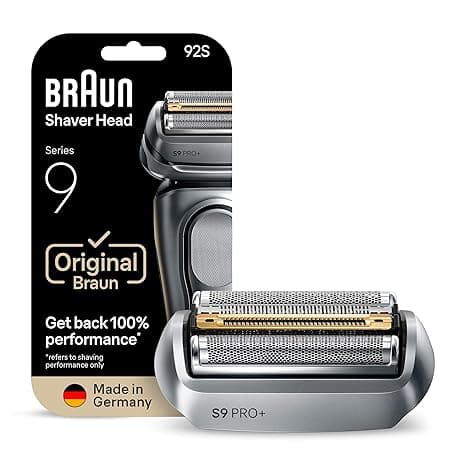
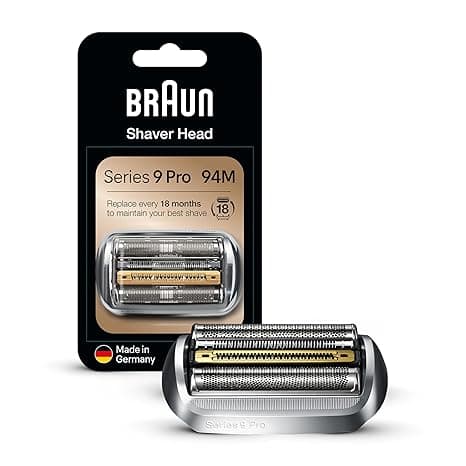
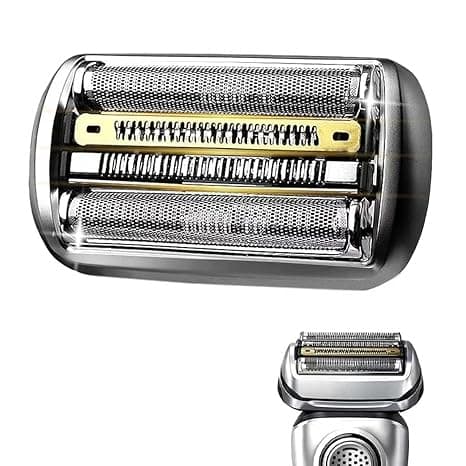
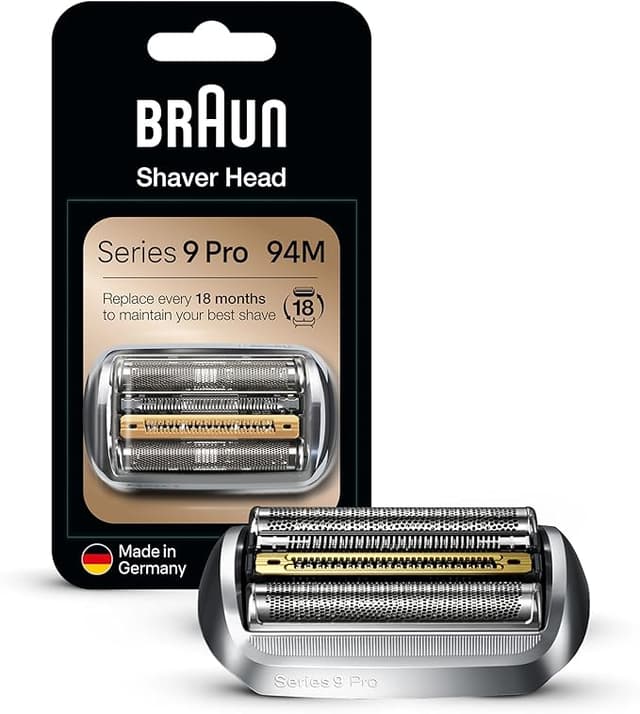
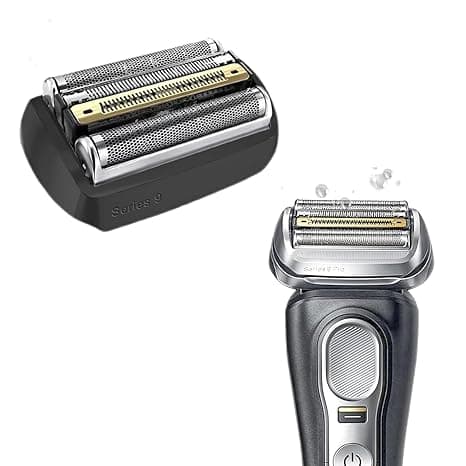
And here's the part that almost got me. I went online half-convinced I needed a whole new shaver. The Series 9 still sells for north of $250, and that number plants a seed: maybe the thing is just old, maybe it's time. It's not. A shaver that pulls instead of cuts is almost never a motor problem. It's the cassette — the foil-and-cutter head that sits on top — and that's a wear part, same as brake pads. You replace it, you don't replace the car.
The price that made me stop and do the math
The genuine Braun replacement cassette — the one in the Braun box with the part number printed on the side — runs about $55 where I shop, and I've seen it touch $65 when stock is tight. Fifty-five bucks. For a foil and a cutter block. I sat there doing the annual math: if I'm swapping the head roughly every year and a half to keep the shave honest, that's a recurring $55 hit on top of a machine I already paid a small fortune for.
The compatible cassette I ended up buying was $24. Same Series 9 mount, same foil-and-cutter sandwich, a little over half the price of the OEM. So the real choice in front of me wasn't "new shaver vs. old shaver." It was "spend $55 on the Braun-branded head, or $24 on the compatible one and pocket the thirty-one dollars." Over a few replacement cycles that's real money — easily a hundred bucks I'd otherwise hand to Braun for the privilege of the logo.
Does it actually seat right?
This was my nervous part, honestly. The Series 9 head clicks on, and a sloppy fit means a rattle or, worse, a gap where the foil doesn't sit flush against the cutter. I popped the old one off — you just press the two release buttons on the sides and it lifts away — and snapped the compatible cassette down until I heard the click. It seated. Solid click, no wobble when I gave it the wiggle test.
I'll be straight about the one thing I noticed: the frame on the compatible head is a hair looser in tolerance than the Braun original. Not loose enough to rattle or come off, but if you press a thumbnail at the seam you can feel a touch more play than the OEM had brand new. After I added a single drop of shaver oil to the foil and ran it dry for ten seconds to work it in, it quieted right down and I stopped thinking about it. Three months later it's still locked on tight.
The honest performance read
First shave with it, my face told me the machine was back. Clean cut on the cheeks, no tugging on the neck, and that close-but-not-irritated finish that's the whole reason people buy a Series 9 in the first place. On the flat planes — cheeks, jawline — I genuinely cannot tell the $24 head from the $55 one. Same closeness, same speed, same number of passes.
Where it's a touch behind: the tricky spots. Under the jaw and around the Adam's apple, the OEM foil felt like it grabbed flat-lying hairs maybe a sliver more aggressively. With the compatible head I do one extra pass there, against the grain, and I'm just as smooth. So it's not worse — it's a few seconds more work on about ten percent of my face. For thirty-one dollars saved, I'll take the extra pass.
The downside I want you to hear before you buy
Two things, and I'd rather you know them now than feel cheated later.
First, the foil coating doesn't last quite as long. The OEM head gave me a solid eighteen months of daily shaving before it started pulling. This compatible one, I can already tell, is trending more like twelve to fourteen — the foil is a touch thinner and I think it'll thin out to that pulling point sooner. Run the numbers, though: even if I replace it a few months earlier, two $24 heads still cost less than one $55 OEM, and I'm shaving on fresh foil more often, which my neck actually prefers.
Second — and this is the small stuff that tells you it's aftermarket — the packaging is cheap. Thin cardboard, none of that satisfying Braun-box heft, and there was a faint plastic smell off the cassette the first day. It aired out by the second morning and never touched the shave, but if you're expecting the OEM unboxing, you won't get it. You're paying for the foil and the cutter, not the box. That's kind of the whole point.
Why a worn head is more than an annoyance
This isn't just about comfort. A foil worn thin and a cutter gone dull don't cut hair — they grab it, twist it, and snap it below the skin line. That's exactly how you end up with razor burn, ingrown hairs, and that raw, hot feeling on your neck that lingers into the afternoon. A dead head also makes you press harder, which makes the irritation worse, which makes you blame your skin when the real culprit is a $24 part you've been putting off. Once I had a sharp foil back on the machine, the after-shave redness I'd been living with for weeks just... stopped.
So who should buy which?
If you shave dry, daily, with a heavy coarse beard, and your skin flares at the slightest dull blade, I'd actually point you at the OEM cassette — that longer foil life and the slightly sharper grab in the tricky spots is worth the extra thirty-some dollars to you specifically. No shame in it.
For everyone else — and that's most of us — the compatible head is the easy call. It seats right, it shaves my Series 9 back to feeling like the machine I paid for, and it does it for $24 instead of $55. I expected to be disappointed. I wasn't. I've already got a second one sitting in the drawer, and when this one starts to pull, I'll snap it in without a second thought — because I've done it now, and it works.