Troubleshooting & Analysis
The click is the first thing that told me it was going to be fine
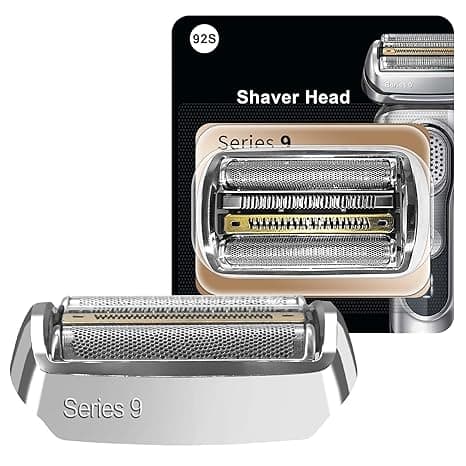
I'd already convinced myself I was about to ruin a $280 shaver. The compatible cassette for my Braun Series 9 had shown up in a thin little box — no foam insert, just a plastic clamshell and a folded slip of instructions — and I sat there for a second thinking, okay, this is the part where the cheap one doesn't seat and I throw away twenty bucks. Then I pressed the release buttons, pulled the old head, and snapped the new cassette down. It clicked. Not a mushy half-click. The same firm tk the original gave me three years ago when the shaver was new. That sound did more to settle my nerves than any review could.
Here's where I was coming from. My Series 9 had gone from a two-minute glide to a genuinely painful chore. The foils were dull, the trimmer was dragging, and every morning it was pulling whiskers out before it cut them — that hot, stinging razor-burn line right along the jaw. A dull head doesn't just shave worse. It tugs the hair, the follicle gets irritated, and you walk around with that blotchy raw neck all day. I knew the head was shot. What I didn't want to do was the thing Braun clearly wants you to do, which is shrug and buy a whole new shaver.
The math is the whole reason I tried the compatible one
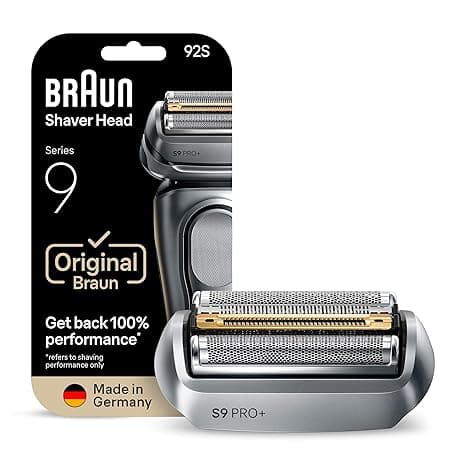
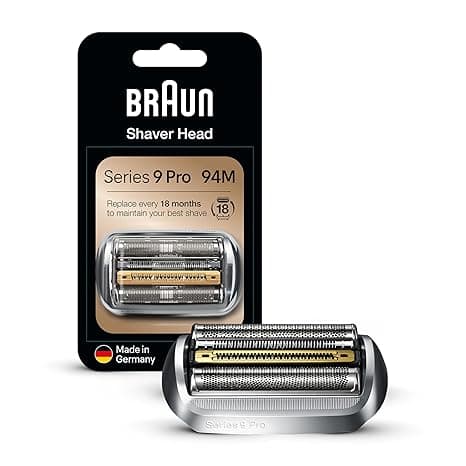
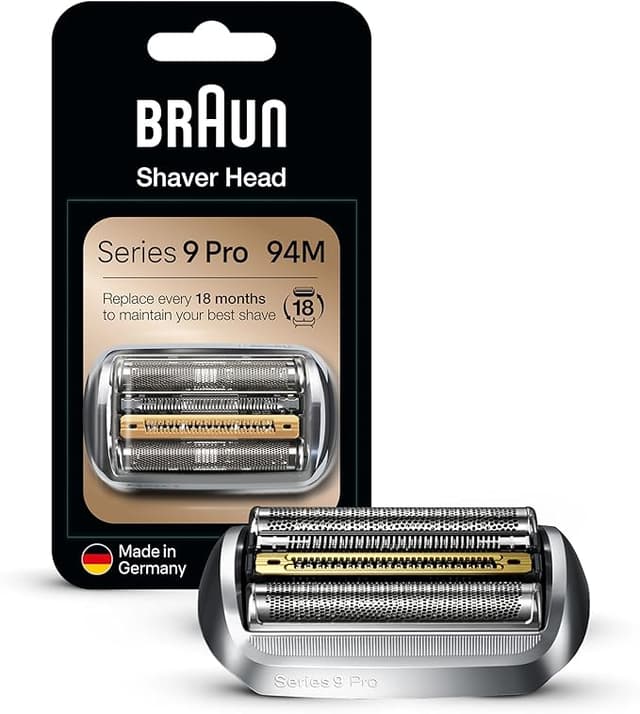
A brand-new Series 9 — the actual razor — sits around $250 to $300 depending on the week and the bundle. That's the number Braun is quietly counting on you reaching for when your shave goes bad, because a lot of people don't even know the head is replaceable. It is. The official Braun cassette (the 92-series head) runs roughly $40 to $50. And the compatible cassette I bought was about $22.
So look at the actual decision in front of you. You can spend $280 on a new machine. You can spend $45 on the genuine head. Or you can spend $22 on a third-party head that drops into the exact same housing. The savings over OEM is real money — call it a $20-plus gap every time you swap, and on a head you change maybe once a year, that adds up faster than you'd think over the life of the shaver. I'm not made of money. Twenty bucks to bring a dead razor back to a like-new shave was an easy thing to test.
Fit and install: genuinely a 30-second job
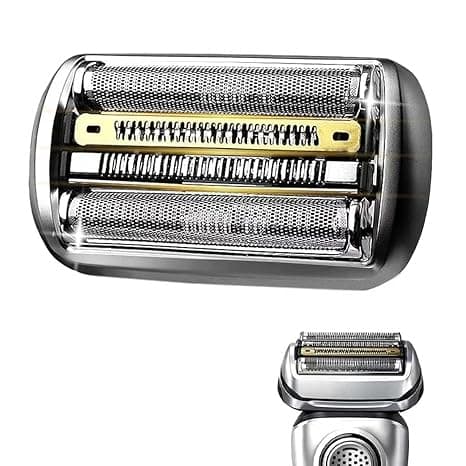
This is the part people get scared of, and they shouldn't. You press the two release buttons on the sides of the head, the whole cassette pops off, and you set it aside. The new one snaps down the same way — it only goes on one orientation, so you can't really botch it. I added a single drop of light oil along the foils before the first run, which Braun recommends on their own heads too, and it does smooth out that first pass. Thirty seconds, no tools, no fiddling. The frame seated flush against the body with no rocking or gap. If you've ever swapped a head on the genuine part, this is identical.
I'll be honest about the one thing that's not identical: the plastic frame on the compatible cassette feels a hair less premium in the hand. The OEM frame has this slightly denser, more "engineered" weight to it. The aftermarket one is a touch lighter and the seam where the foil frame meets the base is a little less crisp. Does it matter on your face? No. It seated perfectly and held tension fine. But you can feel the cost-cutting if you're paying attention, and I'd rather tell you that than pretend the two are molecularly the same.
How it actually shaves
First morning, the difference was almost embarrassing. The tug was just gone. The shaver went back to that quiet, fast glide where you stop thinking about it and just shave. Close enough on the neck that I wasn't going over the same spot four times, which is exactly what kills your skin with a worn head. After about four weeks of daily use it's held up — no foil tears, no hot spots, the trimmer pops up and cuts sideburns clean.
Where it sits a hair behind the genuine head: on a three-day beard, the absolute closest cuts. The OEM foils, when they're fresh, get that last fraction of a millimeter on really coarse, flat-lying hair a touch better. With the compatible head I noticed on the heaviest growth I'd occasionally want one extra pass under the jaw. We're talking small. On a normal one-day shave I cannot tell the two apart. But if you're someone who goes four or five days and then expects a single pass to leave you baby-smooth, the genuine cassette has a slight edge there.
The real downsides, not the polite ones
Two things. First, the packaging and the early smell. Out of the clamshell there was a faint plastic-and-machine-oil smell for the first couple of days — not strong, gone by day three, but it's there and it tells you this didn't come off Braun's line. Second, and this is the one that actually matters: head life. My honest read after a month is that the cutting edges feel like they may not hold their peak quite as long as a genuine cassette. I'd plan to swap it a little sooner. At $22 a pop versus $45, I'm completely fine with that trade — I can replace the compatible one twice and still come out ahead — but you should go in knowing it, not expecting the aftermarket head to last 18 months.
And the safety angle is the reason none of this is optional. A worn shaving head isn't just an annoyance — dull foils mean you press harder, you go over the same skin again and again, and that's how you get ingrowns, irritation, and broken skin on your neck. Restoring the head to a clean cut is the thing that protects your face. Letting a dead head limp along for another six months because you didn't want to spend $22 is the genuinely bad move here.
The verdict
If you do a heavy multi-day beard and you want the single closest cut money can buy, or you simply won't tolerate any compromise on a tool you use every day, buy the genuine Braun cassette — that's a real reason, not a guilt trip. For everyone else: I pressed the buttons, heard that clean click, ran it for a month, and got my shave back for about $22 instead of $280 on a new shaver or $45 on the official head. The frame's a touch cheaper, it might want replacing a bit sooner, and there's a faint smell for two days. I knew all that going in. I'd buy it again — and the next time my head goes dull, I will.