Troubleshooting & Analysis
The morning my Series 9 started pulling instead of cutting
I knew before I finished one cheek. That little tug at the jawline — hair getting yanked half a millimeter before it finally gave — and then the burn afterward, the kind that has you patting aftershave on like it's a punishment. My Braun Series 9 had been a tank for about a year and a half. Then one week it just... turned mean. I figured the motor was dying. I was already pricing out a new shaver in my head, doing the "ugh, $250 again" math, when I flipped the head off and actually looked at the cassette.
The foils were shot. Stretched, dull, a couple of micro-tears you'd never see unless you held it to the light. That's all it was. The shaver was fine. The cutting surface — the part that's *supposed* to wear out — had worn out, and I'd nearly thrown out a perfectly good machine over a $25 part.
What Braun wants you to pay, and what I actually paid
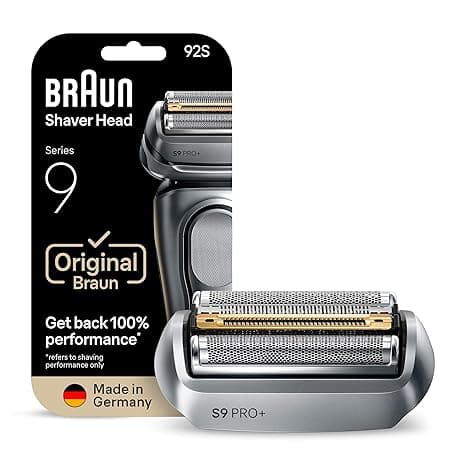
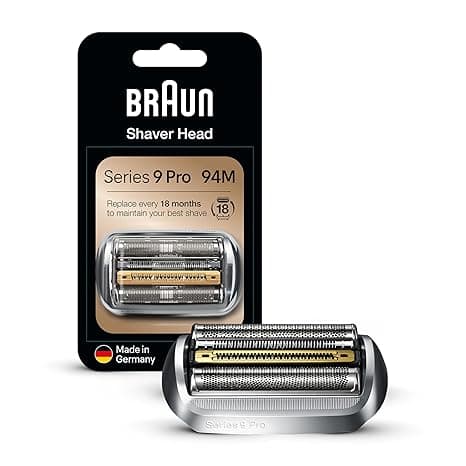
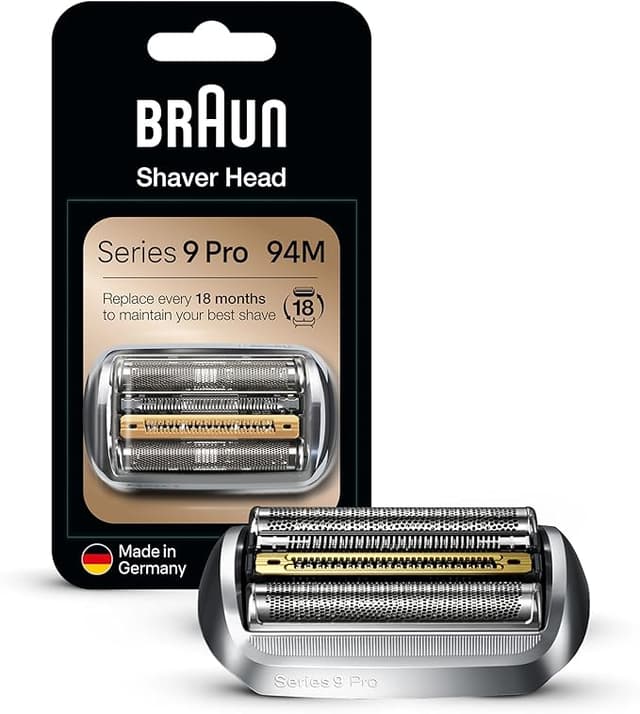
Here's where it gets silly. The genuine Braun Series 9 replacement head — the 92S or 92M cassette depending on whether you want silver or gel-friendly — runs around $50 to $60 most places I checked. For a foil-and-cutter block. Braun's whole pitch is basically "don't trust anyone else with your face," and for a while I bought into it.
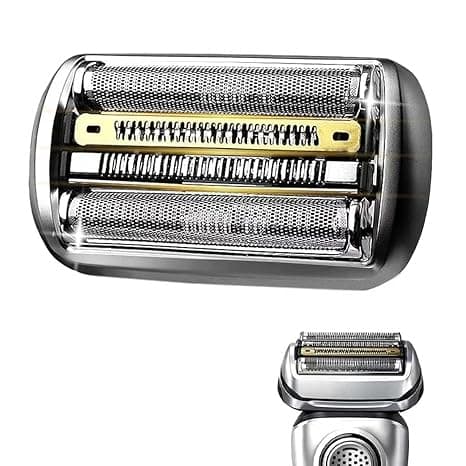
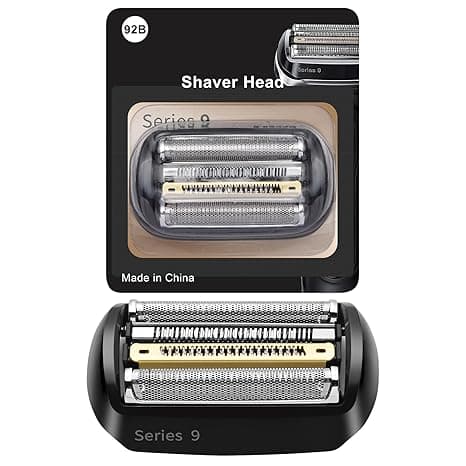
The compatible cassette I ended up with cost me $26. Same fitment, same snap-on mount, same two-foil-plus-center-trimmer layout. So we're talking a roughly $30 gap on a part you replace maybe every 12 to 18 months. Over the life of a shaver you might swap heads three or four times — that's $100-plus you hand Braun for the privilege of the logo, versus keeping it in your pocket. And remember the alternative I almost chose was a whole new shaver. The replacement head, OEM or not, was always the smart move. The only question was whether the cheap head was *good* enough.
Does it actually seat right?
This is the part I was nervous about, because a shaver head that doesn't lock down flush is a head that rattles, vibrates wrong, and shaves uneven. The swap itself is nothing — you press the two release buttons on the sides, the old cassette pops off, and the new one snaps in. You hear the click. Both sides. That click is the whole ballgame, and on this compatible unit I got it cleanly, first try, no wiggling.
I'll be honest about the fit, though, because this is the kind of thing the five-star reviews skip: the frame on the aftermarket cassette is a *hair* looser in the hand than the OEM one. Not loose on the shaver — it locks tight there — but the plastic itself feels a touch lighter, a little less premium when you're holding it before install. Out on the face you can't feel any of that. In your fingers during the swap, you notice. I did the thing the instructions tell you to do and put a single drop of shaver oil on the foils before the first run, worked it in dry for a few seconds, and it ran smooth and quiet. If yours arrives feeling like it's buzzing louder than it should, that drop of oil is usually the fix, not a defect.
The shave itself — honest take
First pass with the new head and the pulling was just gone. Completely. That's the headline. Hair got cut at the skin instead of dragged, the burn never showed up, and my neck — which is where dull foils always punish me first — came out smooth in one pass instead of three angry ones.
Is it *identical* to a fresh OEM Braun head? No, and I'm not going to pretend it is. Side by side over a few weeks, the genuine cassette gives me maybe a marginally closer result on the very flat part of my cheek — the kind of difference you'd only catch running your hand across your face an hour later, not something anyone else would ever see. The compatible head is about 90% of the way there on closeness and basically 100% of the way there on comfort, which for daily shaving is the trade I'll take every time. I'm not photographing my jawline for a magazine. I just don't want to bleed.
The real downsides — more than one
Two things you should know going in.
First, the break-in. For the first two or three shaves there was a faint plastic-and-new-metal smell when the head warmed up — nothing strong, but it's there, and it's the kind of thing that makes you second-guess a cheap part. It faded completely by day four. Totally normal, but nobody warns you.
Second, and this is the one that actually matters long term: I don't fully trust the aftermarket foils to last as long as Braun's. The genuine cassettes are rated for that 12-to-18-month window and they tend to hit it. My honest read on this compatible one, watching how the foil was wearing after a couple months, is that I'll probably be swapping it closer to the 10-to-12-month mark than 18. At $26 a pop I genuinely do not care — even replacing it more often, I'm still way under what the OEM heads would've cost me. But if you're the type who hates re-ordering and wants to set it and forget it for a year and a half, that's a real strike against it.
The packaging's cheap too. Mine showed up in a thin blister pack with a folded paper insert instead of Braun's molded box. The part inside was fine. Just don't expect it to feel like an Apple unboxing.
Why a dull head is more than an annoyance
Quick thing, because I lived it: shaving with worn foils isn't just uncomfortable, it's how you get ingrowns and irritation. Dull blades pull the hair up and snip it below the skin line at a bad angle, and that's the recipe for those little inflamed bumps along the neck. A worn head also makes you press harder and go over the same spot again and again, which is exactly what tears your skin up. Replacing the cassette the moment it starts tugging isn't vanity — it's the difference between a clean shave and a week of razor burn.
Who should buy OEM — and why I grab this instead
If you've got sensitive, reactive skin and you've found that only the genuine Braun foils keep you from breaking out — stick with OEM. The extra $30 is cheap insurance for your face, and I'd never tell you to gamble on that. Same if you truly want maximum interval and hate reordering.
For everyone else — and that's most of us — the compatible Series 9 head did the actual job: it stopped the pulling, killed the razor burn, snapped in with a clean click, and saved me from buying a $250 shaver I didn't need over a worn-out $26 part. It's a touch less premium in the hand and I'll probably replace it a little sooner. But it brought my shaver back to life for half the price of the official head, and when this one wears out I'm buying it again. I already have, twice.