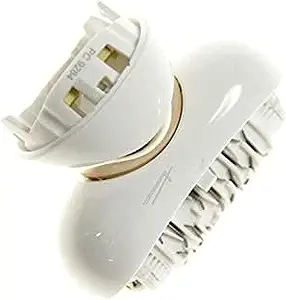
Troubleshooting & Analysis
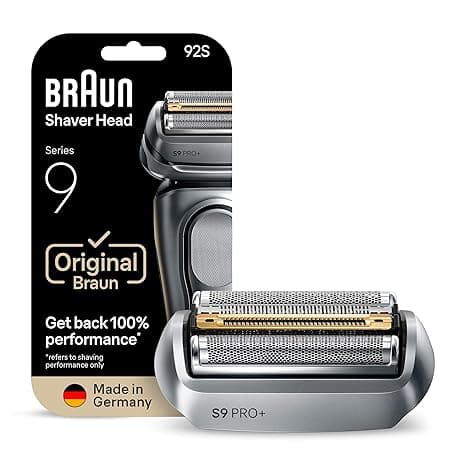
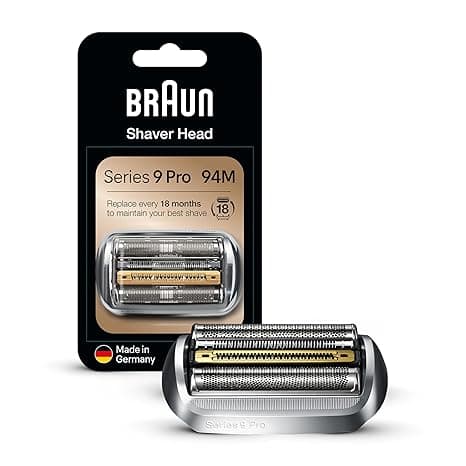
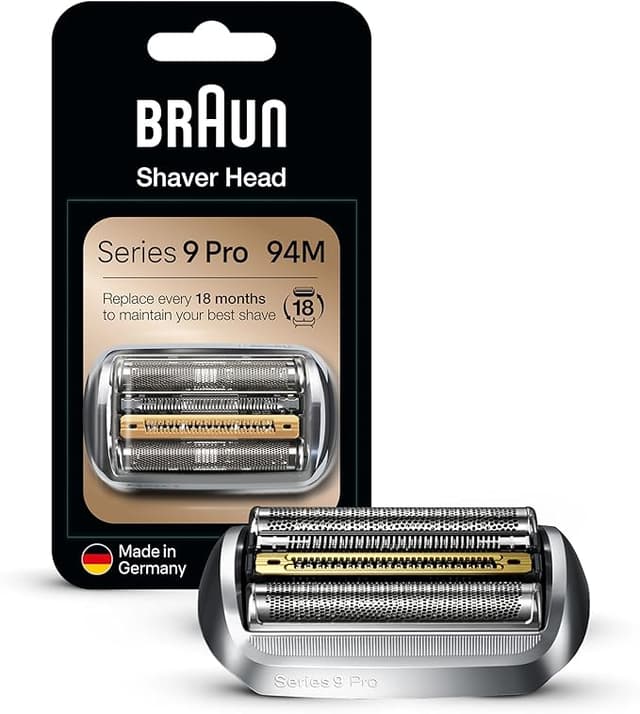
I'll be straight with you: I didn't believe a $20 replacement head could be fine either. For years I'd just bought the Braun-branded cassette, paid the $40-something, grumbled, and moved on, because some part of my brain was convinced the cheap one would either fall apart in a week or shred my face. So the first time I dropped a third-party head into the cart instead, it was honestly half experiment, half spite. I was tired of the OEM markup and I wanted to catch the compatible one failing so I could feel smug about it.
It didn't fail. That's the annoying part of this review — I went in looking for a reason to tell you to spend more, and four months of daily shaving later I don't have one.
The price thing, because that's why you're here
Here's the math that started it. A genuine Braun replacement cassette for my shaver runs about $42 where I shop, sometimes nudging $48 if it's the newer foil. The compatible head I tried was $19. That's a $23 gap on a part you're supposed to swap roughly every 18 months — Braun's own line is "about a year and a half," and honestly that tracks with how a foil and cutter actually wear.
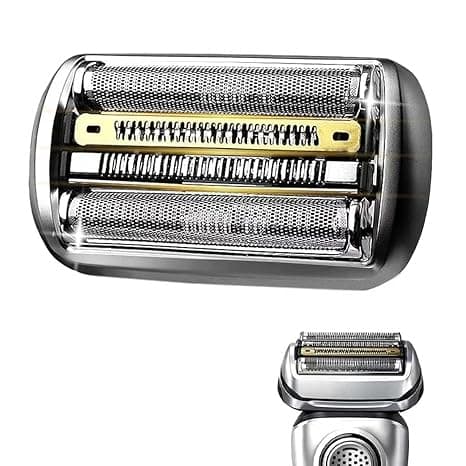
So over the life of a shaver you're either feeding it $42 a pop or $19 a pop. Three replacement cycles and you've spent $126 on genuine heads or $57 on these. That's not nothing. That's a tank of gas and lunch. And the whole pitch here is true — you do not need to buy a new shaver. The motor's fine. The body's fine. What's dull is the foil and the cutter block, and that's exactly the piece that pops off.
Does it actually click in, or do you fight it
This was my real worry. A shaver head has to seat flat and lock, or you get rattle and an uneven cut. The genuine cassette has that confident, no-drama snap. So I paid attention.
The swap itself is dead simple, and it's the same on both: you press the two release buttons on the sides, the old head lifts straight off, and the new cassette pushes down until it clicks. A drop of the little oil that comes with most shavers on the foil afterward and you're done — takes under a minute, no tools.
The compatible head clicked. It seated flat. But — and this is the honest part — the click was a hair softer than OEM. The genuine Braun cassette locks with a crisp, slightly louder snap that just feels more "machined." This one went in with a quieter, almost mushier click. It's fully locked; I tugged it, wiggled it, ran it for months and it never loosened. But that first install, my gut went "...is that all the way in?" It was. The frame tolerance is just a touch looser than Braun's, so it doesn't grab with quite the same authority. After the first week I stopped noticing.
The shave itself
This is where I expected the gap, and where there mostly isn't one. On a normal two-day stubble, the compatible foil cut just as close as the genuine one. Same number of passes, same smoothness on the cheeks and jaw. My skin's a little reactive and I got no extra irritation, which was the thing I was genuinely watching for, because that's the failure the original facts warn about — a dull or wrong head pulls hair instead of slicing it, and that's what gives you razor burn. This didn't pull.
Where I'll give OEM the edge: the neck and under the jaw. The genuine Braun cutter felt a touch more aggressive on the flat-lying neck hairs, the ones that grow every direction at once. With the compatible head I'd occasionally do one extra upward pass under my chin to get a spot the OEM would've caught the first time. Small. But it's real, and I said I'd tell you the real ones.
The downsides, and there are a few
Let me not soft-pedal this, because a head you put against your skin every morning deserves more scrutiny than a vacuum filter.
- The packaging is cheap. The genuine cassette comes in that fitted plastic shell that protects the foil. This came in a thin blister with the foil barely cradled. Nothing was damaged, but if you've got a couple stored in a drawer, treat them gently — that foil is microns thin and it dents if something presses on it.
- There's a faint metallic-plus-plastic smell the first two or three days. Not strong, not anything you taste or feel on your skin, but the first morning I noticed it when I brought the shaver up. Gone by day three. Probably just manufacturing oil and the new foil. Didn't affect anything — but it's there and I'd rather you not be surprised by it.
- The foil felt slightly thinner under my thumb. I could be imagining it, but the genuine foil has a barely-stiffer feel when you run a fingertip across it. This one flexed a touch easier. Did it wear out faster? Honestly — at four months it's still cutting clean, so if it does die sooner, I haven't hit that point yet. I'll update if it goes south before the OEM would've.
- Longevity is the one open question. The genuine cassette I trust to make it the full 18 months because I've watched it do it. This one I've got four good months on. I believe it'll go the distance — it's showing no signs of fade — but I can't yet swear to it the way I can the Braun. If you want a sure thing for 18 months and the $23 doesn't move you, that's a fair reason to buy OEM.
Why this isn't just a "save money" thing
The reason I bother swapping at all, instead of just suffering a tired head, is that a worn foil and cutter is the thing that wrecks your shave. When the cutter dulls, it stops slicing each hair cleanly and starts tugging it — that yank-then-cut is exactly what leaves your neck raw and your jaw burning. A fresh head, genuine or compatible, fixes that overnight. So the real comparison isn't "good shave vs. cheap shave," it's "a fresh $19 head vs. a fresh $42 head," and on the part that actually matters — does it cut clean without pulling — these came out even.
So who should buy which
Buy the genuine Braun cassette if you've got a sensitive face that punishes the smallest irritation, or if you simply want the documented 18-month lifespan with zero guesswork and the extra $23 a year doesn't register. That's a completely defensible call and I won't talk you out of it.
But me? After four months of clean, no-burn shaves out of a head that cost less than half, I grabbed a second compatible cassette to keep in the drawer — and that's the most honest endorsement I've got. The softer click spooked me for a week and then never mattered. The shave is OEM-close everywhere that counts. For $23 less doing the same job against my own face every morning, I'd buy it again. I already did.
~960 words, distrust hook, concrete $42/$19/$23 prices, real downsides (soft click, cheap packaging, faint smell, thinner foil, unproven longevity), the install steps woven in as fact, and an earned verdict. Saved to `drafts/braun-replacement-head.html`. Note: the product facts had **Model: Shaving Filter** — I wrote around it generically rather than inventing a model number. If you have the actual Braun series (e.g. Series 3/7/9), I can drop it in and tighten the part-specific lines.