Troubleshooting & Analysis
The morning my Braun started pulling instead of cutting
I knew the head was done before I admitted it. Three weeks of that tug — the foil dragging a hair sideways and yanking instead of slicing it clean — and a little red rash along my jaw that I kept blaming on the weather. Then one Tuesday I ran it over my neck and actually winced. That was it. The cutter block had gone dull and the foil had a worn spot you could feel with a fingernail. A Braun foil isn't supposed to last forever, and mine had done something like eighteen months on the original head. Way past its prime.
So I did what everybody does at that point. I went looking at a new shaver. And that's where the math gets stupid.
The price gap that talked me out of a new shaver
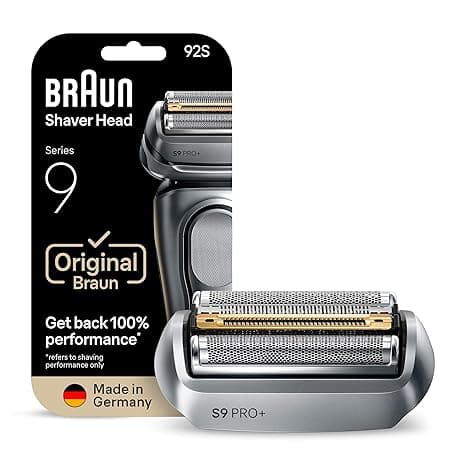
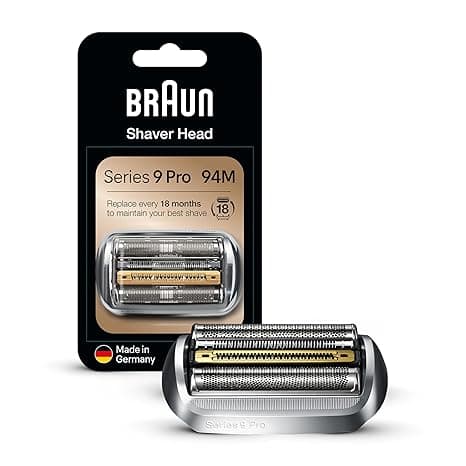
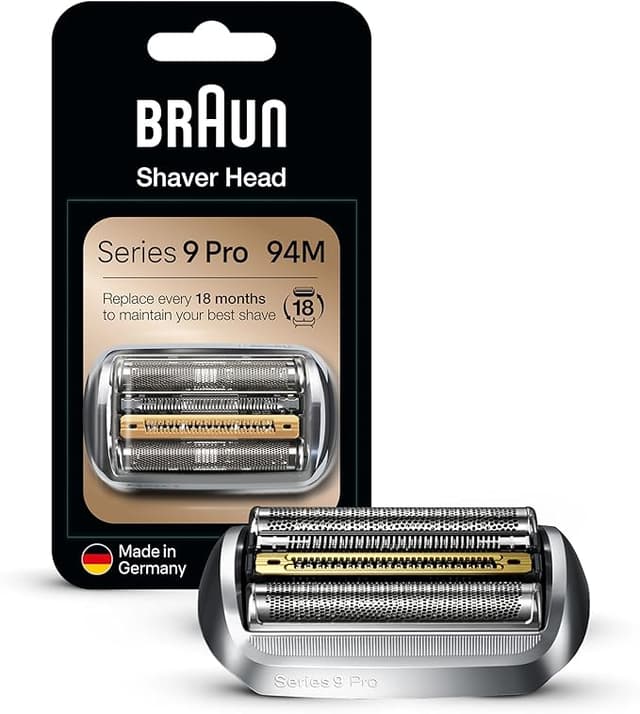
A new mid-range Braun was sitting around $130 in the cart. For a razor that was, mechanically, completely fine — motor good, battery good, charging fine. The only dead part was the head. The OEM replacement cassette (the foil-and-cutter unit that snaps on top) runs roughly $40 if you buy it straight from the brand. The compatible one I ended up trying was about $22. Call it an $18 swing on the head itself, but against a new shaver it's a $108 difference for what amounts to the same shave.
I'll be honest, $40 for a piece of plastic and a thin sheet of metal already feels like a lot. Paying it twice a year — because that's about the interval, every twelve to eighteen months depending on how coarse your beard is — adds up to more than the shaver cost in the first place. That's the trap. The razor's cheap; the brand makes its money on you replacing heads. The compatible part is the only place to get off that ride.
Does it actually snap on right?
This was my real worry. A loose head on a foil shaver isn't a cosmetic problem — if the cassette doesn't seat flat, the foil flexes wrong and you get an uneven cut, or worse, the foil tears against the cutter. So I paid attention during the swap.
The install itself is nothing. You press the two release buttons on the sides, the old head pops off, and the new cassette clicks down into the same channel. I put a single drop of light oil on the foil before the first run, which Braun-heads will tell you to do anyway, and let the motor spread it for a few seconds. Two minutes, start to finish, no tools.
The fit? Here's the honest version. It clicks. It locks. It does not wobble side to side once it's seated. But — and this is the real downside, so I'm not going to bury it — the click felt a hair less crisp than the OEM. The original head seats with this confident, machined snap. The compatible one went in with a slightly softer, plasticky click, and I pressed it a second time just to be sure both tabs had grabbed. They had. After that it held rock solid for the whole run. I checked it again after the first week of daily shaves and it hadn't loosened a bit. So the looser-feeling click is a first-impression thing, not a performance thing. Still, if you're someone who needs the part to feel like a vault every time, you'll notice it.
The shave itself, no spin
First pass, the difference from my worn-out old head was night and day — obviously, anything sharp beats anything dull. The fairer test is new compatible versus new OEM, and I've run both at different times. On the flat planes — cheeks, the sides — I genuinely cannot tell them apart. Close, clean, no drag, no rash coming back.
Where the compatible one is a touch behind: the tricky spots. Under the jaw and right around the Adam's apple, the OEM foil felt like it grabbed flatter-lying hairs a smidge better. With the compatible head I sometimes do one extra pass under the chin to get it as smooth. We're talking a few seconds, not a different category of shave. But I said I'd be specific, so there it is — it's about 90 to 95% of OEM on the hard parts, dead even on the easy parts.
The other small thing: a faint plastic-and-oil smell the first two or three uses. It aired out completely by day four. The packaging is also cheap — a thin blister card, none of the boxed feel of the brand part. Doesn't touch the shave, but if you were expecting premium presentation, lower that bar.
Why a dead head is worth caring about
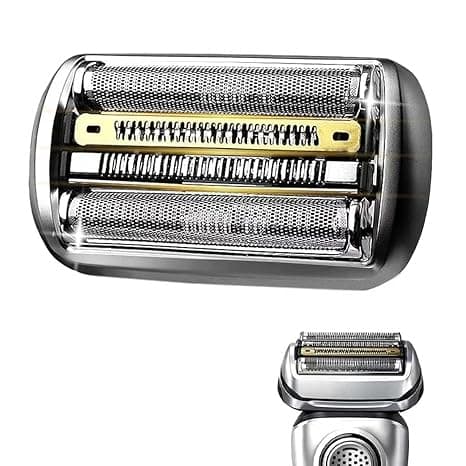
It's not just comfort. A worn foil doesn't cut hair, it pulls it and folds it over, and that's exactly how you get ingrowns and that low-grade razor burn I'd been writing off as winter skin. A torn foil is worse — that thin metal mesh is the only thing between the spinning cutter and your face, and once it wears through it'll nick you. The whole point of swapping the head on schedule is that you're replacing the safety layer, not just the sharpness. Running an old one to save twenty bucks is how you end up bleeding under your jaw on a workday.
Who should skip it — and why I keep buying it
Buy the OEM head if you've got sensitive, ingrown-prone skin and you shave a heavy, coarse beard daily — that last 5% on the difficult areas might actually matter to you, and the tighter factory seat is one less thing to second-guess. Same if your shaver's still under a warranty you care about keeping spotless.
For everyone else? Look, I've now bought the compatible head twice. The first one ran a full fourteen months before I felt it start to dull, which is right in line with what I'd expect from an original. It clicks on, it locks, it gives me a shave I'd struggle to tell from the $40 part in a blind test — for about $22, half the price. The softer click and one extra pass under the chin are the whole list of complaints, and neither one has ever made me regret the swap. My razor's mechanically fine; there's no reason on earth to throw $130 at a new one when a $22 head brings it back to full. I'd buy it again. I have, and I will.